
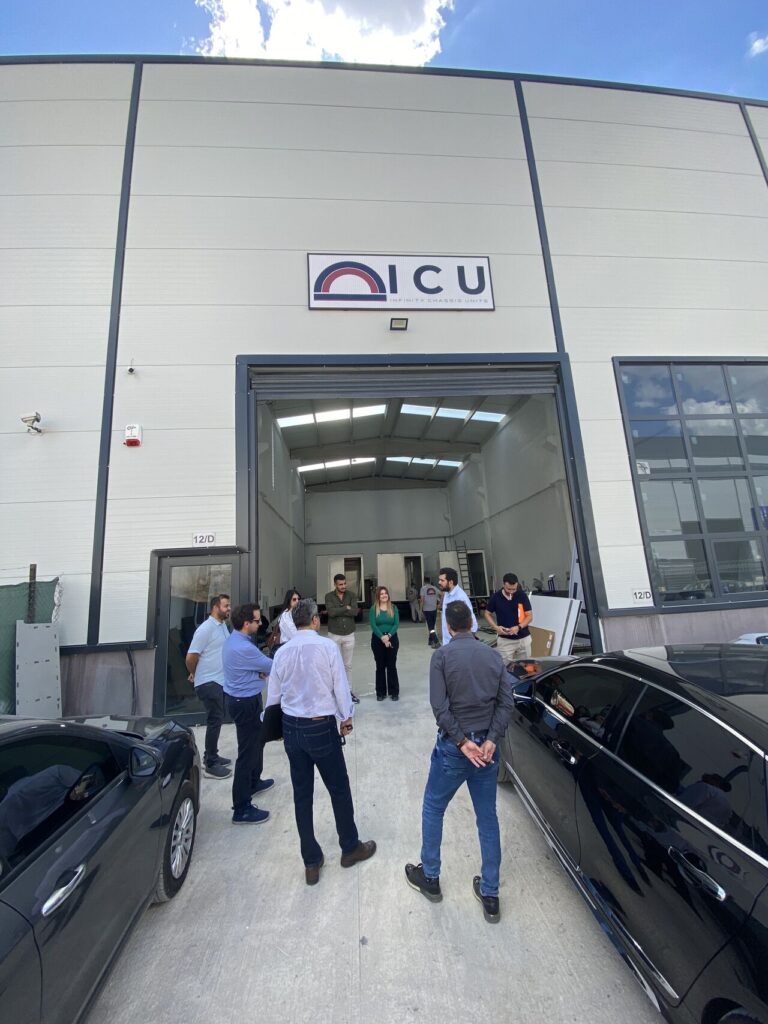
The European ambulance manufacturing sector is undergoing a massive transformation. Driven by an aging population, the rising prevalence of chronic diseases, and the lessons learned from recent global health crises, the market is shifting from producing simple “transport vans” to engineering highly sophisticated Mobile Intensive Care Units (MICUs).
To operate within the European Union, manufacturers must navigate some of the strictest regulatory and safety frameworks in the world, primarily the EN 1789 standard. To understand how modern manufacturers balance rigorous compliance with cutting-edge medical technology, we can analyze the engineering and production methodologies of Infinity Chassis Units (ICU), a prominent Ankara-based manufacturer that exports heavily to the European market.
Here is an in-depth analysis of the European ambulance manufacturing landscape through the lens of ICU Automotive.
1. The Regulatory Bedrock: EN 1789 Compliance
You cannot discuss ambulance manufacturing in Europe without addressing CEN 1789 (or EN 1789). This harmonized standard dictates the design, testing, performance, and equipping of road ambulances. It classifies vehicles into three categories:
- Type A: Patient Transport Ambulance (Basic care/scheduled transport).
- Type B: Emergency Ambulance (Advanced Life Support capable).
- Type C: Mobile Intensive Care Unit (Critical care and prolonged treatment).
The 10G Crash Test Mandate
The most grueling aspect of EN 1789 is the dynamic crash testing. Manufacturers cannot simply screw cabinets into a van. Every piece of furniture, medical device bracket, and stretcher mount must be proven to withstand 10G of deceleration force in multiple directions (front, rear, lateral, and vertical) without detaching and becoming a lethal projectile.
The ICU Approach: ICU Automotive treats EN 1789 not just as a legal hurdle, but as a foundational engineering baseline. Their facilities utilize parametric 3D CAD modeling to simulate stress impacts before a physical prototype is ever built, ensuring that their mounting systems—from the heavy defibrillators to the oxygen cylinder banks—exceed European safety margins.
2. Design and Technological Innovations: The ICU Case Study
ICU Automotive demonstrates how modern manufacturers are integrating advanced materials and digital systems to improve patient outcomes and paramedic safety.
2.1. Infection Control: Seamless Architecture
The COVID-19 pandemic permanently altered how ambulance interiors are built. Traditional wood-laminate cabinets, which harbor moisture and blood-borne pathogens in their seams, are obsolete in premium European builds.
- Seamless ABS Vacuum-Forming: ICU utilizes antibacterial, single-piece ABS vacuum-formed panels for the patient cabin. Because there are no sharp corners or joints, the entire interior can be aggressively disinfected using chemical wash-downs or Vaporized Hydrogen Peroxide (VHP) without degrading the materials.
- Advanced HVAC: European standards increasingly demand sophisticated climate control. ICU integrates roof-mounted HVAC systems with HEPA-H14 filtration (achieving up to 20 air changes per hour) and capable of maintaining negative pressure to isolate infectious patients.
2.2. Digitalization and the “Smart Ambulance”
The modern European ambulance is a node in the wider healthcare Internet of Things (IoT).
- CAN-Bus Multiplexing: ICU replaces miles of heavy, traditional copper wiring with digital CAN-bus networks. A central touchscreen in the Action Area allows the paramedic to control lighting, climate, suction, and monitor oxygen levels digitally, complete with automated fault diagnostics.
- Telemedicine Integration: Manufacturers are engineering vehicles to support high-bandwidth 5G and satellite (Starlink) telemetry hubs. This allows ICU-built vehicles to transmit real-time 12-lead ECG data, ultrasound imaging, and patient vitals directly to the receiving hospital while en route.
3. Platform Versatility: Adapting to European Geography
Europe features diverse operational environments—from the narrow, congested streets of Rome to the high-speed Autobahns of Germany and the alpine roads of Switzerland. Manufacturers must offer specialized platforms. ICU’s portfolio reflects this necessity:
- The Urban Agile (Fiat Ducato / Ford Transit Custom): Utilizing Front-Wheel-Drive architectures like the Ducato allows for a very low rear loading height, saving paramedic backs and providing maximum interior width for city-based Type B responses.
- The Heavy-Duty Standard (Mercedes-Benz Sprinter): The Sprinter is the gold standard for Type C MICUs in Europe. ICU leverages its heavy payload capacity (up to 5,500 kg) to integrate dual-battery systems, heavy incubators, and advanced driver-assistance systems (ADAS) like Crosswind Assist.
- The Modular Box Body (Type I / Type III): For heavy rescue or bariatric transport, ICU manufactures separate composite sandwich-panel “boxes” mounted onto chassis-cabs. This provides maximum thermal insulation and the financial advantage of “remountability” once the base truck chassis reaches the end of its life.
4. Future Market Trends (2025–2030)
Looking at the broader European market trajectory, manufacturers like ICU are pivoting toward sustainable and autonomous technologies:
- Electrification (EV Ambulances): As European cities enforce stricter Low Emission Zones (LEZs), there is a massive push toward electric and hybrid-electric ambulances. The engineering challenge is balancing the heavy battery weight of the vehicle with the immense electrical draw of the medical equipment.
- Weight Reduction: To maximize payload for medical gear (and compensate for EV battery weight), manufacturers are increasingly utilizing aerospace-grade carbon fiber and lightweight aluminum alloys in the vehicle’s superstructure.
Summary
The European ambulance market demands a flawless synthesis of automotive engineering, biomedical integration, and strict regulatory compliance. As demonstrated by ICU Automotive, succeeding in this space requires moving beyond simple vehicle conversions into the realm of manufacturing autonomous, crash-safe, and digitally connected mobile hospitals.