
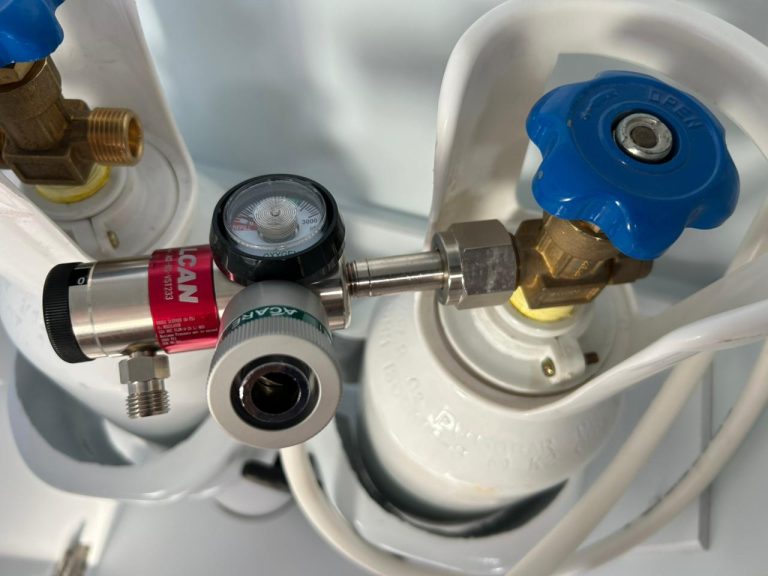
An ambulance oxygen system is a critical medical device that supplies medical-grade oxygen to patients in emergencies or those suffering from respiratory failure. These systems have a wide range of applications and are essential equipment in every ambulance worldwide.
As a direct manufacturer of ambulance medical equipment in Turkey, we produce high-quality oxygen systems that meet international standards. Whether you need a fixed oxygen system integrated into the ambulance structure or a portable oxygen system for flexible use, we have the right solution for your emergency medical vehicles.
What is an Ambulance Oxygen System?
An ambulance oxygen system is a medical device designed to deliver therapeutic oxygen to patients who cannot maintain adequate oxygen saturation levels independently. These systems are used by trained healthcare personnel in emergency situations, during patient transport, and in pre-hospital care.
The system typically consists of:
- Oxygen cylinders (fixed or portable)
- Pressure regulators
- Flow meters
- Humidifiers
- Oxygen tubing
- Delivery devices (masks, nasal cannulas)
- Mounting hardware and safety equipment
Key Functions of Ambulance Oxygen Systems:
| Function | Description |
|---|---|
| Oxygen Delivery | Supplies medical oxygen to patients with respiratory distress |
| Flow Control | Adjustable oxygen flow rates based on patient needs |
| Pressure Regulation | Reduces cylinder pressure to safe, usable levels |
| Humidification | Moisturizes oxygen for patient comfort during extended use |
| Monitoring | Tracks oxygen levels and alerts staff to low pressure |
| Safety | Prevents over-pressurization and fire risks |
Why is Ambulance Oxygen System Used?
Oxygen is a vital component for the human body. It is necessary for the proper functioning of tissues and organs. When sufficient oxygen is not obtained, organs and tissues cannot perform their functions, potentially leading to fatal consequences.
Ambulance oxygen systems are used in the following critical situations:
1. Respiratory Failure
Patients with chronic obstructive pulmonary disease (COPD), asthma attacks, pneumonia, or other respiratory conditions often require supplemental oxygen during transport.
2. Cardiac Emergencies
Heart attacks and other cardiac events reduce the heart’s ability to pump oxygenated blood. Oxygen support helps minimize tissue damage.
3. Trauma and Shock
Severe injuries, blood loss, and shock can compromise oxygen delivery to vital organs.
4. Carbon Monoxide Poisoning
High-flow oxygen helps displace carbon monoxide from hemoglobin.
5. Anaphylaxis
Severe allergic reactions can cause airway constriction and require oxygen support.
6. Stroke
Oxygen therapy helps protect brain tissue during cerebrovascular events.
7. Neonatal Resuscitation
Newborns with respiratory depression require immediate oxygen support.
8. Palliative Care
Oxygen provides comfort to terminally ill patients experiencing dyspnea.
Types of Ambulance Oxygen Systems
There are two primary types of oxygen systems used in ambulances: fixed systems and portable systems. Each serves different purposes and offers distinct advantages.
Fixed Oxygen Systems
Fixed oxygen systems are permanently installed in the ambulance, typically integrated into the upper cabinets or side walls of the patient compartment.
| Feature | Specification |
|---|---|
| Mounting | Permanent installation in ambulance cabinetry |
| Cylinder Capacity | Large cylinders (5L, 10L, 20L, or larger) |
| Flow Range | 0-15 LPM or higher |
| Typical Use | High-flow oxygen support, extended transport |
| Advantages | Higher capacity, no handling during transport |
Ideal for:
- Patients requiring high-flow oxygen support
- Long-distance transfers
- ICU and ALS ambulances
- Multiple patients (with multiple outlets)
Fixed System Components:
- Large oxygen cylinders (secured in cylinder brackets)
- Pipeline distribution system
- Multiple wall outlets throughout patient compartment
- Central pressure gauges and alarms
- Backup cylinder provisions
Portable Oxygen Systems
Portable oxygen systems have a mobile character and can be easily moved into any environment. They consist of smaller, more portable oxygen cylinders, regulators, and delivery devices.
| Feature | Specification |
|---|---|
| Mounting | Removable, carried by handle or strap |
| Cylinder Capacity | Small cylinders (0.5L, 1L, 2L) |
| Flow Range | 0-15 LPM (adjustable) |
| Typical Use | Patient transfer, scene response, extrication |
| Advantages | Lightweight, portable, versatile |
Ideal for:
- Emergencies outside the ambulance
- Patient movement within the ambulance
- Quick response situations
- Secondary transport (stretcher to hospital)
Portable System Components:
- Small oxygen cylinder with integrated valve
- Compact regulator with flow meter
- Carrying case or bag
- Basic delivery devices
- Shoulder strap for hands-free carrying
Comparison: Fixed vs Portable Oxygen Systems
| Factor | Fixed System | Portable System |
|---|---|---|
| Capacity | High (large cylinders) | Limited (small cylinders) |
| Duration | Hours of continuous use | 30-60 minutes typical |
| Weight | Heavy, permanently mounted | Light, 2-5 kg complete |
| Mobility | Stationary in ambulance | Fully mobile |
| Flow Rates | Up to 25 LPM | Up to 15 LPM |
| Multiple Outlets | Yes (2-4 outlets) | No (single outlet) |
| Best For | Long transports, ICU patients | Scene response, extrication |
| Cost | Higher initial investment | Lower cost |
| Maintenance | Professional installation required | Simple, user-serviceable |
Clinical Recommendation: Most ambulances should carry both system types – a fixed system for primary patient care during transport and a portable system for scene response and patient movement.
Ambulance Oxygen System Features
Modern ambulance oxygen systems incorporate various features to ensure safety, reliability, and ease of use.
1. Adjustable Oxygen Flow
Oxygen flow can be precisely adjusted according to the patient’s medical condition and respiratory needs.
| Flow Rate | Typical Application |
|---|---|
| 1-2 LPM | Nasal cannula, mild hypoxemia |
| 2-4 LPM | Nasal cannula, moderate hypoxemia |
| 4-6 LPM | Simple mask |
| 6-10 LPM | Partial rebreather mask |
| 10-15 LPM | Non-rebreather mask |
| 15+ LPM | High-flow oxygen therapy |
2. Safety Alarms
Modern systems include alarms that activate when:
- Oxygen pressure falls below safe levels
- System failure occurs
- Cylinder needs replacement
- Flow interruption detected
3. Pressure Regulation
Regulators reduce high cylinder pressure (typically 2000+ psi) to safe, usable levels (50-60 psi) for patient delivery.
4. Humidification
Oxygen is naturally dry and can irritate airways during extended use. Humidifiers add moisture for patient comfort, especially important for:
- Long-duration oxygen therapy
- Pediatric and neonatal patients
- Patients with pre-existing respiratory conditions
5. Monitoring Capabilities
Advanced systems enable monitoring of:
- Patient oxygen saturation (when integrated with pulse oximetry)
- Cylinder pressure remaining
- Flow rate accuracy
- Duration of oxygen remaining
6. Safety Features
- Pressure relief valves prevent over-pressurization
- Flashback arrestors prevent fire propagation
- Anti-static materials reduce fire risk
- Secure mounting prevents cylinder movement during transport
- Color coding (white/green) for medical oxygen identification
7. Pressure Adjustment
Regulators allow precise pressure control for different clinical applications and delivery devices.
Ambulance Oxygen System Components
Oxygen Cylinders
| Cylinder Size | Capacity (Liters) | Typical Duration (at 2 LPM) | Typical Use |
|---|---|---|---|
| B (0.5L) | 170 L | 85 minutes | Portable, first responder |
| C (1.0L) | 340 L | 170 minutes | Portable, stretcher mounting |
| D (1.5L) | 510 L | 255 minutes | Portable, extended use |
| E (4.5L) | 1,500 L | 12.5 hours | Fixed system, short transports |
| HX (8.0L) | 2,700 L | 22.5 hours | Fixed system, long transports |
| M (9.5L) | 3,200 L | 26.5 hours | Fixed system, ICU ambulances |
Oxygen Regulators
| Type | Features | Application |
|---|---|---|
| Single-stage | Simple, durable, cost-effective | Portable systems, basic use |
| Two-stage | Consistent output regardless of cylinder pressure | Fixed systems, critical care |
| Integrated | Combined regulator and flow meter | Portable systems |
| Prescription | Pre-set flow rates | Specialized applications |
Flow Meters
| Type | Flow Range | Accuracy |
|---|---|---|
| Thorpe tube | 0-15 LPM | ±10% |
| Ball float | 0-15 LPM | ±10% |
| Digital | 0-25 LPM | ±2% |
| Dial | 0-15 LPM | ±5% |
Humidifiers
| Type | Description | Application |
|---|---|---|
| Disposable | Single-use, sterile | Infection control |
| Reusable | Autoclavable, cost-effective | High-volume services |
| Bubble | Simple, effective | Standard oxygen therapy |
| Passover | Heated option available | High-flow, long-term |
Delivery Devices
| Device | Flow Rate | Oxygen Concentration |
|---|---|---|
| Nasal Cannula | 1-6 LPM | 24-40% |
| Simple Mask | 5-10 LPM | 35-50% |
| Partial Rebreather Mask | 6-10 LPM | 50-70% |
| Non-Rebreather Mask | 10-15 LPM | 80-95% |
| Venturi Mask | 4-12 LPM | 24-50% (precise) |
| Nebulizer Mask | 6-8 LPM | Variable |
| CPAP Mask | High-flow | Pressure-dependent |
Mounting Hardware
| Component | Description |
|---|---|
| Cylinder Bracket | Wall or floor mount with quick-release strap |
| Yoke Assembly | Secures cylinder in bracket |
| Outlet Station | Wall-mounted quick-connect for oxygen |
| Distribution Manifold | Connects multiple outlets to single cylinder |
Ambulance Oxygen System Specifications
Standard Fixed Oxygen System (Toyota Hiace Ambulance)
| Component | Specification |
|---|---|
| Cylinder Capacity | 2 x 5L or 1 x 10L medical oxygen cylinders |
| Cylinder Material | Aluminum or steel (DOT/ISO certified) |
| Operating Pressure | 200 bar (2,900 psi) maximum |
| Working Pressure | 4-5 bar (60-70 psi) regulated |
| Flow Meters | 2 units (0-15 LPM) with humidifiers |
| Wall Outlets | 2-4 quick-connect stations |
| Distribution | Copper or stainless steel piping |
| Pressure Gauge | Remote reading in driver/patient area |
| Low Pressure Alarm | Visual and audible at 10 bar remaining |
| Regulator Type | Two-stage, balanced |
| Safety Features | Pressure relief valve, flashback arrestor |
Standard Portable Oxygen System
| Component | Specification |
|---|---|
| Cylinder Size | D or E cylinder (1.5L – 4.5L) |
| Cylinder Material | Aluminum (lightweight) |
| Regulator | Integrated single-stage with flow meter |
| Flow Range | 0-15 LPM adjustable |
| Contents Gauge | Built-in pressure indicator |
| Carrying Case | Padded nylon with shoulder strap |
| Included Accessories | Oxygen tubing, adult mask, pediatric mask, nasal cannula |
| Total Weight | 3-5 kg complete |
| Duration (at 2 LPM) | 2-6 hours depending on cylinder size |
Ambulance Oxygen System Price List 2026
All prices are Ex-Works Turkey. Volume discounts available for fleet orders.
Fixed Oxygen Systems
| Model | Description | Cylinder Capacity | Outlets | Price (USD) |
|---|---|---|---|---|
| O2-FIX-100 | Basic fixed system | 1 x 5L | 2 outlets | $1,200 |
| O2-FIX-200 | Standard fixed system | 2 x 5L | 2 outlets | $1,800 |
| O2-FIX-300 | Advanced fixed system | 2 x 5L | 4 outlets | $2,200 |
| O2-FIX-400 | ICU fixed system | 2 x 10L | 4 outlets + manifold | $2,800 |
| O2-FIX-500 | Dual-cylinder system with automatic changeover | 2 x 10L | 4 outlets + alarms | $3,500 |
Portable Oxygen Systems
| Model | Description | Cylinder Size | Included | Price (USD) |
|---|---|---|---|---|
| O2-PORT-100 | Basic portable | D cylinder (1.5L) | Regulator, bag, mask | $450 |
| O2-PORT-200 | Standard portable | E cylinder (4.5L) | Regulator, bag, mask set | $550 |
| O2-PORT-300 | Professional portable | E cylinder (4.5L) | Digital regulator, humidifier, complete kit | $650 |
| O2-PORT-400 | Pediatric portable | D cylinder (1.5L) | Pediatric-specific kit | $500 |
Individual Components
| Component | Description | Price (USD) |
|---|---|---|
| O2-CYL-05 | Oxygen cylinder, 0.5L (B size) aluminum | $150 |
| O2-CYL-10 | Oxygen cylinder, 1.0L (C size) aluminum | $180 |
| O2-CYL-15 | Oxygen cylinder, 1.5L (D size) aluminum | $220 |
| O2-CYL-45 | Oxygen cylinder, 4.5L (E size) aluminum | $350 |
| O2-CYL-50 | Oxygen cylinder, 5.0L steel | $200 |
| O2-CYL-100 | Oxygen cylinder, 10.0L steel | $300 |
| O2-REG-100 | Single-stage regulator with flow meter | $80 |
| O2-REG-200 | Two-stage regulator with flow meter | $150 |
| O2-REG-300 | Digital regulator with flow meter and gauge | $250 |
| O2-FLO-100 | Thorpe tube flow meter (0-15 LPM) | $60 |
| O2-FLO-200 | Ball float flow meter (0-15 LPM) | $50 |
| O2-HUM-100 | Disposable humidifier (box of 10) | $40 |
| O2-HUM-200 | Reusable humidifier | $30 |
| O2-MSK-100 | Oxygen mask, adult (box of 25) | $35 |
| O2-MSK-200 | Oxygen mask, pediatric (box of 25) | $35 |
| O2-CAN-100 | Nasal cannula, adult (box of 25) | $30 |
| O2-CAN-200 | Nasal cannula, pediatric (box of 25) | $30 |
| O2-BRK-100 | Cylinder bracket, floor mount | $40 |
| O2-BRK-200 | Cylinder bracket, wall mount | $45 |
| O2-OUT-100 | Wall outlet station (quick-connect) | $60 |
| O2-TUB-100 | Oxygen tubing, 7ft (box of 10) | $25 |
Complete Ambulance Oxygen Kits
| Kit | Includes | Price (USD) |
|---|---|---|
| O2-KIT-BLS | 1 x 5L fixed system + 1 portable D cylinder kit | $1,500 |
| O2-KIT-ALS | 2 x 5L fixed system + 2 portable E cylinder kits | $2,400 |
| O2-KIT-ICU | 2 x 10L fixed system + 2 portable E cylinder kits + backup manifold | $3,600 |
Ambulance Oxygen System Installation
Fixed System Installation Requirements
- Cylinder mounting location – Typically behind driver’s seat or in dedicated cabinet
- Pipeline routing – Through wall cavities to outlet locations
- Outlet placement – Near head of stretcher, at attendant seat, and additional clinical locations
- Electrical integration – Low-pressure alarms connected to master control panel
- Ventilation – Cylinder storage area must have external ventilation
- Safety signage – “Medical Oxygen – No Smoking” signs required
Installation Time
| System Type | Installation Time |
|---|---|
| Basic fixed system | 4-6 hours |
| Advanced fixed system | 8-10 hours |
| Portable system | 30 minutes (no installation required) |
Maintenance and Testing
Daily Checks
- Cylinder pressure adequate for shift
- No visible damage to components
- Flow meters function properly
- All connections secure
- No oxygen leaks (hissing sounds)
Monthly Maintenance
- Clean cylinder valves and connections
- Check cylinder expiry dates
- Test low-pressure alarms
- Verify flow meter accuracy
- Inspect tubing for cracks or wear
Annual Certification
- Cylinder hydrostatic testing (every 5-10 years depending on local regulations)
- Regulator calibration
- System pressure testing
- Safety valve function test
Safety Guidelines for Ambulance Oxygen Systems
DO’s
✅ Secure cylinders at all times
✅ Use only medical-grade oxygen
✅ Keep oxygen away from heat sources
✅ Open cylinder valves slowly
✅ Use only compatible regulators and fittings
✅ Check for leaks regularly
✅ Store spare cylinders in well-ventilated areas
✅ Train all staff in oxygen system operation
DON’Ts
❌ Never use oil or grease on oxygen fittings
❌ Never smoke near oxygen equipment
❌ Never use oxygen equipment that appears damaged
❌ Never exceed maximum flow rates
❌ Never leave an open cylinder unattended
❌ Never store oxygen cylinders near flammable materials
❌ Never use adapters to force incompatible connections
Frequently Asked Questions (FAQ)
1. What is an ambulance oxygen system?
An ambulance oxygen system is a medical device that supplies medical-grade oxygen to patients in emergencies or those suffering from respiratory failure. These systems help raise the patient’s oxygen levels, support respiratory functions, and speed up the healing process.
2. What are the two types of ambulance oxygen systems?
There are two main types: fixed systems permanently installed in the ambulance, ideal for patients requiring high-flow oxygen support, and portable systems that can be easily moved, perfect for emergencies outside the ambulance or when the patient needs to move.
3. Why is an oxygen system needed in ambulances?
Oxygen is vital for the human body. When patients cannot obtain enough oxygen due to respiratory failure, heart attack, trauma, or other emergencies, organs and tissues cannot function properly. The oxygen system provides life-sustaining support in these critical situations.
4. What are the key features of ambulance oxygen systems?
Key features include adjustable oxygen flow according to patient needs, alarms when oxygen levels fall or system failure occurs, humidification for patient comfort, safety measures against over-pressure and fire, and pressure regulation.
5. How much does an ambulance oxygen system cost?
Prices vary based on technology, capacity, and features. Basic fixed systems start at approximately $1,200, while complete ICU-grade systems can reach $3,600. Portable systems range from $450 to $650. Component prices vary from $25 for tubing to $350 for large cylinders.
6. Can the oxygen flow be adjusted?
Yes. Ambulance oxygen systems allow you to adjust the amount of oxygen given to the patient. They have customizable adjustments according to the patient’s medical condition and respiratory needs, typically ranging from 0-15 LPM or higher.
7. What is the difference between fixed and portable oxygen systems?
Fixed systems are integrated into the ambulance structure, have larger cylinders (5L-10L+), and are ideal for high-flow oxygen support during transport. Portable systems are mobile with smaller cylinders (0.5L-4.5L), allowing easy movement to any environment, perfect for scene response and patient transfer.
8. What safety features do ambulance oxygen systems have?
Safety features include pressure relief valves to prevent over-pressurization, flashback arrestors to prevent fire propagation, secure cylinder mounting, low-pressure alarms, and anti-static materials to reduce fire risk.
9. How do I choose between a fixed and portable system?
Most ambulances need both. The fixed system provides primary oxygen during transport, while the portable system is essential for scene response, patient extrication, and movement within the ambulance. For Basic Life Support (BLS) ambulances, a basic fixed system plus one portable unit is sufficient. Advanced Life Support (ALS) and ICU ambulances require larger fixed systems with multiple outlets and multiple portable units.
10. What maintenance do oxygen systems require?
Daily pressure checks, monthly cleaning and inspection, and annual professional certification. Cylinders require hydrostatic testing every 5-10 years depending on local regulations.
11. Do you ship oxygen systems internationally?
Yes. We export ambulance oxygen systems worldwide, including to Philippines, India, Bangladesh, UAE, Saudi Arabia, Kenya, Nigeria, and throughout Africa, Asia, and the Middle East. We handle all export documentation and can arrange shipping.
12. What is the warranty on oxygen systems?
We provide a 2-year warranty on fixed systems and 1-year warranty on portable systems and components against manufacturing defects.
13. Can I get spare parts for my existing oxygen system?
Yes. We supply all spare parts including regulators, flow meters, humidifiers, cylinders, brackets, tubing, and delivery devices. Contact us with your system details for compatibility.
14. How do I request a quote?
Contact our sales team with:
- Quantity needed
- System type (fixed/portable/both)
- Cylinder capacity preference
- Destination country
- Any special requirements
Why Choose Our Ambulance Oxygen Systems?
Direct Manufacturer Advantage
- Competitive pricing – No middleman markups
- Quality control – Each system tested before shipment
- Customization – Tailored to your specific requirements
- Technical support – Direct access to our engineering team
Compliance
- ISO 10083:2006 (Oxygen concentrator supply systems)
- ISO 7396-1 (Medical gas pipeline systems)
- Relevant EN and ISO standards for medical devices
- DOT/ISO certified cylinders
Applications
- Type B Ambulances (BLS)
- Type C Ambulances (ALS/MICU)
- Patient transport vehicles
- Field hospitals
- Emergency response vehicles