
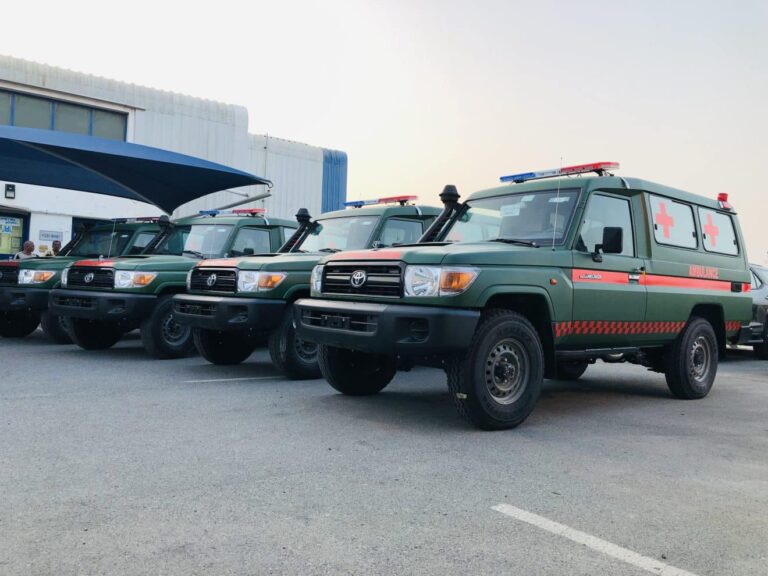
In the high-stakes world of emergency medical services, not all missions take place on peaceful city streets. In conflict zones, terrorist hotspots, and areas affected by civil unrest, standard ambulances are vulnerable. They lack the protection needed to safeguard medical staff and patients from external threats. This is where the armored ambulance becomes not just a vehicle, but a lifeline.
An armored ambulance is a specially designed emergency vehicle that integrates ballistic protection with advanced medical capabilities. Built to withstand bullets, shrapnel, and explosive blasts, these vehicles ensure that emergency medical services can continue uninterrupted even in the most dangerous environments. Whether it’s a war zone, a natural disaster area, or a high-risk political demonstration, the armored ambulance provides a safe haven for both the injured and the responders.
What is an Armored Ambulance?
An armored ambulance is a custom-engineered vehicle that combines the full medical functionality of a standard ambulance with high-level ballistic protection. Unlike conventional ambulances, which are designed for urban environments and peaceful conditions, armored ambulances are built to operate in hostile territories.
They are typically based on robust 4×4 chassis, such as the Toyota Land Cruiser, Mercedes-Benz Sprinter, or Ford F-Series, and are then reinforced with military-grade armor plating. The level of protection can vary, but many are built to BR7 standards—the highest level of ballistic resistance for civilian vehicles, capable of stopping high-velocity rifle rounds.
These vehicles are essential for:
- Military medical evacuation (MEDEVAC) in combat zones.
- Humanitarian organizations operating in high-risk regions.
- Government agencies and protection forces needing secure medical transport during civil unrest.
- Private security firms and VIP protection details.
Key Features of an Armored Ambulance
The features of an armored ambulance are designed to save lives in the most extreme conditions. Here’s what sets them apart:
- High-Level Ballistic Protection: The vehicle is encased in specially developed armor, providing strong resistance against bullets, bombs, and explosives. Depending on the threat level, armor can range from BR6 to BR7, offering protection against powerful assault rifles like the AK-47 .
- Explosion-Resistant Tires: Run-flat tires allow the vehicle to continue moving even after being punctured, ensuring the crew can escape hazardous kill zones.
- Advanced Communication Systems: To overcome communication blackouts in emergencies, these ambulances are equipped with GPS, satellite phones, and encrypted radio systems.
- Night Vision Capabilities: Optional thermal and night vision systems enable safe operation in low-light or blackout conditions.
- Full Medical Suite: Despite the added armor, the interior retains all the necessary medical equipment—stretchers, defibrillators, ventilators, oxygen supplies, and trauma kits—ensuring no compromise on patient care.
- Reinforced Suspension and Braking: To handle the significant extra weight of the armor, the chassis is upgraded with heavy-duty suspension and high-performance braking systems.
Armoring Standards: What is BR7 Protection?
When discussing armored ambulances, the term BR7 frequently appears. But what does it mean?
BR7 is a ballistic resistance level under the European standard EN 1063. It certifies that the vehicle’s armor can withstand multiple hits from high-velocity rifle rounds, such as 7.62x51mm NATO ammunition (the type used by FN FAL and G3 battle rifles) . For an ambulance operating in a war zone or a high-risk area, this level of protection is often the minimum requirement to ensure the safety of the medical team and patients inside.
Armored Ambulance vs. Standard Ambulance
While a standard ambulance is perfectly adequate for daily emergencies, it is not designed for hostile environments. Here’s how an armored ambulance compares:
| Feature | Standard Ambulance | Armored Ambulance |
|---|---|---|
| Ballistic Protection | None | BR6 / BR7 level (bulletproof) |
| Tire Protection | Standard tires | Run-flat, explosion-resistant tires |
| Chassis | Standard commercial | Reinforced for extra weight |
| Communication | Basic radio | Encrypted, satellite, GPS |
| Operational Environment | Urban, peaceful areas | Conflict zones, riots, disasters |
| Maneuverability | High | Moderate (due to weight) |
It’s important to note that while armored ambulances are less maneuverable than their standard counterparts due to the added weight of the armor, they are engineered to deliver maximum performance where it counts most: in the line of fire.
Where to Use an Armored Ambulance
Armored ambulances are versatile and can be deployed in a variety of challenging scenarios:
- Conflict Zones and War Areas: For evacuating wounded soldiers and civilians from active battlefields.
- Terrorist Attacks: Providing secure medical response during and after terrorist incidents.
- Civil Unrest and Riots: Protecting medical personnel while attending to injured protestors or law enforcement.
- Natural Disasters: In regions where looting or civil disorder follows an earthquake or hurricane, an armored ambulance ensures aid can still reach those in need.
- High-Risk Medical Evacuations: For transporting high-profile individuals (VIPs) or prisoners in secure custody who require medical attention.
Customization and Armor Levels
One of the key advantages of modern armored ambulances is their flexibility. They can be customized to meet specific operational requirements and threat levels.
- Toyota Land Cruiser Armored Ambulance: A popular choice for rugged terrains and military use, often configured with BR7 protection and off-road capabilities .
- Mercedes-Benz Sprinter Armored Ambulance: Offers a spacious interior, ideal for intensive care units (ICU) on wheels, with the option for high-level ballistic packages .
- Cash-in-Transit (CIT) Vehicle Conversions: The same technology used to protect money trucks can be adapted for medical use, providing BR7-level protection for ambulances .
Armored Ambulance Price: Factors Influencing Cost
The cost of an armored ambulance is significantly higher than that of a standard vehicle. The price depends on several factors:
- Base Vehicle: A luxury SUV like a Toyota Land Cruiser will have a higher base cost than a commercial van.
- Armor Level: Protection against handguns (BR4) is cheaper than full rifle protection (BR7).
- Medical Equipment: The sophistication of the onboard medical suite (basic first aid vs. full ICU) affects the final price.
- Additional Technology: Night vision, advanced communications, and run-flat tire systems add to the cost.
While prices vary widely, a fully equipped BR7 armored ambulance based on a robust chassis like the Land Cruiser 78 can range from $150,000 to over $300,000 USD , depending on the level of customization and medical integration.
Frequently Asked Questions (FAQ)
Q1: What is the difference between BR6 and BR7 armor?
Both are high levels of ballistic protection. BR7 offers a higher level of resistance, capable of stopping 7.62x51mm NATO rounds, while BR6 typically protects against lower caliber rifles. BR7 is often the standard for military and high-risk civilian operations.
Q2: Can a Toyota Land Cruiser be converted into an armored ambulance?
Yes, the Toyota Land Cruiser 70 Series is one of the most popular platforms for armored ambulance conversions due to its robust ladder-frame chassis and reliability in harsh environments.
Q3: How much does an armored ambulance cost?
The price varies greatly based on the base vehicle, armor level (e.g., BR7), and medical equipment. Generally, prices start around $150,000 USD and can exceed $300,000 USD for fully equipped units.
Q4: Are armored ambulances slower?
Due to the significant weight of the armor plating (often several tons), armored ambulances have a lower power-to-weight ratio, which can affect acceleration and maneuverability. However, they are engineered to maintain adequate speed for emergency response.
Q5: What types of medical equipment can be installed?
Despite the armor, these vehicles are fully functional ambulances. They can be equipped with stretchers, defibrillators, ventilators, oxygen tanks, suction units, and full trauma kits, just like a standard mobile ICU.
Q6: Where can I buy an armored ambulance for sale?
Specialized manufacturers, such as Infinity Chassis, offer custom-built armored ambulances. It’s best to contact them directly with your specific requirements for a quote.
Conclusion
The armored ambulance represents the pinnacle of emergency medical vehicle engineering. It combines the life-saving capabilities of a modern ambulance with the ballistic resilience of a military vehicle. In a world where threats are increasingly diverse, having access to a secure medical evacuation vehicle is not a luxury—it’s a necessity for ensuring that healthcare reaches those in danger, no matter the circumstances.
For governments, military forces, and humanitarian organizations operating in high-risk areas, investing in an armored ambulance is an investment in the safety of both their personnel and the people they serve. To discuss your specific needs and explore the possibilities, contact the experts at Infinity Chassis today.