Mobile Dental Clinic Romania – Complete Solutions from Infinity Chassis Units

Buy a Mobile Dental Clinic - Mobile Dental Clinic Romania

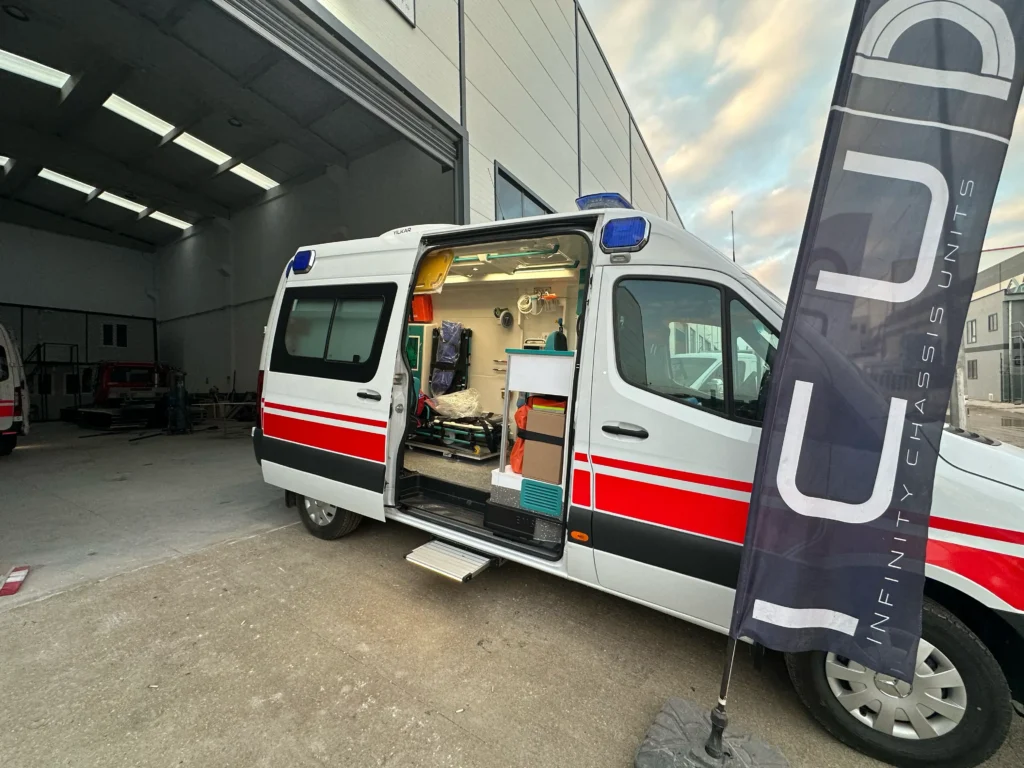
Mobile Dental Clinic Romania; At Infinity Chassis Units, we do not just build vehicles—we engineer complete mobile medical ecosystems. Our mobile dental clinics are designed to provide high-quality dental services in a flexible and accessible format, specifically tailored to meet the needs of Romania. We partner with public institutions, private companies, and non-governmental organizations to […]

Ambulance Costs Explained: A Real-World Pricing and Value Guide

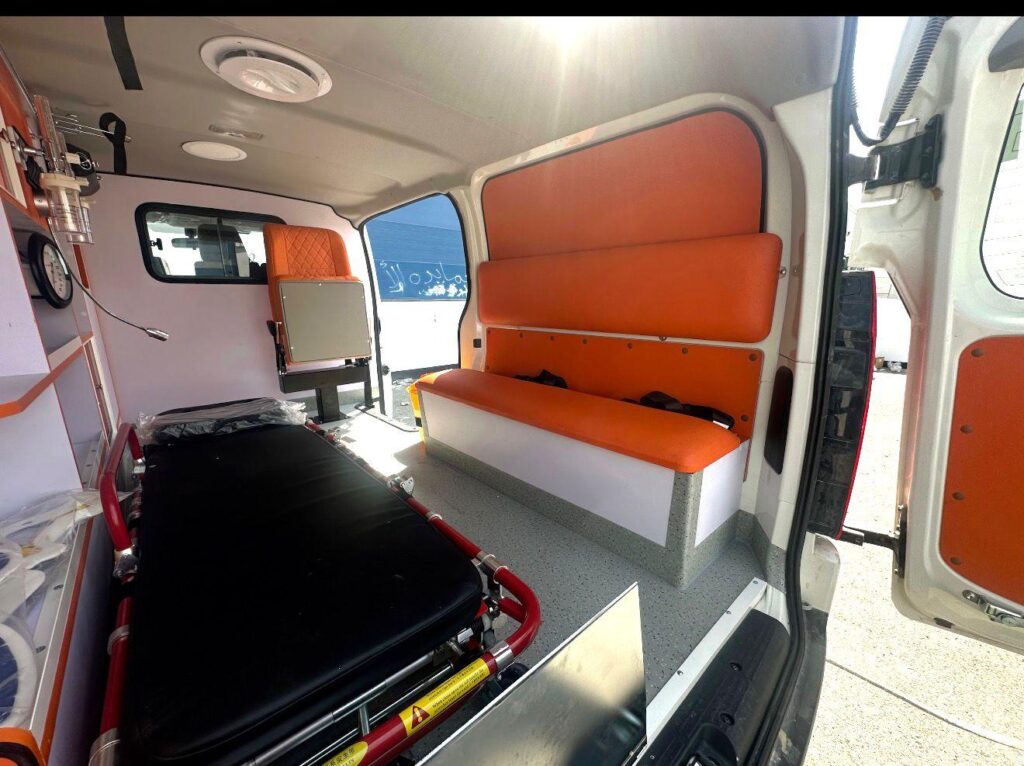
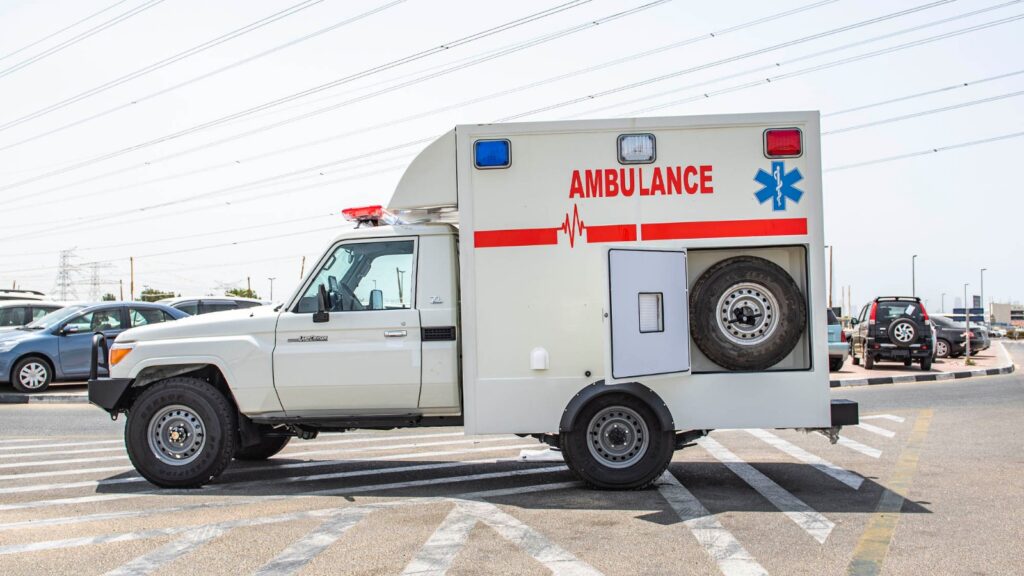
Toyota HiAce Ambulance is Morocco's Ultimate Mobile Medical Solution Picture this: a critical patient in a remote, dusty village in the High Atlas Mountains. A complicated childbirth in a coastal town where the nearest hospital is an hour away. A tourist in distress on a winding, unpaved track in the Sahara. In these moments of vulnerability, the vehicle that arrives isn't just transportation; it's a first line of defense, a mobile clinic, a sanctuary on wheels. And across the diverse and demanding landscapes of Morocco, one vehicle consistently answers the call: the Toyota HiAce Ambulance. This isn't a coincidence. The marriage of Toyota's legendary reliability with the specific, life-saving needs of emergency medical services (EMS) has created a tool that is perfectly suited to the Moroccan context. For NGOs, private ambulance services, and even remote industrial sites, the HiAce isn't just a good choice—it's often the only choice. In this deep dive, we'll explore why the Toyota HiAce has become such an iconic sight on Moroccan roads, its key features, what to look for when sourcing one, and the real-world impact it has on communities from Tangier to Tan-Tan. Part 1: The Moroccan Challenge - A Terrain as Diverse as its People To understand why the HiAce Ambulance excels, you must first appreciate the environment it operates in. Morocco presents a unique set of challenges for any vehicle, let alone one carrying precious human cargo. Extreme Geography: The country boasts everything from the rugged Rif and Atlas Mountains with their steep, serpentine passes, to the vast, sandy expanse of the Sahara, to long, humid coastal plains. An ambulance must be equally capable on a pristine autoroute as it is on a rocky piste (dirt track). Climate Variance: Scorching summer heat in the interior that can push 50°C (122°F), contrasting with freezing temperatures and snow in the mountains during winter. Vehicles are tested to their absolute limits. Urban & Rural Dichotomy: While cities like Casablanca and Rabat have modern infrastructure and advanced hospital networks, rural and mountainous regions can be isolated. Access to timely medical care here is entirely dependent on robust, go-anywhere ambulances. Economic Realities: For NGOs and smaller medical cooperatives, budget is a constant concern. A vehicle must not only be affordable to acquire but, more importantly, cheap and easy to maintain over a long, hard service life. This is the crucible in which the Toyota HiAce Ambulance has been forged and proven. Part 2: The Toyota HiAce - An Icon of Reliability Before we even get to its ambulance conversion, the base Toyota HiAce van is a global legend. For decades, it has been the backbone of commerce and transport across Africa, the Middle East, and beyond. Its reputation is built on a foundation of sheer, uncomplicated toughness. Mechanical Simplicity: The HiAce, particularly the earlier, non-turbo diesel models, is famously simple. With fewer complex electronics and emission systems than European counterparts, they are easier for local mechanics to diagnose and repair. In a small town in the Souss Valley, finding a specialist for a high-tech engine can be impossible, but every mechanic knows the Toyota 2L or 3L diesel engine. Parts Ubiquity: Toyota spare parts are available in virtually every major city and many smaller towns across Morocco. This drastically reduces downtime. A broken ambulance is a tragedy; a quickly repaired one is a triumph of logistics. Proven Durability: The HiAce's robust ladder-frame chassis (on older models) and tough suspension components are built to handle heavy loads and terrible roads. They are known for clocking hundreds of thousands of kilometers with basic, regular maintenance. When you build a critical medical vehicle on this platform, you are starting with the best possible foundation. Part 3: Anatomy of a HiAce Ambulance - More Than Just a Van A standard HiAce van is a blank canvas. The conversion into a fully-fledged ambulance is where it becomes a lifeline. These conversions, often done by specialized bodybuilders in Europe or increasingly in North Africa itself, transform the vehicle into a compact, highly functional mobile medical unit. Key Features of a Well-Converted HiAce Ambulance: Exterior: High-Visibility Livery: Bold colors (typically white with orange and red reflective stripes) and clear "AMBULANCE" lettering ensure it's seen day and night. Emergency Warning System: A full LED light bar on the roof, supplemented by grill and rear lights, and a multi-tone electronic siren to clear traffic. Access Doors: A wide rear double-door for loading the stretcher is essential. A side sliding door often provides access for medical personnel and equipment. Interior Medical Layout: The Stretcher System: The core of the ambulance. A heavy-duty, roller-based stretcher that can be easily loaded and locked into place. It's often accompanied by a fold-down attendant seat at the head of the patient. Medical Cabinetry: Purpose-built, lockable cabinets for organizing vital equipment. These are shock-proof and designed to stay closed even during aggressive driving. They house everything from oxygen cylinders and defibrillators to trauma kits and medications. Oxygen & Suction Systems: A built-in central oxygen outlet and a portable suction unit are non-negotiable for advanced life support (ALS) or even basic life support (BLS) operations. Electrical System: A dedicated, powerful secondary battery system runs all the medical equipment and interior lighting without draining the vehicle's starter battery. This includes 12V and 220V inverters for powering sensitive devices. Communication: A two-way radio is crucial for coordinating with hospitals and dispatch, especially in areas with poor cell phone coverage. Drivetrain and Performance: Engine Options: The most common and recommended engine for Morocco is the 3.0L 1KD-FTV turbo-diesel. It provides a great balance of power and torque for mountainous terrain and high-speed highway travel, while still being relatively fuel-efficient. The older 2.5L and 3.0L non-turbo engines are also reliable but can feel underpowered when fully loaded. 4x4 Capability: While most HiAce ambulances are rear-wheel drive, 4x4 versions do exist and are worth their weight in gold for operations in the Sahara, the Atlas Mountains, or during rainy seasons when dirt roads turn to mud. The added capability can be the difference between reaching a patient and being forced to turn back. Part 4: Sourcing the Right HiAce Ambulance for Morocco If you're an NGO, a private company, or a charitable organization looking to deploy a HiAce ambulance in Morocco, where do you start? New vs. Used: New: The latest-generation HiAce (H300) is a more modern, car-like van with a monocoque chassis. It offers superior comfort, safety (with features like stability control), and power. However, it is more expensive, and its complex electronics may be harder to service in remote areas. It's an excellent choice for urban or inter-city services. Used: The vast majority of HiAce ambulances in service are used models imported from Europe (especially from Germany, the Netherlands, or the UK). The H100 (1990s-2004) model is a timeless workhorse. Its simplicity and ruggedness are unmatched. The H200 (2004-2019) offers a more refined drive while retaining much of the toughness. A well-maintained used model offers incredible value. What to Look For: Service History: This is paramount. A documented history from a European EMS provider is a huge plus. Rust Check: Carefully inspect the undercarriage, wheel arches, and door sills for corrosion, especially if the vehicle comes from a country that uses road salt. Medical Equipment: Determine what is included. Are the oxygen cylinders in date? Is the stretcher in good working order? Factor in the cost of replacing or certifying expired equipment. Mechanical Inspection: Have a trusted mechanic check the engine, transmission, and suspension. Pay special attention to the turbocharger on diesel models. Importation and Registration: Importing a vehicle into Morocco involves customs duties and taxes. It's highly advisable to work with a local customs broker (transitaire) who can navigate the bureaucracy. Once in Morocco, the vehicle must pass a technical inspection (contrôle technique) to be registered with Moroccan plates. Part 5: Real-World Impact - Stories from the Field The true value of the HiAce ambulance is not in its specifications, but in the lives it touches. The Mountain Rescue: A local association in the Aït Bouguemez valley uses a rugged, older H100 model as their primary ambulance. It navigates narrow village paths to evacuate elderly residents suffering from altitude-related illnesses or injuries from agricultural work, transporting them to the provincial hospital in Azilal—a journey that was previously undertaken by donkey or shared taxi. The Desert Mobile Clinic: An NGO operating near Erfoud has converted a HiAce ambulance into a mobile medical unit. It travels from oasis to oasis, providing basic healthcare, vaccinations, and prenatal check-ups to nomadic and settled Berber communities. Its reliability in the harsh desert environment is its most critical feature. The Tourist Safety Net: In popular but remote destinations like the Dades Gorges or the road to Chefchaouen, private ambulance services stationed HiAce vehicles to respond to traffic accidents or tourist emergencies. Their quick response, facilitated by a capable vehicle, can dramatically improve outcomes. Part 6: The Future - Evolution and Alternatives The Toyota HiAce is not without its modern competitors. The Mercedes-Benz Sprinter and Volkswagen Crafter offer more space and luxury, and are becoming more common in urban areas. However, for the ultimate combination of all-terrain resilience, simplicity, and cost-effectiveness, the HiAce, particularly in its 4x4 guise, remains in a league of its own. The future will likely see a hybridization of the fleet. Newer H300 models will serve high-volume corridors, while the indomitable older models will continue their vital work in the places where the road ends. The potential for electric ambulances is still a distant dream for rural Morocco, where charging infrastructure is non-existent, reinforcing the diesel HiAce's reign for decades to come. Conclusion: More Than Metal The Toyota Hiace Ambulance in Morocco is more than just a vehicle; it is a symbol of resilience, hope, and practical compassion. It is a testament to the idea that the right tool, no matter how simple, can perform extraordinary tasks. It bridges the gap between cutting-edge medical science and the harsh realities of geography and economics. When the call comes in from a remote village, when every second counts, the sight of that familiar white and orange Toyota cresting the hill is a profound relief. It is, in every sense of the word, an unshakeable lifeline for the Kingdom of Morocco.

Ambulance Costs; Finding a straightforward price tag for an ambulance is nearly impossible, and for good reason. The final cost depends on dozens of decisions, from the base chassis to the specific medical equipment inside. Instead of chasing a single number, smart buyers focus on understanding the variables that drive the final investment. This guide […]

Ambulance Models & Brands: A Comprehensive Guide to Vehicle Platforms

How Much Does an Ambulance Vehicle Cost 

From Van to Lifesaver: Understanding Ambulance Chassis Options Ambulance Models & Brands: A Comprehensive Guide to Vehicle Platforms; Choosing an ambulance involves two critical decisions: the medical configuration (Type 1, 2, or 3) and the vehicle platform underneath it all. The chassis determines everything from driving dynamics and fuel efficiency to maintenance costs and interior […]

Ambulance Types Guide: Understanding Type 1, 2, 3 & Specialized Units

Mercedes Sprinter Ambulance 417 CDI 2025

What Are Type 1, 2, and 3 Ambulances? Key Differences Explained Ambulance Types Guide; When you picture an ambulance, you might think of a standard van with flashing lights. But did you know there are different classifications that determine capabilities, equipment, and even chassis types? Understanding Type 1, Type 2, and Type 3 ambulances helps […]

GMC Savana Patient Transport Ambulance: A Comprehensive Breakdown

GMC Savana Patient Transport Ambulance

Title: GMC Savana Patient Transport Ambulance: A Comprehensive Breakdown : The Complete Medical & Technical Equipment List Introduction A fully-equipped patient transport ambulance is far more than just a vehicle—it’s a mobile medical unit designed for safety, efficiency, and comprehensive care during transit. While the GMC Savana chassis provides the robust foundation, the true life-saving capability […]

Armored Ambulances: Understanding BR6 & BR7 Protection Levels

Armored Ambulances

Introduction to Armored Medical Evacuation Armored Ambulances: Understanding BR6 & BR7 Protection Levels; In high-threat environments, the mission to save lives cannot stop. Armored ambulances bridge the critical gap between emergency medical response and tactical survivability. These specialized vehicles allow paramedics and combat medics to operate in hostile zones, providing vital care while shielded from […]

Mobile Lab Vehicles: Bringing Science to the Frontlines

Mobile Laboratory Vehicles

What Are Mobile Laboratory Vehicles? Imagine a fully equipped laboratory that can travel anywhere—from remote villages to disaster zones. That’s exactly what Mobile Laboratory Vehicles (MLVs) are. These self-contained units are transforming how we deliver emergency medical response, conduct field research, and provide diagnostic services in areas without permanent facilities. Whether built into trucks, trailers, or shipping containers, these mobile labs […]

Mobile Blood Donation Vans: 2026 Equipment, Capacity & Cost Guide

Mobile Blood Donation Vans

Mobile blood donation vans are the lifeblood of blood collection systems worldwide, bringing convenient donation opportunities directly to workplaces, campuses, and community centers. For 2026, these units are evolving into sophisticated, donor-friendly collection centers on wheels. This guide breaks down the essential equipment, operational capacities, and realistic cost expectations for modern mobile blood collection. The […]

Mobile Health Vehicles: The 5 Essential Types for 2026 – Surgery, Gynecology, X-ray, Dental & Clinic

Mobile Health Vehicles

Mobile health vehicles represent the future of accessible healthcare, transforming vans, buses, and trailers into specialized medical facilities on wheels. As healthcare systems worldwide seek to reach underserved populations and reduce hospital overcrowding, these mobile units provide targeted solutions that deliver care directly to communities. Here are the 5 essential types of mobile health vehicles […]

EN 1789 Ambulance Standard Explained: What Buyers Need to Know for 2026

EN 1789 Standard

EN 1789 Ambulance Standard Explained: What Buyers Need to Know for 2026; When procuring an ambulance, the difference between a safe, effective mobile medical unit and a poorly converted van can be a matter of life and death. For buyers in Europe and much of the world, the EN 1789 standard (officially BS EN 1789:2020+A1:2023) is the definitive […]