
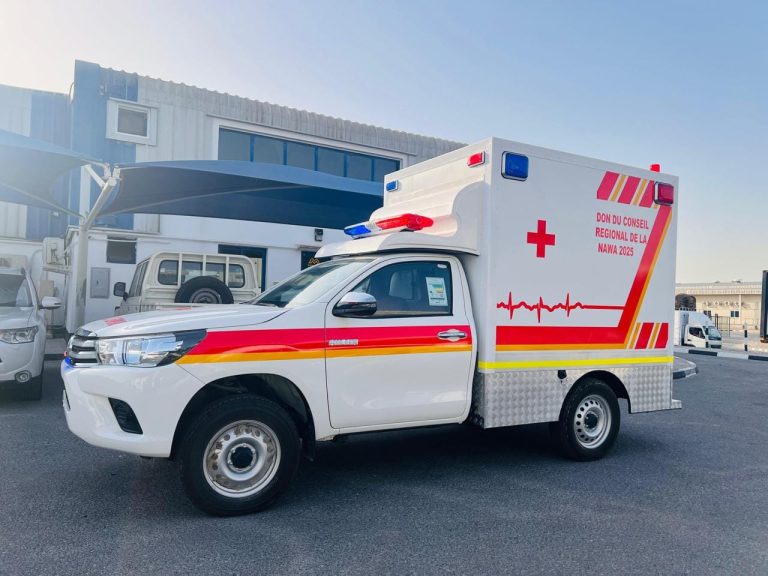
Different types of ambulances serve different purposes in emergency medical services. From rapid response vehicles to mobile intensive care units, understanding the types of ambulances available is essential for healthcare providers, EMS agencies, and government organizations looking to invest in the right emergency vehicles. At Infinity Chassis Units, as a leading ambulance manufacturer, we produce a full range of ambulance vehicles designed to meet diverse operational requirements.
In this comprehensive guide, we explore the various ambulance types, their classifications, specifications, and ideal use cases.
1. Introduction to Ambulance Types
An ambulance is a specially equipped vehicle used to transport sick or injured individuals who need emergency medical care. However, not all ambulances are the same. The types of ambulance vehicles vary based on their design, chassis, medical equipment, and intended purpose.
Understanding the different types of ambulances helps EMS directors, hospital administrators, and government procurement officers make informed decisions when expanding or upgrading their fleets.
2. Primary Ambulance Classifications: Type I, Type II, Type III
In North America, ambulances are primarily classified into three main categories: Type I, Type II, and Type III. These ambulance types are defined by the chassis and module configuration.
2.1. Type I Ambulance
Type I ambulances are built on a truck chassis with a separate modular body mounted on the frame. This design is known for its durability and high payload capacity.
| Feature | Specification |
|---|---|
| Chassis | Heavy-duty truck chassis (Ford F-450/F-550, RAM 4500/5500, Chevrolet 4500/5500) |
| Configuration | Separate cab and modular patient compartment |
| Typical Applications | Advanced Life Support (ALS), rural EMS, high-call-volume services |
| Advantages | Maximum payload capacity, durable, easier to repair, can be transferred to new chassis |
| Limitations | Larger turning radius, higher center of gravity |
What is a Type I ambulance? A Type I ambulance features a conventional truck cab with a separate modular body mounted on the frame. This design offers exceptional durability and payload capacity, making it ideal for ALS units and services requiring extensive medical equipment.
Type I ambulance weight: Typically ranges from 10,000 to 14,000 lbs (4,500 to 6,350 kg) depending on configuration and equipment.
Type I ambulance dimensions: Average length 20-24 feet, width 96 inches, height 96-110 inches.
2.2. Type II Ambulance
Type II ambulances are van-based designs, where the patient compartment is integrated into the van body. These are the most common ambulance vehicles seen in urban environments.
| Feature | Specification |
|---|---|
| Chassis | Standard van chassis (Mercedes-Benz Sprinter, Ford Transit, RAM ProMaster) |
| Configuration | Integrated van body with raised roof |
| Typical Applications | Basic Life Support (BLS), patient transport, urban EMS |
| Advantages | Better fuel efficiency, lower center of gravity, easier to maneuver |
| Limitations | Limited interior space, lower payload capacity |
Which of the following basic ambulance designs looks like a standard van? The Type II ambulance. It resembles a standard van with a raised roof, allowing medical staff to stand inside the patient compartment.
Type II ambulance is the most fuel-efficient and commonly used for long-distance transfers due to its better aerodynamics and lower weight.
2.3. Type III Ambulance
Type III ambulances combine features of Type I and Type II. They use a cutaway van chassis with a modular body attached, offering a balance between payload capacity and maneuverability.
| Feature | Specification |
|---|---|
| Chassis | Cutaway van chassis (Ford E-350/E-450, RAM 4500, Mercedes-Benz Sprinter cutaway) |
| Configuration | Cutaway cab with modular body, walk-through from cab to patient module |
| Typical Applications | ALS, critical care transport, municipal EMS |
| Advantages | Walk-through access, good payload capacity, more maneuverable than Type I |
| Limitations | More expensive than Type II, less payload than Type I |
Type I vs Type III ambulance comparison:
| Factor | Type I | Type III |
|---|---|---|
| Chassis | Truck chassis with separate module | Cutaway van chassis with module |
| Cab Access | No walk-through; exit cab to enter module | Walk-through available |
| Payload | Highest | High |
| Maneuverability | Lower | Better |
| Typical Use | Rural, heavy-duty ALS | Urban, suburban ALS |
3. International Ambulance Classifications
Outside North America, different classification systems are used. In Europe and many other regions, ambulances are classified according to EN 1789 standards.
3.1. European Ambulance Types (EN 1789)
| Type | Description | Equivalent N. American Type |
|---|---|---|
| Type A1 | Patient transport vehicle (non-emergency) | BLS van |
| Type A2 | Emergency ambulance for basic life support | Type II BLS |
| Type B | Emergency ambulance for advanced life support | Type II or III ALS |
| Type C | Mobile intensive care unit | Type I or III MICU |
3.2. Type A Ambulance
Type A ambulance refers to patient transport vehicles used for non-emergency transfers. These are further divided into:
- Type A1: Small vehicles for single patient transport (up to 1 patient on stretcher)
- Type A2: Larger vehicles for multiple patients or specialized transport
3.3. Type C Ambulance
Type C ambulance is the European designation for mobile intensive care units. These are large vehicles with advanced life support equipment, comparable to North American Type I ALS units.
4. Specialty Ambulance Types
Beyond the standard classifications, there are several special type ambulances designed for specific missions.
4.1. ICU Ambulance (Mobile Intensive Care Unit)
An ICU ambulance or mobile intensive care unit is a highly specialized vehicle equipped for critical care transport. These ambulances feature:
- Advanced ventilators
- Multiple infusion pumps
- Cardiac monitors with invasive pressure monitoring
- Point-of-care laboratory equipment
- Additional medical staff seating
ICU ambulance vehicles are typically built on Type I or Type III chassis to accommodate the additional weight and space requirements.
D level ICU ambulance refers to a classification used in some regions indicating the highest level of intensive care capability.
4.2. Neonatal Ambulance
Neonatal ambulances are specially designed to transport premature or critically ill newborns. Features include:
- Neonatal incubators (transport isolators)
- Specialized ventilators for neonates
- Warmers and temperature control systems
- Additional power capacity for life support equipment
Neonatal air ambulance services also exist for long-distance critical care transport of newborns.
4.3. 4×4 ICU Ambulance
4×4 ICU ambulances are designed for off-road and wilderness rescue operations. These vehicles combine intensive care capabilities with all-terrain mobility. Features include:
- Four-wheel drive with off-road suspension
- Reinforced chassis and underbody protection
- Larger fuel tanks for extended range
- Self-contained power and oxygen systems
4.4. Bariatric Ambulance
Bariatric ambulances are specially configured to transport patients with higher body weights. Features include:
- Wider stretchers with higher weight capacity (1,000+ lbs)
- Reinforced loading systems
- Wider door openings
- Heavy-duty suspension
4.5. Air Ambulance
Air ambulances include both helicopters and fixed-wing aircraft equipped for medical transport. While Infinity Chassis Units specializes in ground ambulance vehicles, we can provide medical interior modules for aircraft integration.
5. Ambulance Vehicles by Chassis Type
5.1. Mercedes-Benz Ambulance
Mercedes-Benz ambulances are among the most popular worldwide due to their reliability, safety, and global service network. Available configurations include:
- Mercedes-Benz Sprinter: Type II and Type III configurations
- Mercedes-Benz Sprinter 4×4: Off-road capable ALS units
- Mercedes-Benz Vito: Compact ambulance for urban operations
5.2. Ford Ambulance
Ford ambulances are known for their robust performance and parts availability:
- Ford Transit: Type II and light Type III configurations
- Ford F-450/F-550: Type I heavy-duty ambulances
5.3. RAM Ambulance
RAM ambulances utilize RAM truck chassis for Type I configurations:
- RAM 4500/5500: Popular for Type I ALS and MICU units
5.4. Chevrolet Ambulance
Chevrolet ambulances offer alternative options for Type I builds:
- Chevrolet 4500/5500: Heavy-duty chassis for modular ambulances
5.5. Toyota Ambulance
Toyota ambulances are popular in markets where Toyota has strong service networks:
- Toyota HiAce: Compact Type II ambulances for basic transport
- Toyota Land Cruiser: Off-road capable ambulance conversions
6. Ambulance Services and Applications
6.1. Emergency Ambulance Services
Emergency ambulance services provide immediate response to 911/112 calls. These ambulances are typically ALS or BLS configured and staffed by paramedics or EMTs.
6.2. Non-Emergency Ambulance
Non-emergency ambulances are used for scheduled patient transfers between healthcare facilities or from home to appointments. These patient transport vehicles are typically BLS configured.
6.3. Patient Transport Vehicle
A patient transport vehicle is similar to a BLS ambulance but may have less advanced medical equipment. These are used for stable patients who do not require emergency care during transport.
6.4. Hospital Ambulance
Hospital ambulances are owned and operated by hospitals for transferring patients between facilities or to their facility from outlying areas.
6.5. Private Ambulance Service
Private ambulance services are non-government providers that offer both emergency and non-emergency transport services.
7. Ambulance Features and Equipment
7.1. Basic Ambulance Equipment
All ambulances carry essential equipment including:
- Stretcher/cot with locking system
- Oxygen administration equipment
- Basic airway management supplies
- Bleeding control supplies
- Splints and immobilization devices
7.2. ALS Ambulance Equipment
ALS ambulances include additional advanced equipment:
- Cardiac monitor/defibrillator
- Transport ventilator
- Advanced airway kit (intubation)
- IV supplies and medications
- Advanced cardiac life support drugs
7.3. ICU Ambulance Equipment
ICU ambulances feature the most advanced equipment:
- ICU-grade ventilators
- Multiple infusion pumps
- Invasive monitoring capabilities
- Point-of-care laboratory
- Blood product storage
8. Ambulance Dimensions and Capacity
8.1. Ambulance Dimensions
| Parameter | Typical Range |
|---|---|
| Length | 18-24 feet (5.5-7.3 meters) |
| Width | 92-98 inches (2.3-2.5 meters) |
| Height | 96-110 inches (2.4-2.8 meters) |
| Interior Headroom | 68-74 inches (1.7-1.9 meters) |
8.2. Ambulance Capacity
How many patients can an ambulance carry?
- Standard ambulance: 1-2 patients (one on stretcher, one on bench seat)
- Bariatric ambulance: 1 patient (specialized bariatric stretcher)
- Neonatal ambulance: 1-2 neonates in incubators
- Mass casualty ambulance: Up to 4-6 ambulatory patients plus 1-2 stretcher patients
How many people can an ambulance hold?
- Crew: Typically 2-3 (driver, attendant, paramedic)
- Patients: 1-2 (depending on configuration)
- Total capacity: 4-5 people including crew and patients
9. Frequently Asked Questions About Different Types of Ambulances
9.1. What are the different types of ambulances?
The different types of ambulances include:
- Type I: Truck chassis with modular body (highest payload)
- Type II: Van-based (best fuel efficiency)
- Type III: Cutaway van chassis with module (balance of features)
- Type A: Patient transport vehicles (European classification)
- Type B: Emergency ambulances (European ALS)
- Type C: Mobile intensive care units (European MICU)
9.2. How many types of ambulances are there?
There are three primary ambulance types in North America (Type I, II, III) and three in the European EN 1789 standard (Type A, B, C). Additionally, there are numerous special type ambulances including neonatal, bariatric, and 4×4 ICU units.
9.3. What is a Type 4 ambulance?
Type 4 ambulance is not an official N. American classification. Some manufacturers use “Type IV” to describe specialty units like medium-duty chassis or large modular ambulances. The official classifications are Type I, II, and III.
9.4. What is the most fuel-efficient ambulance?
Type II ambulances built on van chassis like the Mercedes-Benz Sprinter or Ford Transit are the most fuel-efficient, typically achieving 15-20 MPG compared to 8-12 MPG for Type I units.
9.5. What type of ambulance is commonly used for long-distance transfers?
Type II ambulances are most commonly used for long-distance transfers due to their better fuel efficiency and highway handling characteristics.
9.6. What is a D level ICU ambulance?
D level ICU ambulance is a classification used in some regions (particularly Asia) to indicate the highest level of intensive care capability, similar to a mobile ICU.
9.7. Is an ambulance a truck or a van?
Is an ambulance a truck or a van? It depends on the type:
- Type I: Built on truck chassis (truck-based)
- Type II: Built on van chassis (van-based)
- Type III: Built on cutaway van chassis (hybrid)
9.8. What vehicle is used for transporting sick people?
An ambulance is the primary vehicle used for transporting sick or injured individuals who need medical care during transport.
9.9. How many patients can an ambulance carry?
A standard ambulance can carry 1-2 patients. Mass casualty configurations can carry more ambulatory patients, but standard EMS ambulances are designed for one critical patient with space for a second stable patient on the bench seat.
10. Infinity Chassis Units Ambulance Types
At Infinity Chassis Units, we manufacture all major ambulance types to meet diverse operational requirements:
| Type | Chassis Options | Typical Configuration |
|---|---|---|
| Type I ALS | Ford F-550, RAM 5500, Iveco Daily | Advanced life support, rural EMS |
| Type II BLS | Mercedes-Benz Sprinter, Ford Transit | Basic transport, urban EMS |
| Type II ALS | Mercedes-Benz Sprinter | Advanced life support, municipal |
| Type III ALS | Mercedes-Benz Sprinter cutaway, Ford E-450 | ALS, critical care transport |
| ICU Ambulance | Mercedes-Benz Sprinter, Iveco Daily | Mobile intensive care |
| 4×4 ICU | Mercedes-Benz Sprinter 4×4, Iveco Daily 4×4 | Wilderness rescue, military |
11. Choosing the Right Ambulance Type
When selecting ambulance types for your fleet, consider:
- Mission profile: Emergency response, patient transport, critical care?
- Terrain: Urban streets, highways, off-road?
- Patient volume: How many calls per day? How many patients per call?
- Equipment requirements: BLS, ALS, ICU?
- Budget: Initial cost vs. operating cost vs. lifespan
- Service network: Availability of parts and service for the chassis
12. Conclusion Different Types of Ambulances
Understanding the different types of ambulances is essential for making informed decisions about emergency medical services. From Type I heavy-duty units to Type II fuel-efficient vans and specialized ICU ambulances, each configuration serves a specific purpose in the emergency medical system.
At Infinity Chassis Units, we have the expertise to help you select and build the right ambulance vehicle for your specific needs. Whether you require Type I ALS units for rural response or Type II BLS vans for urban transport, we deliver quality, reliability, and performance.
13. Contact Infinity Chassis Units about Different Types of Ambulances
Ready to discuss your ambulance requirements? Contact Infinity Chassis Units today for a consultation and detailed quotation.
Tell us about your needs:
- What type of ambulance are you looking for? (Type I, Type II, Type III, ICU, 4×4)
- What chassis do you prefer? (Mercedes-Benz, Ford, RAM, Iveco)
- What level of medical equipment is required? (BLS, ALS, ICU)
- Where will the vehicle be deployed?
We are ready to build the perfect ambulance for your mission.