
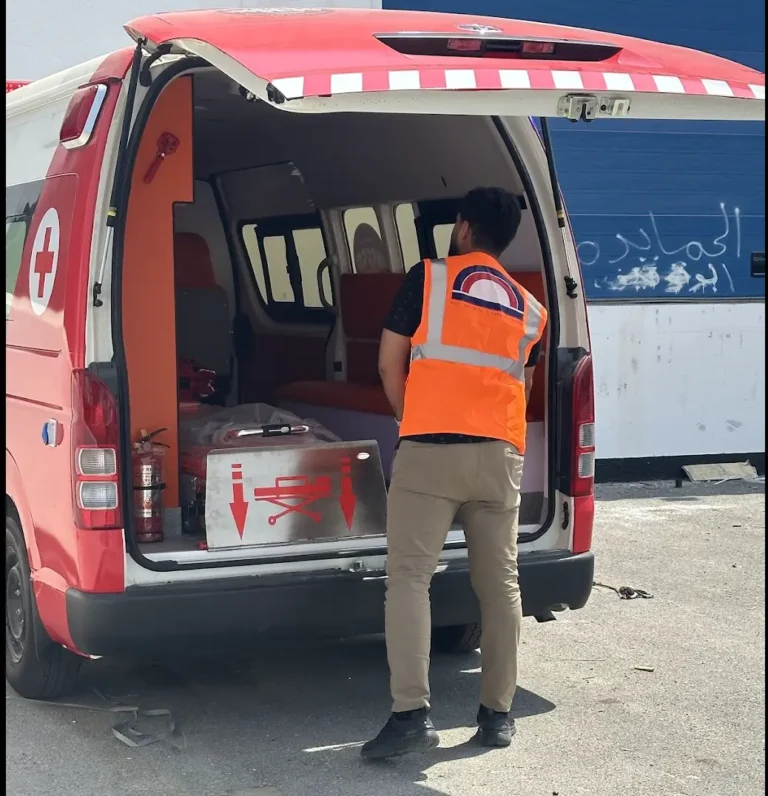
EN 1789 Ambulance Standard Explained: What Buyers Need to Know for 2026; When procuring an ambulance, the difference between a safe, effective mobile medical unit and a poorly converted van can be a matter of life and death. For buyers in Europe and much of the world, the EN 1789 standard (officially BS EN 1789:2020+A1:2023) is the definitive rulebook. It doesn’t just suggest good practice—it mandates critical safety and performance benchmarks.
If you are purchasing an ambulance for delivery in 2026, understanding this standard is non-negotiable. Here’s what every buyer needs to know.
What is EN 1789? The “Rulebook” for Safe Ambulances
EN 1789 is a European standard titled “Medical vehicles and their equipment – Road ambulances.” It specifies minimum requirements for the design, testing, performance, and equipment of road ambulances used for the transport and treatment of patients.
Its Core Purpose: To ensure the safety of the patient, the crew, and other road users, while providing an effective environment for emergency medical care during transport.
Why It Matters for Your 2026 Purchase: More Than a Checklist
Specifying “EN 1789 Compliance” in your tender document is the single most important thing you can do to guarantee quality. Here’s why:
- Patient Safety First: It’s engineered around the vulnerable, potentially unstable patient. It governs crash protection, secure equipment mounting, and a clinical environment.
- Crew Safety & Ergonomics: It protects your most valuable asset—the medical team—with features that reduce injury risk and fatigue.
- Legal & Insurance Protection: In many regions, compliance is a legal requirement for licensing and operation. It also provides a strong defense in case of an incident, proving you procured a vehicle to the highest recognized standard.
- Ensures Value for Money: It prevents suppliers from cutting corners on critical but unseen safety features to offer a lower, but dangerous, price.
- Future-Proofs Your Fleet: A compliant ambulance will have the structural integrity, electrical safety, and layout to serve effectively for its entire lifespan.
Key Requirements of EN 1789 (2020+A1:2023) for 2026 Buyers
The standard is exhaustive, but as a buyer, you should focus on these critical areas in your Request for Quotation (RFQ) and final inspection.
A. Vehicle Classification & Types
EN 1789 defines ambulance types based on patient acuity, which correlates with vehicle size and capability:
- Type A: Patient Transport Ambulance (PTA) – For stable, non-urgent patients.
- Type B: Emergency Ambulance – For emergency and pre-hospital care.
- Type C: Mobile ICU/CCU – For critical care and inter-hospital transfers.
Your 2026 needs will dictate the type. Most emergency services require Type B.
B. Structural & Crash Safety (The Invisible Shield)
This is where engineering matters most. The standard mandates:
- Vehicle Integrity Tests: The patient compartment must withstand specified longitudinal, lateral, and vertical forces without failure of critical mounts (like the main stretcher).
- Crash Pulse Survival: The interior must be designed to protect occupants (both crew and patient) during a crash. This includes padding on edges, secure seating with belts, and dynamic testing of the main stretcher and its locking mechanism to ensure it holds during a collision.
- Sled Test for Stretcher: The patient stretcher system undergoes a simulated crash test to prove it won’t become a deadly projectile.
C. Interior Layout & Ergonomics (The Working Environment)
- Minimum Interior Dimensions: Strict requirements for height, width, and length around the patient’s head to allow for effective treatment.
- Workflow & Zones: Clear definition of a “Clinical Workstation” for the primary caregiver, with all essential equipment and supplies within reach without moving from the designated seat/belt.
- Securement: Every single item of equipment, from oxygen cylinders to monitors, must have a tested and certified mounting system to prevent it from flying loose in a crash or during sudden maneuvers.
D. Electrical Safety & Systems (The Life Support)
- Dual Electrical Systems: Separate circuits for vehicle and medical equipment, with automatic isolation to ensure the vehicle can always start.
- Emergency Power Supply (EPS): A backup system that automatically powers critical equipment (like ventilation, suction, lighting) if the main supply fails.
- EMC (Electromagnetic Compatibility): Medical devices must not interfere with each other or the vehicle, a critical requirement with today’s sensitive electronics.
E. Key Equipment Mandates
The standard provides a minimum equipment list (MEL) for each ambulance type. For a Type B emergency ambulance in 2026, this includes, but is not limited to:
- A primary and secondary patient carrying device (e.g., main stretcher + folding chair/stair chair).
- A suction apparatus and oxygen system with minimum capacity.
- AED/Defibrillator with monitoring capability.
- Ventilator (for Type C, recommended for Type B).
- A comprehensive set of immobilization, bandaging, and infection control materials.
The “EN 1789” Label: How to Verify True Compliance for Your 2026 Order
Beware of suppliers who claim a vehicle is “built to EN 1789 principles” or “EN 1789 style.” This is not the same as certified compliance.
As a buyer, you must demand and verify:
- Declaration of Conformity: The manufacturer/supplier must provide a signed Declaration of Conformity (DoC) stating the vehicle meets EN 1789:2020+A1:2023. This is a legal document.
- Technical File: Request evidence from the manufacturer, which should include:
- Design calculations and drawings.
- Test Reports from an Accredited Laboratory: This is crucial. Look for reports on:
- Stretcher system dynamic sled tests.
- Seat and seatbelt anchorage strength tests.
- Cabinet and equipment mount strength tests.
- Electrical system safety and EMC tests.
- Independent Certification: The gold standard is certification from a notified body or independent accredited institute that audits the production and quality control process.
Cost Implications for 2026 Procurement
Compliance does increase the upfront cost. You are paying for:
- More robust materials and construction.
- Extensive engineering, design, and prototyping.
- Third-party testing and certification fees.
- Higher-quality components (e.g., medical-grade electrical systems).
Example: A van converted to a basic patient carrier might cost $35,000. A fully EN 1789-compliant Type B Emergency Ambulance on a similar chassis will cost $70,000 – $95,000+. You are investing in proven safety, durability, and legal certainty.
Your 2026 Procurement Action Plan
- Specify Precisely: In your RFQ, state: *”The ambulance shall be fully compliant with BS EN 1789:2020+A1:2023, Type B, and the supplier shall provide a Declaration of Conformity and relevant test reports prior to delivery.”*
- Ask for Proof: During supplier evaluation, ask for the test reports and DoC for a previously delivered model. A reputable manufacturer will have them ready.
- Inspect the Details: On pre-delivery inspection, check for the small signs: Is every piece of equipment firmly mounted? Are there sharp edges? Does the electrical panel have proper isolation switches and labels?
- Budget Accordingly: Understand that the compliant vehicle is a capital asset for 10+ years. The higher initial cost amortizes over a long, safe service life, reducing liability and operational risk.
Final Word: For your 2026 ambulance purchase, EN 1789 is not just a technical standard—it is your primary tool for ensuring you receive a vehicle that is fundamentally safe, effective, and built to protect lives under the most demanding conditions. Do not compromise on it.