
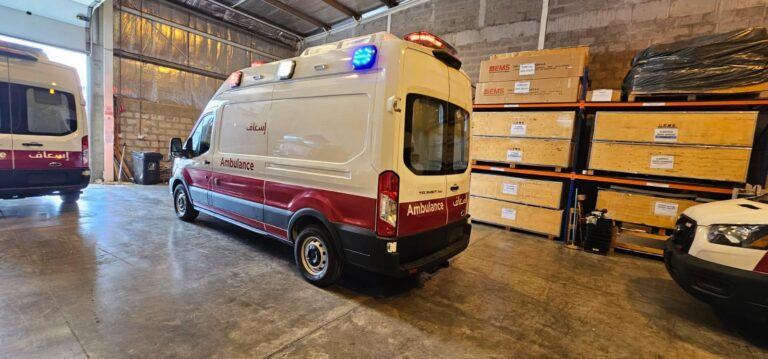
The Ford Transit has become one of the most popular platforms for ambulance conversions around the world. There’s a good reason for that. It’s reliable, versatile, and can be configured to meet just about any emergency medical need.
At Infinity Chassis Units, we take the Ford Transit and turn it into a fully equipped ambulance that saves lives every day. Whether you need a basic transport vehicle or a mobile intensive care unit, we can build it.
Why the Ford Transit Works So Well for Ambulances
The Transit platform has some real strengths that make it perfect for ambulance conversions.
Two engine choices. Ford gives you options. You can pick the engine that fits your needs best.
Customizable interior. The back of a Transit can be configured in many different ways. We can set it up for basic transport, advanced life support, or even critical care.
Choice of drive. You can get rear-wheel drive or all-wheel drive depending on where you’ll be driving.
Strong chassis. The Transit is built to handle heavy loads, which matters when you’re adding all that medical equipment.
Engine Options: Pick the Right One for Your Work
3.5L EcoBoost V6 (Gasoline)
This engine is all about power. It puts out 310 horsepower and 400 lb-ft of torque. That’s a lot.
This is the choice for services that need to move fast. Urban response, highway chases, situations where every second counts. The EcoBoost accelerates hard and gets you there quickly.
It’s a gasoline engine, so it runs smooth and quiet. If you’re in a city environment where you need to respond fast and often, this engine delivers.
2.0L EcoBlue Diesel
The diesel option is built for different priorities. It’s all about efficiency and torque.
Diesel engines make their power at lower RPMs, which means they pull hard even when you’re carrying a heavy load. This is perfect for long-distance transfers where you’re cruising on the highway for hours.
It’s also more fuel-efficient. If you’re watching your budget and fuel costs matter, the diesel engine saves money over time.
The diesel works great for stop-start city driving too. It has the low-end grunt to move quickly from a dead stop even when fully loaded.
Transmission and Drive
Both engines connect to a 10-speed automatic transmission. It shifts smooth and quick, which matters when you’re driving in emergency mode.
You can get rear-wheel drive or all-wheel drive. AWD is a smart choice if you work in areas with snow, ice, or rough roads. It gives you extra traction when you need it.
Inside the Patient Compartment
The back of the ambulance is where the real work happens. Here’s what we put in there.
Stretcher System
Patients ride on a sturdy stretcher that locks securely to the floor. Some are electric-powered, which makes loading and unloading easier on the medics. Others are manual folding stretchers. Both use multi-point locking systems that keep the stretcher from moving during transport.
Seating for Medics
The crew needs places to sit that are safe and comfortable. We install seats with proper harnesses. They swivel so medics can face the patient. They fold out of the way when not needed. And they’re positioned right at the patient’s head where medics need to be.
Climate Control
The patient area has its own heating and air conditioning system. It works separately from the driver’s cab. That means patients stay comfortable no matter what temperature the driver wants. In summer, the back stays cool. In winter, it stays warm. This matters a lot for patient comfort and recovery.
Lighting
Good lighting is essential for working on patients. We install several types:
- Overhead LED panels for general light
- Focused spotlights right over the stretcher for detailed work
- Red lighting for night operations that preserves night vision
You can see what you’re doing without blinding yourself or the patient.
Power System
Medical equipment needs power. We install a separate electrical system with inverters and batteries. It runs independently from the vehicle’s main electrical system. That means you can power monitors, ventilators, and other gear without worrying about draining the starter battery.
There are plenty of outlets too. 12-volt and 110-volt or 220-volt, depending on what you need.
Medical Equipment
What goes inside depends on what level of service you provide. But here’s the kind of equipment we can install.
Basic Life Support (BLS)
For basic transport, you need the essentials:
- Oxygen system with tanks and masks
- Suction unit for clearing airways
- Basic airway equipment
- Splints and bandages
- CPR gear
Advanced Life Support (ALS)
For advanced response, we add more:
- Monitor and defibrillator for watching heart rhythms and shocking if needed
- Advanced airway equipment including endotracheal tubes and laryngoscopes
- IV supplies and medications
- Pulse oximeter for oxygen levels
- Blood pressure monitor
Oxygen Systems
We install a central oxygen system with wall outlets. No more fumbling with tanks. Just plug in and go. There are also holders for portable oxygen tanks so you can take oxygen with you when you leave the vehicle.
Storage
Everything needs a place. We build cabinets and drawers that keep supplies organized and accessible. You don’t want to be digging around looking for something when every second counts. Lockable cabinets keep controlled substances secure.
Infection Control
We include places for sharps containers, biohazard waste, and disinfectants. Keeping things clean matters in healthcare, and we make it easy.
Specialized Configurations
Not every ambulance needs to be the same. We can build Ford Transits for specific purposes.
Pediatric and Neonatal
Kids aren’t just small adults. They need different equipment. We can configure a Transit for transporting newborns with incubators and warmers. Or set it up for children with pediatric-sized gear and drug dosing guides.
Bariatric
Some patients are larger and need more space and stronger equipment. We can reinforce the floor, install wider doors, and add a patient lift system rated for higher weights. These units handle patients over 700 pounds safely.
Mobile ICU
For critically ill patients who need constant attention during transport, we build mobile intensive care units. These have:
- Advanced ventilators for breathing support
- Multiple infusion pumps for medications
- Extra monitors for tracking more vital signs
- Coolers for blood products
- Space for a second medic to work
These are used for moving patients between hospitals, often over long distances.
Community Paramedicine
Some ambulances aren’t for emergencies at all. They’re for community health workers who do home visits and preventative care. We can set up a Transit with a work area, diagnostic tools like portable ultrasound, and storage for supplies. It’s a mobile clinic that brings healthcare to people who can’t easily get to a doctor.
Communication and Technology
Modern ambulances are connected. We integrate:
- Intercom systems so the driver and medics can talk while moving
- GPS tracking so dispatchers know where the unit is
- Computer mounts for electronic patient care reports
- Controls for exterior scene lights from inside the cab
The ambulance becomes part of the whole emergency response system, not just a vehicle.
Why Infinity Chassis Units
We’ve been building ambulances for a long time. We know what works and what doesn’t. We’ve talked to hundreds of medics and emergency services to understand what they really need.
When you buy a Ford Transit ambulance from us, you’re getting more than just a vehicle. You’re getting years of experience and careful craftsmanship.
We use quality materials because they last longer and perform better. We pay attention to the details because details matter when lives are on the line.
And we stand behind our work. When you have questions or need support, we’re here to help.
Get In Touch
Thinking about adding a Ford Transit ambulance to your fleet? Want to know more about engine options, configurations, and pricing? Get in touch with us at Infinity Chassis Units. We’ll help you find the right vehicle for your needs.