
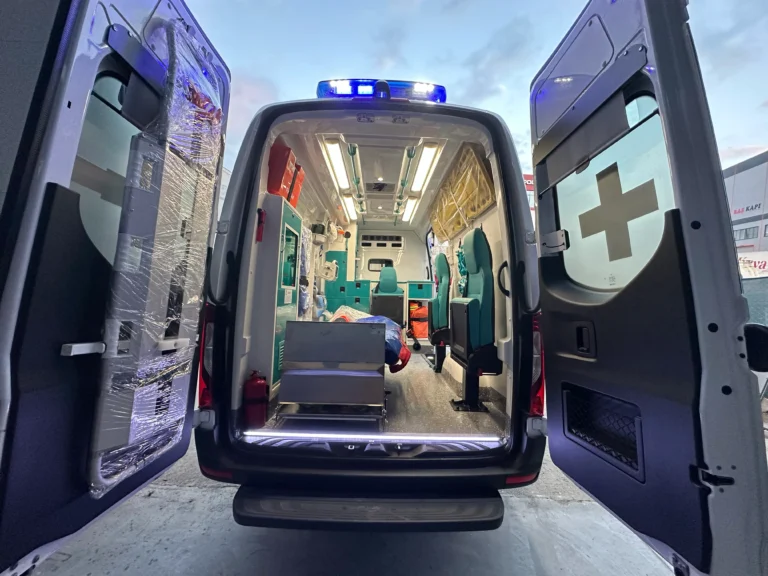
EN 1789 Mercedes Ambulance; The procurement of an emergency medical vehicle is a critical infrastructure decision governed by stringent legal and clinical obligations. In Europe and for global operators aligning with international best practices, compliance with the EN 1789:2020 standard (“Medical vehicles and their equipment – Road ambulances”) is non-negotiable. This harmonized European standard defines the minimum construction, performance, equipment, and safety requirements for road ambulances, serving as the definitive benchmark for patient and crew safety. A vehicle built to this specification is not merely a converted van; it is a certified medical device on wheels.
The Mercedes-Benz Sprinter platform has become the predominant chassis for compliant ambulance conversions globally, owing to its robust engineering, predictable performance, and extensive support infrastructure. This article provides a technical, compliance-focused analysis for procurement officers, EMS fleet managers, hospital administrators, and tender authorities. It details the integration of the EN 1789 standard onto the Mercedes Sprinter chassis, clarifying the certification pathway, differentiating between vehicle types, and outlining the critical engineering considerations that separate a compliant, life-saving asset from a non-compliant conversion.
What Is EN 1789?
EN 1789 is a harmonized European standard published by the European Committee for Standardization (CEN). Its primary purpose is to ensure a consistently high level of safety, reliability, and clinical functionality for road ambulances across member states. It covers all aspects of the vehicle, from crashworthiness and electrical safety to interior layout and infection control.
- Scope and Legal Status: While adoption into national law varies, EN 1789 is the de facto specification for public tenders across the European Union and EFTA. Compliance demonstrates adherence to the EU’s General Product Safety Directive and, for the medical equipment within, the Medical Devices Regulation (MDR 2017/745). A fully compliant ambulance receives CE marking for its integrated medical systems (e.g., stretcher, oxygen, electrical supply), signifying conformity with health, safety, and environmental protection legislation.
- Ambulance Typology (Type A, B, C): The standard categorizes ambulances based on mission profile and clinical capability:
- Type A: Patient Transport Ambulance. For non-emergency, scheduled transport of patients who do not require continuous medical monitoring or intervention.
- Type B: Emergency Ambulance. Designed for emergency response and transport, capable of providing basic life support (BLS) and often advanced life support (ALS) en route. It is the most common configuration for first-response units.
- Type C: Mobile Intensive Care Unit (MICU). A larger, box-body ambulance (often on a chassis like the Mercedes Sprinter with a specific module) equipped and staffed to provide a full intensive care environment during transport, including support for critically ill or unstable patients.
Why Mercedes Sprinter Is Ideal for EN 1789 Ambulances
The Mercedes-Benz Sprinter is not inherently EN 1789 compliant; it is the donor chassis upon which a compliant medical module is constructed. Its selection by leading converters and authorities is based on several decisive engineering and operational factors:
- Chassis Reliability and Durability: Engineered for commercial duty cycles, the Sprinter offers robust drivetrains, high torsional rigidity, and proven service intervals that match the demanding 24/7 operational profile of EMS.
- Payload Capacity and GVWR: EN 1789-compliant interiors, with their reinforced structures, heavy medical equipment, and multiple crew, add significant weight. The Sprinter’s range of Gross Vehicle Weight Ratings (GVWR) – from 3.5t to 5.5t+ – provides the necessary payload headroom without compromising braking or handling performance.
- Interior Volume and Modularity: The high-roof, long-wheelbase Sprinter provides the cubic volume required for the standard’s minimum patient compartment dimensions, allowing for ergonomic workflow, adequate storage for EN 1789-mandated equipment, and safe practitioner movement during patient care.
- Global Service and Parts Network: For multinational organizations, NGOs, and export markets, the ubiquity of Mercedes-Benz commercial vehicle support ensures logistical feasibility for maintenance and repair, a critical consideration for fleet uptime.
Core Technical Requirements of EN 1789 Mercedes Ambulance
Compliance is an integrated system of interdependent requirements. Key technical domains include:
Patient Compartment Dimensions & Layout
The standard specifies minimum internal length, width, and height to ensure sufficient space for at least two seated attendants to work unimpeded on a patient secured to a stretcher. This governs the selection of the Sprinter’s wheelbase and roof height. The layout must provide clear access to the patient’s head, sides, and foot, with all essential equipment and controls within reach of seated and restrained practitioners.
10G Crash Testing for Stretcher & Attendant Seats
All patient stretchers, attendant seats, and their anchoring systems must withstand dynamic deceleration tests simulating a 10G frontal impact and other crash vectors. This is a critical safety differentiator, preventing the stretcher from becoming a projectile. Certified systems use proprietary, tested mounting rails and locking mechanisms integrated into the vehicle’s reinforced floor structure.
Medical Electrical Safety (EN 60601)
All installed electrical systems supplying medical equipment (e.g., suction units, defibrillator chargers, ventilator power) must comply with the medical electrical equipment standard EN 60601-1. This requires complete electrical isolation from the vehicle chassis, protective extra-low voltage (PELV) circuits, and stringent earth leakage current limits to protect vulnerable patients from micro-shock hazards.
Oxygen System Compliance EN 1789 Mercedes Ambulance
Fixed oxygen systems must include a minimum of two cylinders (or a manifold) with a secured, ventilated storage compartment, a pressure-reducing regulator, flow meters, and outlets positioned for safe and ready access. The installation must prevent cylinder movement and protect valves from impact, with all materials in the oxygen path being oxygen-compatible to prevent fire risk.
Interior Materials & Hygiene EN 1789 Mercedes Ambulance
All interior surfaces must be smooth, impervious, and easily cleanable and disinfectable. Joints must be sealed to prevent fluid ingress and biofilm formation. This dictates the use of specific plastics, laminates, and seamless flooring systems, directly impacting the design of cabinetry and work surfaces within the Sprinter’s module.
Lighting, Sirens, and Warning Systems EN 1789 Mercedes Ambulance
A complex lighting matrix is required: general compartment lighting, examination lighting, exterior scene lighting, and non-distracting driver compartment lighting. Audible and visual warning devices must meet defined sound pressure levels and flash patterns. Integration must consider electrical load and control ergonomics.
Climate Control & Ventilation
The patient compartment must maintain a defined temperature range (typically +18°C to +26°C) irrespective of external conditions, requiring a dedicated, powerful HVAC system separate from the cab. A positive pressure ventilation system with high-efficiency particulate air (HEPA) filtration is mandatory for Type C vehicles and recommended for Type B, to protect immunocompromised patients and control infection.
Power Supply & Battery Redundancy
A secondary, automatically engaging power supply must maintain all essential medical and safety systems for a minimum duration (e.g., 90 minutes) in the event of the main vehicle electrical system failure. This typically involves a large-capacity auxiliary battery bank with automatic charging and changeover systems.
Certification and Testing Process
Achieving EN 1789 compliance is a formal, documented process overseen by a Notified Body designated by an EU member state.
- Technical Documentation Compilation: The manufacturer (converter) creates a comprehensive Technical File containing design specifications, risk assessments, drawings, bills of materials, and test plans.
- Type Examination: The Notified Body reviews the Technical File and witnesses or reviews reports of critical tests, most notably the 10G dynamic crash tests performed at an accredited laboratory. This test is conducted on a representative vehicle (a Mercedes Sprinter with the specific conversion module and interior fittings).
- Factory Production Control (FPC) Audit: The Notified Body audits the converter’s production facility and quality management system to ensure every vehicle built conforms to the approved type.
- Certificate of Conformity & CE Marking: Upon successful completion, the Notified Body issues an EU-Type Examination Certificate. The converter then issues a Declaration of Conformity and affixes the CE mark to each production vehicle, alongside the vehicle’s statutory plate.
EN 1789 Type B vs Type C EN 1789 Mercedes Ambulance
The choice between Type B and Type C defines the clinical mission and procurement cost.
- Type B (Emergency Ambulance):
- Clinical Capability: Designed for emergency response, scene treatment, and transport. Equipped for BLS and ALS procedures (advanced airway management, intravenous therapy, cardiac monitoring, defibrillation).
- Typical Build: Based on a high-roof Mercedes Sprinter. Interior is optimized for rapid access to equipment and dynamic working conditions. May have a simpler, single-zone HVAC system.
- Use Case: Primary 911/112 response units, inter-facility transfers for stable patients.
- Budget Implication: Represents the standard for emergency fleets, with costs driven by the level of medical equipment integration.
- Type C (Mobile Intensive Care Unit):
- Clinical Capability: Functions as a mobile ICU, capable of transporting the most critical patients (e.g., post-cardiac surgery, severe trauma, neonatal) with continuous multi-parameter monitoring, multiple infusion pumps, advanced ventilators, and IABP support.
- Typical Build: Often uses a larger module (e.g., on a Sprinter 516 CDI chassis with a dedicated module). Features a dedicated workbench for complex equipment, enhanced power distribution, and mandatory dual-zone HVAC with HEPA filtration.
- Use Case: Critical care inter-hospital transfers, neonatal/pediatric intensive care transport, national/regional specialist retrieval teams.
- Budget Implication: Significantly higher due to the complex module, advanced medical systems, and stringent environmental controls.
Common Mistakes in Non-Compliant Ambulance Conversions
Procurement based on lowest cost without regard for EN 1789 exposes organizations to severe clinical, legal, and financial risk.
- Non-Tested Stretcher Mounts: Using generic lashing points or untested brackets fails the 10G requirement. In a crash, the stretcher may fail, causing catastrophic injury to the patient and crew.
- Incorrect Electrical Grounding: Integrating medical equipment into the vehicle’s standard 12V system without isolation creates a potential for leakage currents exceeding EN 60601-1 limits, endangering patients connected to electrical devices.
- Insufficient Ventilation: Lack of a dedicated, powerful HVAC system and sealed interior can lead to patient hypothermia/hyperthermia and fails to control airborne pathogens, violating both clinical care and hygiene clauses.
- Lack of Documentation: Absence of a complete Technical File, test reports, and a Notified Body certificate renders the vehicle inadmissible for EU public tenders and complicates insurance and liability claims following an incident.
Cost Impact of EN 1789 Compliance
Investment must be evaluated against clinical safety, legal defensibility, and vehicle service life.
- Basic Non-Certified Conversion: A functional medical interior in a Sprinter, lacking formal crash testing, medical electrical isolation, and full certification documentation. Suitable only for non-emergency roles in unregulated markets. Price Range: Lower segment of the market.
- Fully EN 1789 Compliant Type B Ambulance: A Sprinter with a certified module, 10G tested stretcher system, compliant electrical and oxygen systems, and full documentation from a Notified Body. The benchmark for emergency response. Price Range: Mid to upper segment, reflecting engineering validation and certification costs.
- EN 1789 Type C Mobile ICU: A complex medical vehicle on a heavy-duty Sprinter chassis, with advanced systems, environmental control, and extensive medical device integration. Price Range: Premium segment, commensurate with its role as a mobile critical care platform.
Key cost drivers include: the level of medical equipment (BLS vs. ALS vs. ICU), chassis specifications (engine power, GVWR), certification depth, and the quality of interior materials and workmanship.
Exporting EN 1789 Mercedes Ambulances Worldwide
EN 1789 compliance is a globally recognized quality hallmark, facilitating export.
- Acceptance: EN 1789 is the preferred or required standard in most EU, Middle Eastern, African, and Asian countries for tenders. It is often accepted as evidence of quality in markets without a national standard.
- Documentation for Tenders: The EU-Type Examination Certificate and comprehensive Technical File are critical components of a winning tender submission, providing objective proof of compliance.
- Homologation Considerations: While EN 1789 covers the medical conversion, the complete vehicle must also meet local roadworthiness homologation (e.g., lighting, emissions). A reputable manufacturer will manage this process, ensuring the Sprinter base vehicle and the conversion meet both medical and automotive regulations in the target country.
Choosing the Right EN 1789 Ambulance Manufacturer
The selection of a manufacturing partner is a strategic decision with long-term implications for safety and operational readiness.
- Engineering Validation: Prioritize converters with in-house engineering teams capable of Finite Element Analysis (FEA) for structural modifications and a demonstrable understanding of the Sprinter’s CAN-bus systems for safe electrical integration.
- Transparent Test Reports: Require sight of the official 10G dynamic crash test report and other key test certificates (electrical safety, oxygen system) from accredited laboratories, linked directly to the offered vehicle model.
- Complete Compliance Documentation: The manufacturer must provide, as standard, the full suite of documentation: EU-Type Examination Certificate, Declaration of Conformity, detailed operator manuals, and the Technical File summary.
- Global After-Sales and Training Support: Ensure the manufacturer has the network and capability to provide spare parts, technical support, and clinical/technical operator training internationally, aligned with the lifecycle of the vehicle.
TECHNICAL COMPLIANCE TABLE
| EN 1789:2020 Requirement | Technical Solution in Mercedes Sprinter Ambulance | Compliance Status & Verification |
|---|---|---|
| Patient Compartment Dimensions (Section 5.3) | Utilization of L2H2 (long, high) or L3H2 Sprinter chassis. Interior module designed to meet min. length, width, and height. | Verified by design drawings and physical measurement. Documented in Technical File. |
| 10G Dynamic Crash Test (Section 5.5) | Installation of a certified stretcher system (e.g., HAWA, P&B, Puls) using manufacturer-specified reinforced floor anchoring rails and crash-tested attendant seats with 3-point belts. | Certified by accredited test lab (e.g., TÜV, DEKRA) crash test report. Core component of EU-Type Examination. |
| Medical Electrical Safety (EN 60601-1) | Dedicated, isolated PELV electrical circuit with medical-grade isolation transformer/DC-DC converter. Separate grounding system for medical equipment. Earth leakage current < 100µA. | Testing report from accredited laboratory. Declaration of Incorporation for the medical electrical system. |
| Oxygen System (Section 6.4) | Secured, ventilated cylinder locker(s). Pressure regulator, manifolds, and flowmeters compliant with ISO 10524. Oxygen-compatible materials (brass, copper, cleaned stainless steel). | Component CE certificates. Risk assessment and installation verification per Technical File. |
| Interior Hygiene & Cleanability (Section 5.8) | Seamless, coved vinyl flooring. Walls and ceilings with smooth, non-porous laminate. All joints sealed with medical-grade silicone. Cabinetry with rounded, cleanable edges. | Material specifications and design review. Verification during Factory Production Control audits. |
| Lighting & Warning Systems (Sections 5.11, 5.12) | Integrated LED lighting system: general, examination, scene, and non-glare driver lights. EN 1789-compliant audible/visual warning device control system. | Photometric and acoustic test reports for warning devices. Design conformity assessment. |
| Climate Control & Ventilation (Section 5.9) | Dedicated rear compartment HVAC unit (≥ 4kW cooling capacity) with independent controls. For Type C: Positive pressure ventilation with ≥ H13 HEPA filtration. | Performance data from HVAC unit manufacturer. Filtration efficiency certificates for Type C. |
| Auxiliary Power Supply (Section 5.10.4) | Automatic changeover system to secondary battery bank (AGM or Lithium) capable of supporting essential loads for defined duration (e.g., 90 mins) upon main power failure. | Circuit design review and endurance test verification. |
4. FAQ SECTION
1. What does “EN 1789 compliant” mean?
It means the ambulance vehicle has been designed, constructed, and certified to meet all mandatory requirements of the European standard EN 1789:2020 for road ambulances. This includes passing dynamic crash tests, complying with medical electrical safety standards, and fulfilling hundreds of other technical and performance criteria, validated by an independent Notified Body.
2. Is a standard Mercedes Sprinter ambulance automatically EN 1789 compliant?
No. A Mercedes Sprinter is a chassis cab. Compliance is achieved through the specific medical conversion performed by a manufacturer. The converter must engineer and build the module to the standard, subject it to certification testing, and have the final complete vehicle certified by a Notified Body.
3. What is the operational difference between a Type B and a Type C ambulance?
A Type B (Emergency Ambulance) is equipped for emergency response and advanced life support during transport. A Type C (Mobile Intensive Care Unit) is a larger, more complex vehicle designed to provide a full intensive care environment for the most critically ill patients during prolonged inter-hospital transfers.
4. How is EN 1789 related to CE marking for ambulances?
The integrated medical systems of an EN 1789 compliant ambulance (e.g., the patient handling system, oxygen system, medical electrical supply) are considered medical devices. Their conformity with the standard allows the manufacturer to issue a Declaration of Conformity and affix the CE mark to the vehicle for those systems, indicating compliance with the EU Medical Devices Regulation.
5. What documentation proves EN 1789 compliance?
The critical documents are: 1) The EU-Type Examination Certificate issued by a Notified Body, 2) The manufacturer’s Declaration of Conformity, and 3) The official test reports (especially the 10G dynamic crash test) from an accredited laboratory. These form part of the vehicle’s Technical File.
6. Can an EN 1789 ambulance be used outside the European Union?
Yes. EN 1789 is a globally respected benchmark. Many non-EU countries reference or require it in their national ambulance specifications or tenders. It provides a strong technical foundation, though local road vehicle homologation may also be required.
7. What is the most critical safety feature mandated by EN 1789?
The 10G dynamic crash test requirement for the patient stretcher and attendant seats is paramount. It ensures that in a severe collision, the secured patient and crew remain restrained, preventing catastrophic injury from equipment becoming projectile.
8. How much does an EN 1789 compliant Mercedes ambulance cost compared to a non-compliant one?
A fully certified EN 1789 ambulance involves significant investment in engineering, testing, certified components, and quality control. It commands a higher price than a basic conversion, reflecting its validated safety, legal defensibility, and compliance with international procurement requirements. Precise cost differentials depend on the type (B or C) and medical equipment level.
9. What training is provided with a compliant ambulance?
Reputable manufacturers provide comprehensive training covering: vehicle systems operation (power, HVAC, safety), daily/weekly check protocols, basic troubleshooting for medical systems, and instructions for safe use of the crash-tested stretcher and attendant seats.
10. Who is responsible for maintaining compliance after the vehicle is in service?
The vehicle operator/owner is responsible for maintaining it in a condition that does not invalidate its certification. This includes using only original or certified-compatible parts for critical systems (like stretcher mounts), having repairs performed by qualified personnel, and retaining all service records.