
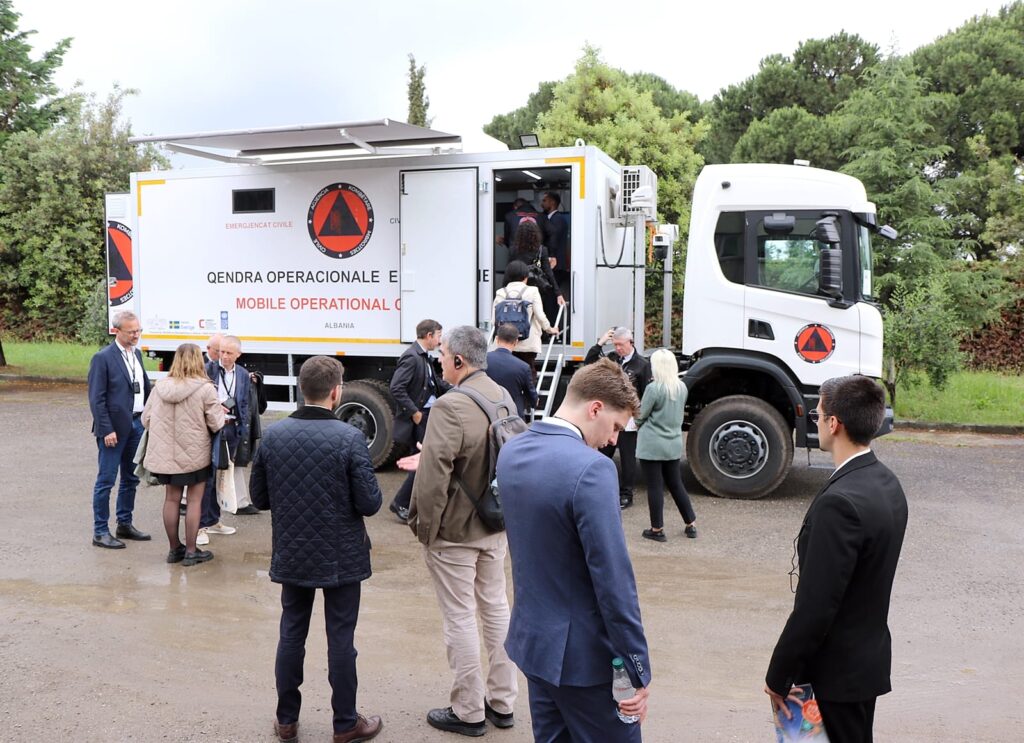
Mobile Command and Control Center Technical Specifications; In the critical moments following a disaster, during a major security operation, or amid a large-scale public event, situational command cannot be confined to a static location. Effective crisis management demands presence, awareness, and decisive action at the point of incident. The Infinity Chassis Units (ICU) Mobile Command and Control Center represents the apex of mobile operational headquarters engineering. Designed explicitly for government agencies, civil defense units, and emergency response organizations, this vehicle transcends the standard “command van” concept. It is a sovereign, resilient, and technologically integrated platform built on a rugged 4×4 truck chassis, engineered to establish immediate command authority in the most austere and challenging environments. Our philosophy is rooted in a fusion of uncompromising mobility, mission-critical systems engineering, and strict adherence to international procurement standards, delivering a turnkey asset ready for immediate deployment under the most stringent government tender requirements.
4×4 Vehicle Platform and Mobility Engineering – Mobile Command and Control Center Technical Specifications
The foundation of any credible mobile command post is its ability to reach the objective. ICU’s platform is engineered for guaranteed access, ensuring command establishes where it is needed, not merely where roads permit.
- Chassis & Drivetrain: Built on a heavy-duty, off-road capable 4×4 truck chassis, providing superior ground clearance, approach/departure angles, and torsional rigidity. Features permanent or selectable four-wheel drive with a low-range transfer case for extreme terrain.
- Engine & Performance: Powered by a turbo-diesel engine delivering ≥150 kW (≥200 hp), ensuring ample power for mobility, systems operation, and auxiliary loads. Engineered for high torque at low RPMs for superior off-road control and hill-climbing capability.
- Emissions Standard: Compliant with Euro V (or equivalent) emission regulations, ensuring the vehicle meets modern environmental standards for operation in urban and protected areas without restriction.
- Suspension & Braking: Reinforced suspension system, often incorporating parabolic leaf springs or air-assisted components for durability and load management under operational weight. Equipped with a full air brake system (or heavy-duty hydraulic discs) with ABS, ensuring safe, controlled stops under all conditions.
- Operational Range: Features a high-capacity fuel tank (typically 150+ liters), providing extended operational range and autonomy for prolonged deployments far from fixed infrastructure.
- Mobility Assurance: Standard equipment includes central tire inflation system (CTIS) capability preparation, heavy-duty winch mounting points, and run-flat tire inserts (optional), ensuring mission continuity despite mobility threats.
Operational Interior Architecture: Conference and Monitoring Rooms
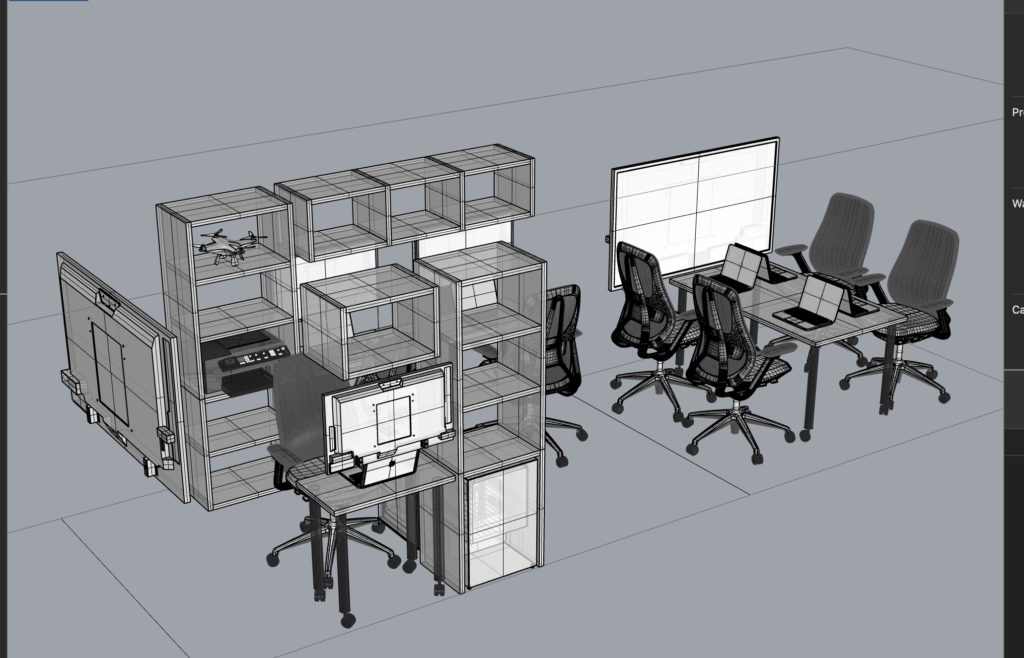
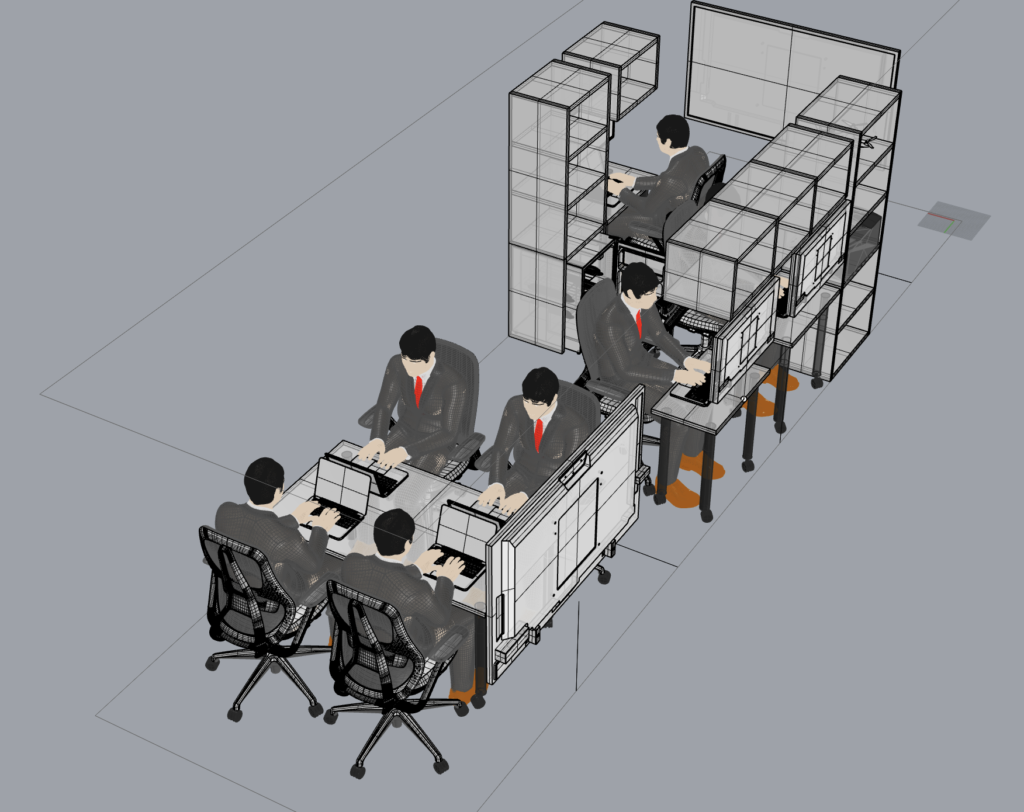
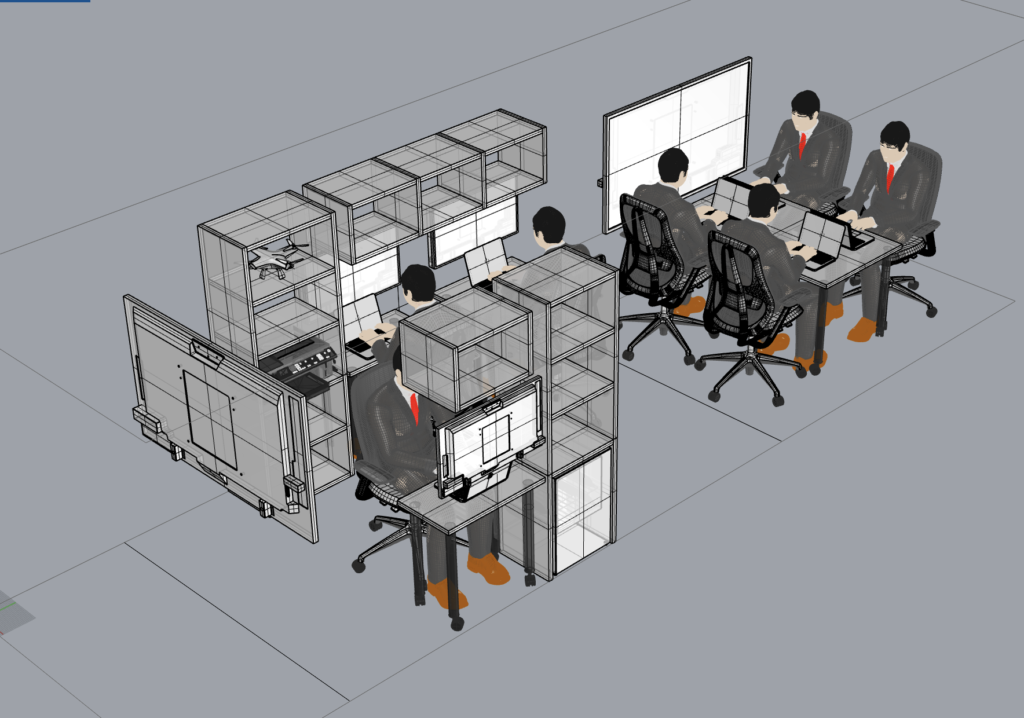
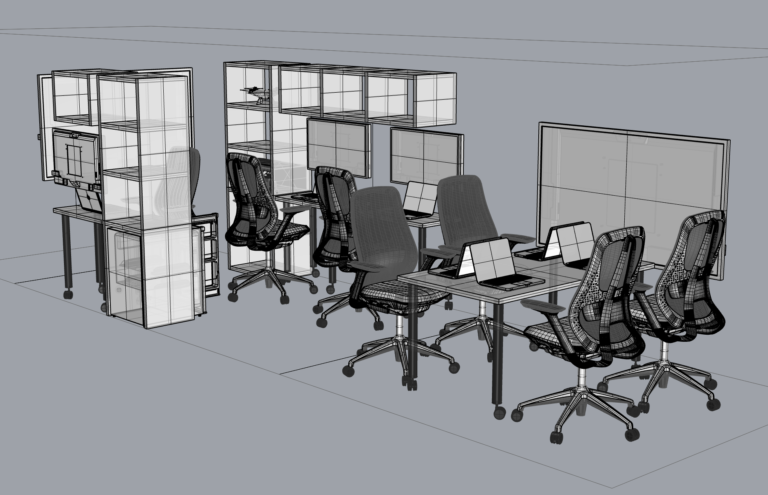
The interior is a purpose-designed workspace, segmented into distinct functional zones to facilitate structured, efficient, and secure command operations.
- Dual-Room Operational Layout: The core architecture is divided into a Conference/Planning Room and a dedicated Monitoring/Communications Room. This separation allows for simultaneous activities: strategic planning and briefings in one space, while continuous surveillance and radio traffic management occur in the other, minimizing distraction and optimizing workflow.
- Situational Awareness Hub: The Monitoring Room is anchored by large-format 65” 4K Ultra HD display panels, configured for multi-source input. This allows for the simultaneous viewing of GIS mapping, live drone feeds, CCTV streams, data networks, and video conferences, creating a comprehensive Common Operational Picture (COP).
- Ergonomics & Workspace: Features vehicle-stabilized, shock-mounted operator consoles and workstations. These provide secure and ergonomic positions for communications specialists, intelligence analysts, and logistics coordinators. Dedicated cable management, equipment racks (19”/23”), and tactical lighting are standard.
- Integrated Communications Infrastructure: The interior is pre-wired with extensive conduit and network cabling (fiber and Cat6+), providing backbone connectivity for all internal and external systems, ensuring clean, professional installation and ease of future upgrades.
Power Generation, Energy Storage and Electrical Safety
Uninterrupted power is the lifeblood of the command center. ICU engineers a layered, fault-tolerant power architecture to guarantee system integrity.
- Primary Onboard Generator: A heavy-duty, sound-dampened diesel generator with a minimum output of 8 kVA provides the primary power for all mission systems, climate control, and lighting. Housed in a weatherproof, externally-accessed compartment with automatic fire suppression.
- Uninterruptible Power Supply (UPS): A robust, inverter-based UPS system with substantial battery storage provides seamless bridge power during generator start/stop cycles or in the event of primary generator failure. This ensures zero interruption to critical communications and computing equipment.
- Power Distribution & Management: A centralized, intelligent Power Distribution Unit (PDU) with surge protection and circuit monitoring allows for remote management and sequencing of loads. Systems are separated into critical, essential, and non-essential branches.
- External Power & Shore Connection: Includes a high-capacity shore power inlet (e.g., 32A/230V) for silent, emission-free operation when parked at bases or facilities, with automatic transfer switching.
- Battery Bank: A dedicated, high-capacity AGM or Lithium-Ion auxiliary battery bank supports low-power systems, emergency lighting, and communications for extended periods without generator operation.
Communication, Surveillance and Situational Awareness Systems
The vehicle’s core capability is to connect, collect, and disseminate information. ICU integrates multi-layered, redundant systems for assured C2 (Command and Control).
- Multi-Band Radio Communications: Integrated dual-band VHF/UHF base radio systems (compatible with analog and digital standards like DMR, P25) provide reliable ground team coordination. Systems include external antenna multiplexers for optimal signal propagation.
- Satellite Communications (SATCOM): A roof-mounted, auto-acquiring satellite terminal (Ku/Ka-band) provides broadband data, VoIP, and secure video conferencing capabilities from any location with satellite coverage, ensuring connectivity when terrestrial networks are damaged or overloaded.
- Surveillance Mast System: A pneumatically or electrically deployed 360° CCTV mast elevates high-definition, thermal, and low-light cameras to provide a panoramic view of the operational area. Cameras are gyro-stabilized and controlled from inside the vehicle.
- Drone Integration Package: The vehicle is prepared for UAS (Drone) integration, featuring secure storage, dedicated charging stations, and real-time video downlink hardware to display live aerial reconnaissance directly on the main situational awareness displays.
- Network & IT Backbone: Onboard includes a hardened network router, firewall, and secure Wi-Fi access point, creating a mobile LAN. This supports data sharing, VoIP phones, and connection for responder devices in the immediate vicinity.
Climate Control, Lighting and Environmental Protection
The vehicle ensures a controlled, secure, and functional environment for personnel during extended, round-the-clock operations.
- HVAC System: A high-capacity, multi-zone diesel-fired heater and roof-mounted air conditioning unit maintain a stable, comfortable temperature in the command interior irrespective of external conditions, from desert heat to arctic cold.
- Acoustic & Thermal Insulation: The body is fully insulated with advanced composite materials for superior thermal efficiency and significant acoustic dampening, reducing exterior noise for clearer communication and operator comfort.
- Operational Lighting: Externally, the vehicle is equipped with 360-degree LED floodlighting (white and red-light modes for night vision preservation) and scene lights for perimeter illumination. Internally, task and ambient LED lighting with dimming controls is installed.
- Environmental Sealing & Protection: The body features IP54 or higher ingress protection, with sealed cable penetrations and climate-sealed doors, protecting sensitive electronics from dust, moisture, and driving rain.
Safety, Emergency Equipment and Mission Readiness
ICU equips the command center to be self-sufficient, safe, and prepared for autonomous operations in high-risk environments.
- Occupant Safety: Includes cab and cabin roll-over protection structure (ROPS), 3-point safety harnesses for all mobile seats, and first aid kits compliant with workplace/vehicle standards.
- Fire Suppression: Automatic fire suppression systems in the engine bay and generator compartment, supplemented by handheld ABC dry chemical fire extinguishers mounted internally and externally.
- Emergency & Survival Equipment: The vehicle is prepared to carry (as per operator requirements) emergency escape tools, personal protective equipment (PPE) storage, and basic survival kits.
- Audible/Visual Warning: Integrated electronic siren and public address (PA) system, coupled with a high-intensity light bar or beacon, provide necessary warning and clear-way capabilities during emergency response travel.
Documentation, Training and Government Tender Compliance – Mobile Command and Control Center Technical Specifications
ICU ensures seamless integration into your force structure, with full support for procurement and operationalization.
- Technical Documentation Package: Includes comprehensive technical specifications (this document), detailed electrical and system schematics, parts catalogs, and full compliance matrices tailored to tender requirements (e.g., ISO, EN, MIL-STD references where applicable).
- Operator & Maintenance Manuals: User-friendly, illustrated manuals in English (and other languages as required) for both vehicle operations and complex system interfaces.
- On-Site Training: Comprehensive training programs for drivers, system operators, and maintenance technicians conducted upon vehicle delivery, ensuring operational proficiency from day one.
- Tender Compliance Support: ICU provides all necessary manufacturer’s certificates, proof of origin, type approvals, and detailed compliance statements to directly support your agency’s tender submission process.
- Delivery & Commissioning: Managed logistics for worldwide delivery, followed by on-site commissioning and acceptance testing performed by ICU engineers to validate full system functionality.
Why Governments Choose Infinity Chassis Units
- Engineering Control: As a chassis-up engineering manufacturer, ICU maintains complete control over the integration process, ensuring every subsystem from power to communications is harmonized for reliability, not merely installed.
- Global Export Provenance: Our vehicles are operational across diverse climates and terrains worldwide, from the Middle East to Northern Europe, demonstrating proven resilience and adaptability.
- Tender-Focused Configuration: We understand the precise language and compliance demands of international government tenders (B2G). Our specifications are crafted to meet and clearly demonstrate compliance with technical, safety, and operational thresholds.
- Customization Capability: While offering a supremely capable standard platform, ICU’s engineering-led approach allows for specific customization—be it for specialized communications encryption, unique sensor payloads, or mission-specific interior layouts—to meet exact operational doctrines.
FAQ – Mobile Command and Control Center Technical Specifications
Q1: Is the command center compliant with international standards?
A1: Yes. The ICU Mobile Command Center is engineered to meet or exceed a range of international standards relevant to vehicle safety, electromagnetic compatibility (EMC), electrical safety, and environmental protection. We provide detailed compliance matrices for standards such as ISO, IEC, and relevant regional automotive regulations (EEC/ECE) as part of our tender support package.
Q2: Can ICU customize the vehicle for our specific country’s tender requirements?
A2: Absolutely. Our core competency is engineered customization. While the platform outlined here is a high-specification baseline, we routinely modify communications suites, power system configurations, interior layouts, and external equipment mounts to meet exact national specifications, operational protocols, and interoperability requirements outlined in tenders.
Q3: What communication systems are included as standard?
A3: The standard integrated package includes a dual-band VHF/UHF radio system, a SATCOM terminal for broadband, a full 360° CCTV mast with cameras, and the IT network backbone for drone and data integration. Specific radio models and SATCOM providers can be specified to align with your existing agency infrastructure.
Q4: How long can the vehicle operate autonomously without external support?
A4: With its large fuel capacity powering both the vehicle and the ≥8 kVA generator, and supported by the UPS/battery system, the command center can typically sustain 24/7 operations for 24-48 hours depending on the climatic load (extreme HVAC use). This duration can be extended with optional auxiliary fuel carriers or silent shore power hookup.
Q5: Do you provide training and technical documentation?
A5: Yes. A complete technical documentation set and comprehensive on-site training for operators and maintenance staff are integral parts of every ICU delivery. We ensure your personnel are fully proficient in operating all vehicle and mission systems.
Q6: Is worldwide export and logistical support available?
A6: Yes. ICU has extensive experience in exporting turnkey vehicles worldwide. We manage the entire export process, including customs documentation, and can facilitate shipping and provide engineering support for commissioning in-country.
Frequently Asked Questions
Is the command center compliant with international standards?
Yes. The ICU Mobile Command Center is engineered to meet or exceed a range of international standards relevant to vehicle safety, electromagnetic compatibility (EMC), electrical safety, and environmental protection. We provide detailed compliance matrices for standards such as ISO, IEC, and relevant regional automotive regulations (EEC/ECE) as part of our tender support package.
Can ICU customize the vehicle for our specific country’s tender requirements?
Absolutely. Our core competency is engineered customization. While the platform outlined here is a high-specification baseline, we routinely modify communications suites, power system configurations, interior layouts, and external equipment mounts to meet exact national specifications, operational protocols, and interoperability requirements outlined in tenders.
What communication systems are included as standard?
The standard integrated package includes a dual-band VHF/UHF radio system, a SATCOM terminal for broadband, a full 360° CCTV mast with cameras, and the IT network backbone for drone and data integration. Specific radio models and SATCOM providers can be specified to align with your existing agency infrastructure.
How long can the vehicle operate autonomously without external support?
With its large fuel capacity powering both the vehicle and the ≥8 kVA generator, and supported by the UPS/battery system, the command center can typically sustain 24/7 operations for 24-48 hours depending on the climatic load (extreme HVAC use). This duration can be extended with optional auxiliary fuel carriers or silent shore power hookup.
Do you provide training and technical documentation?
Yes. A complete technical documentation set and comprehensive on-site training for operators and maintenance staff are integral parts of every ICU delivery. We ensure your personnel are fully proficient in operating all vehicle and mission systems.
Is worldwide export and logistical support available?
Yes. ICU has extensive experience in exporting turnkey vehicles worldwide. We manage the entire export process, including customs documentation, and can facilitate shipping and provide engineering support for commissioning in-country.