
In the high-stakes world of emergency response, natural disasters, and large-scale security events, information is the most critical asset. First responders and military personnel need a reliable hub to coordinate efforts, manage communication, and analyze data in real-time. This is where the mobile command center comes into play. And Mobile Command Center Manufacturers are very important.
These specialized vehicles are far more than modified vans or trucks; they are fully functional, self-sufficient operational headquarters designed to bring order to chaos. Whether you are a sheriff looking to upgrade your fleet, a procurement officer, or just a tech enthusiast, understanding the nuances of these vehicles is essential.
Below, we break down every aspect of mobile command centers, focusing on the exact terms professionals are searching for.
Mobile Command Center
When we talk about a mobile command center, we are referring to a vehicle that serves as a portable Incident Command Post. Unlike a static building, these units are designed to deploy directly to the scene of an incident, whether it’s a wildfire, a hostage situation, a music festival, or a natural disaster like a hurricane.
The primary function is to establish a “common operating picture.” This means bringing together video feeds, radio communications, internet data, and inter-agency personnel into one cohesive environment. Modern mobile command centers are built on various chassis, from heavy-duty pickup trucks to massive custom buses, depending on the mission requirements. They are the difference between a fragmented response and a coordinated, efficient operation.
Military Mobile Command Center Interior
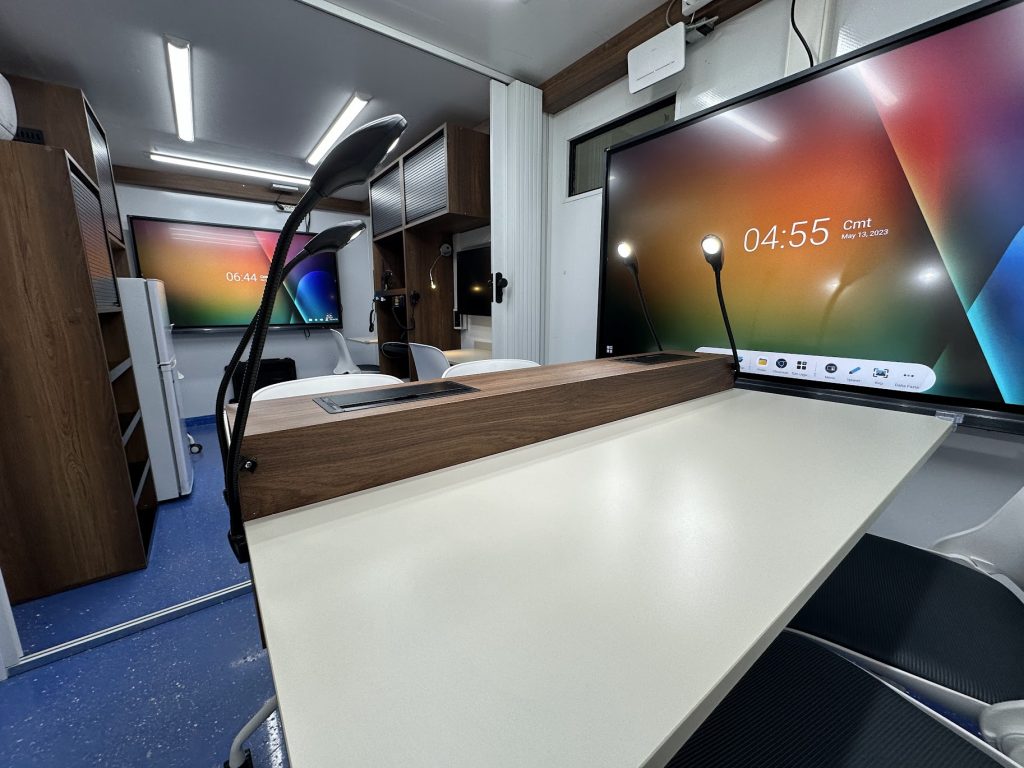
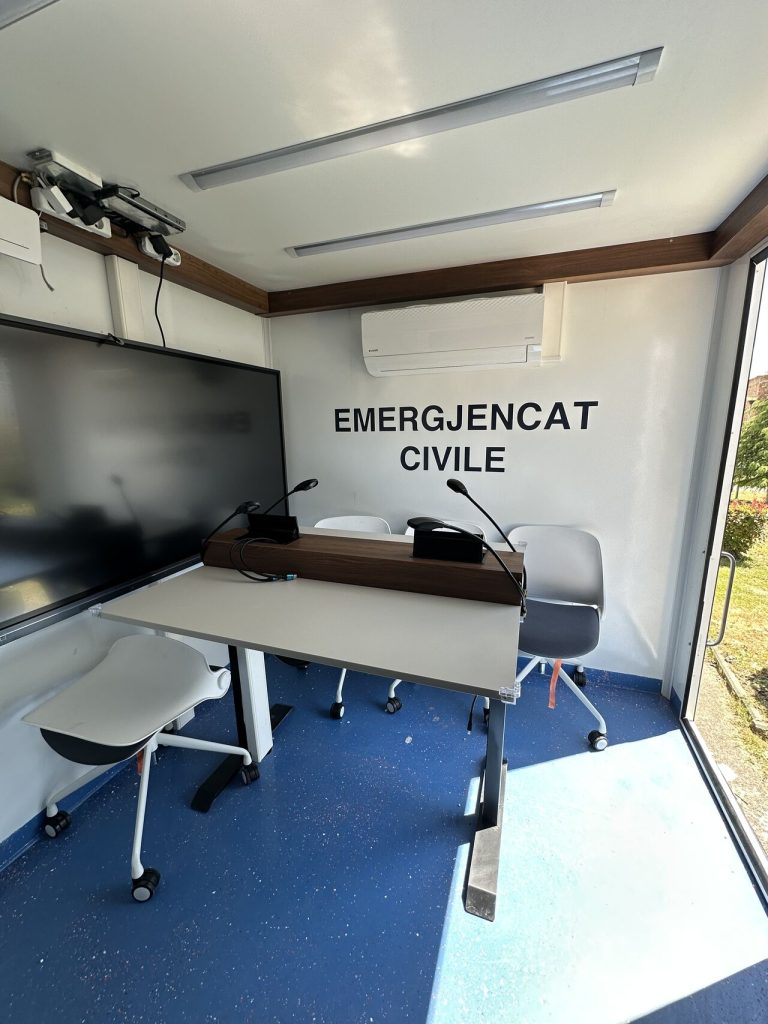
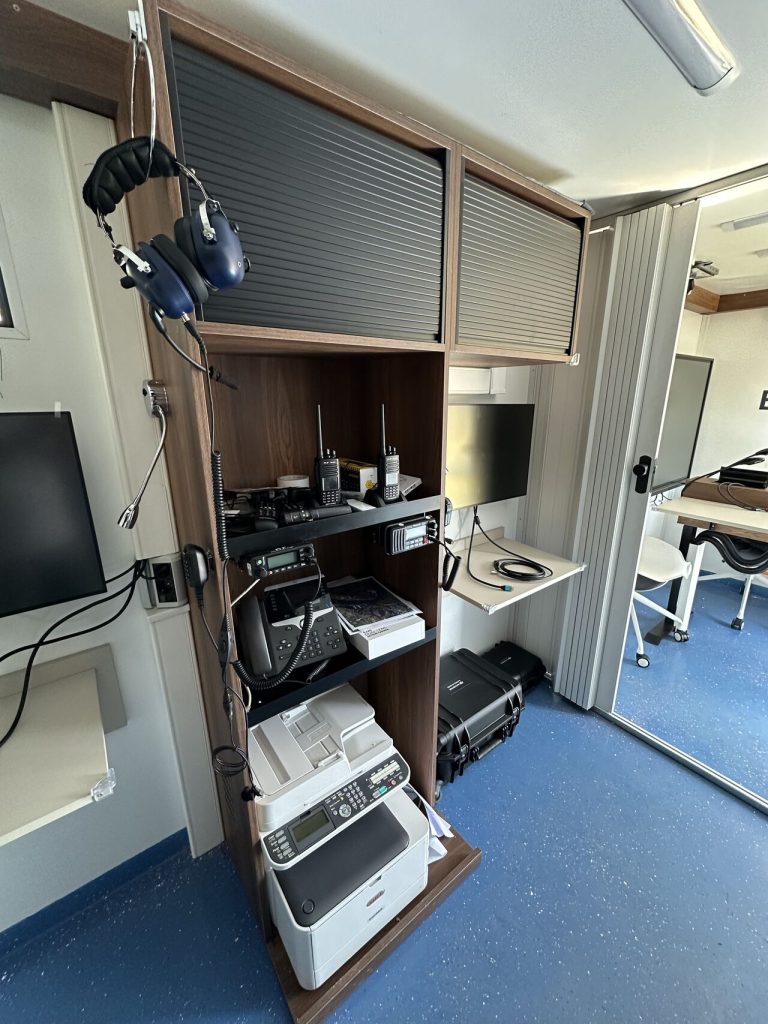
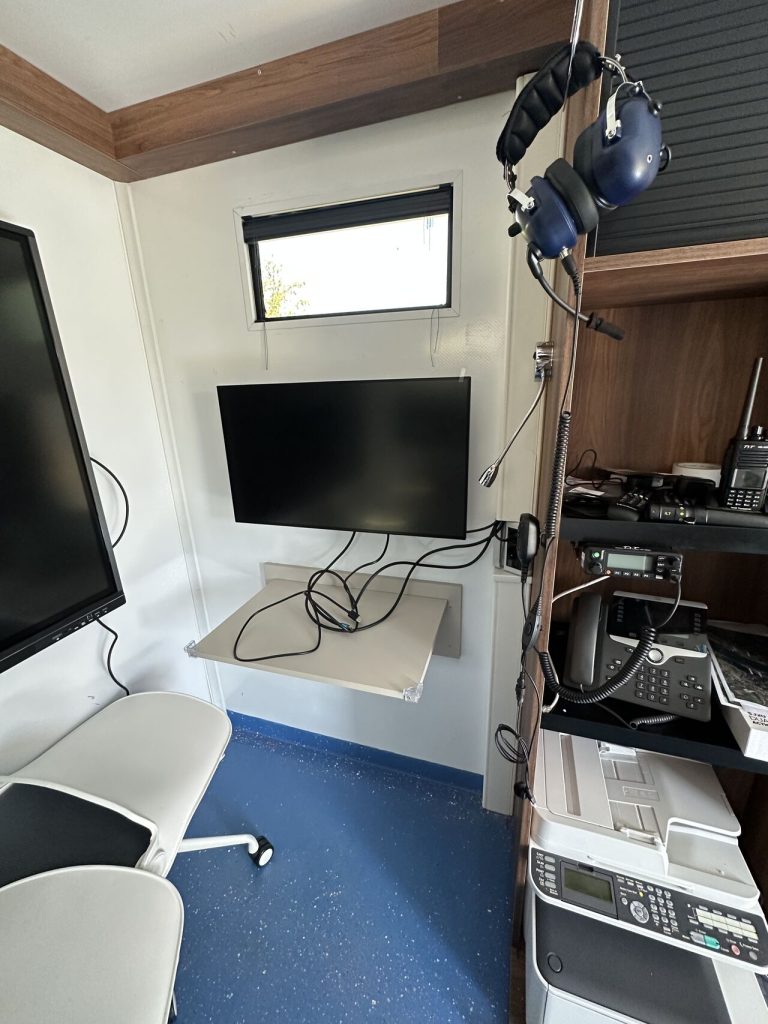
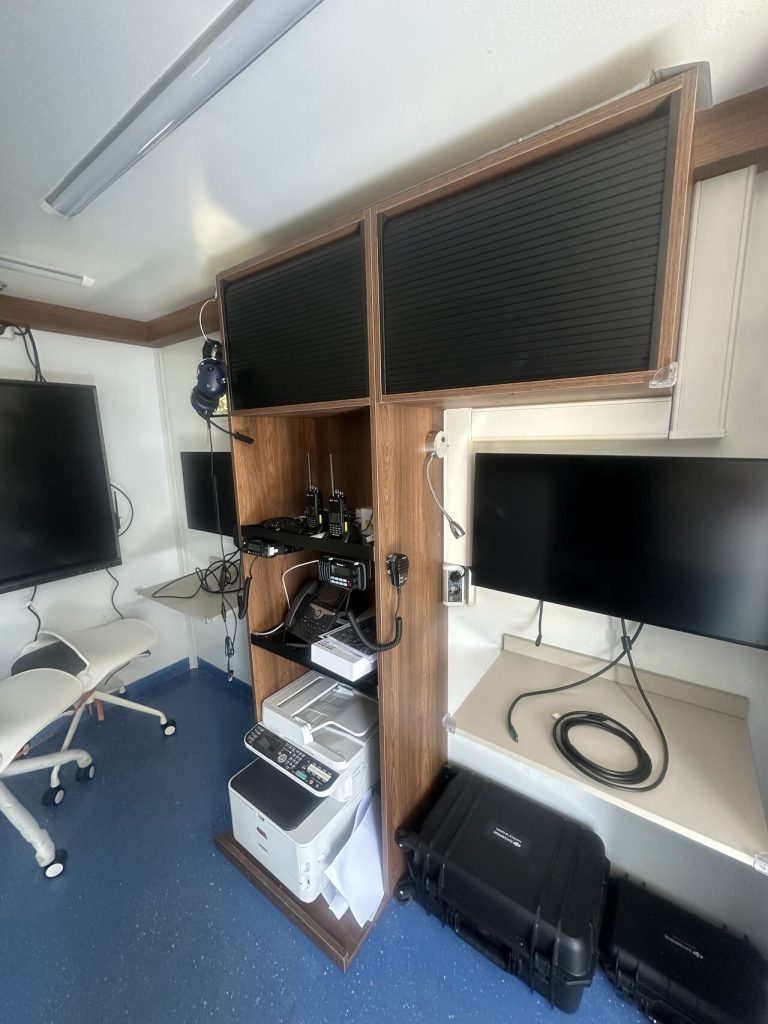
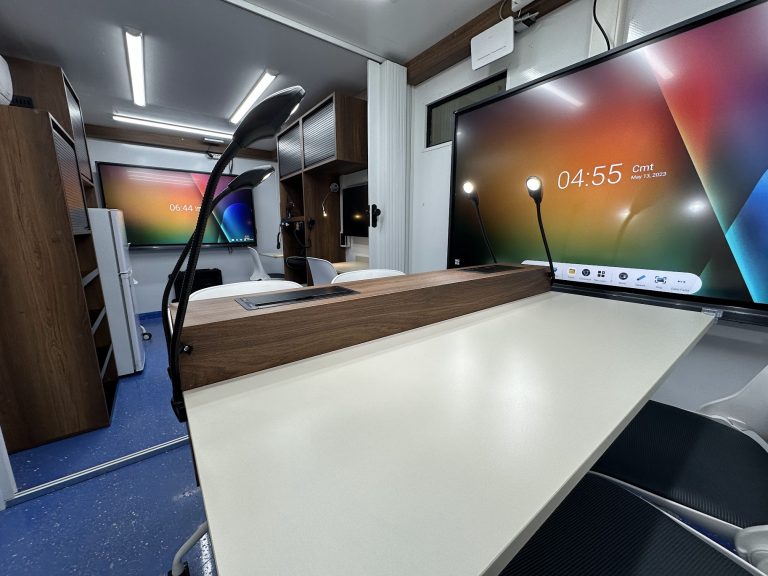
One of the most intriguing aspects of these vehicles is what lies inside. The military mobile command center interior is a marvel of modern engineering and ergonomics. It is designed for functionality, durability, and endurance, often supporting personnel on missions that last days or weeks.
Stepping inside a military-grade unit feels like entering the bridge of a starship. Here is what defines the interior:
- Workstation Layout: The space is optimized for multiple operators. Workstations are arranged to facilitate communication between team members while providing each operator with a dedicated monitor setup, keyboard trays, and storage.
- Redundant Systems: Military applications require zero downtime. Interiors house redundant power supplies, backup communication arrays (satellite, VHF, UHF, and cellular), and independent climate control to keep both personnel and sensitive electronics cool.
- Tactical Visibility: Large video walls display real-time drone footage, satellite imagery, and troop movements. Soundproofing is often installed in designated planning areas to ensure operational security (OPSEC) during sensitive strategy discussions.
- Crew Endurance: Unlike civilian units, military interiors often include small galley areas, bunks, and compact washrooms to sustain crews in the field for extended periods without external support.
Mobile Command Vehicle
The term mobile command vehicle is often used interchangeably with a command center, but it can sometimes refer to a slightly smaller, more agile unit. These vehicles are the workhorses of daily tactical operations.
Think of them as the “first responder” of command units. While a massive bus-sized center might take time to position, a mobile command vehicle—often built on a truck or large SUV chassis—can navigate tighter urban environments and get closer to the action. They are commonly used by SWAT teams for surveillance during barricaded subject incidents or by fire departments as a rehab and communication unit on the scene of major structural fires. They pack the essential technology of a large center into a more maneuverable package.
Military Mobile Command Vehicle
When civilian technology isn’t enough, the military mobile command vehicle steps in. These units are built to withstand extreme environments, from desert heat to arctic cold, and are often designed with ballistic and blast protection in mind.
These vehicles serve as the backbone of modern battlefield communication. They allow generals and tactical commanders to maintain a high level of situational awareness while on the move, a concept known as “C4ISR” (Command, Control, Communications, Computers, Intelligence, Surveillance, and Reconnaissance). They are hardened against cyber threats and electromagnetic pulses (EMP), ensuring that even in the worst-case scenarios, the chain of command remains unbroken and operational.
Mobile Command Center Manufacturers
If you are in the market for a new unit, your search will inevitably lead you to researching mobile command center manufacturers. This is a specialized industry, and choosing the right builder is just as important as choosing the right chassis.
Top manufacturers are more than just upfitters; they are systems integrators. They take a bare vehicle chassis (like a Freightliner, Ford, or International) and transform it into a high-tech command post. When evaluating manufacturers, you should look for:
- Customization Capabilities: Can they design a layout that meets your specific operational needs?
- Integration Expertise: Do they have experience integrating specific radio systems, satellite internet, and drone control software?
- Warranty and Support: What happens if the generator fails in the field? Good manufacturers offer robust after-sales support and nationwide service networks.
Companies like LDV, Inc., Mattracks, and various specialized defense contractors lead the industry in building these custom solutions.
Command and Control Vehicle
In the lexicon of emergency management, the command and control vehicle is the epicenter of decision-making. “Command” refers to the authority to make decisions, while “Control” refers the ability to direct resources and personnel.
These vehicles are equipped with sophisticated mapping software (often using GIS technology) that plots the location of every available unit in real-time. They serve as the radio hub, boosting signals so that officers on foot can communicate with dispatch even in concrete “dead zones.” For large events like marathons or political rallies, the command and control vehicle acts as the central nervous system, monitoring crowd flow and deploying resources to potential trouble spots before they escalate.
Mobile Command and Control Vehicle
A mobile command and control vehicle combines the mobility of a tactical unit with the heavy-duty processing power of a command center. This term is frequently used in the context of public safety and utility response.
For example, during a widespread power outage, a utility company might deploy a mobile command and control vehicle to coordinate line crews. It allows them to track repair progress, communicate with the main grid operator, and handle public inquiries—all from a parking lot near the outage zone. It brings the “boardroom” to the “battlefield,” ensuring that logistical decisions are made with the most current on-the-ground data.
Mobile Command Center for Sale Used
Budget constraints are a reality for many municipalities and smaller agencies. This makes the search for a mobile command center for sale used a very common and practical starting point.
The used market offers incredible value. You can often find a vehicle with a solid diesel engine, a reliable generator, and a sturdy interior layout at a fraction of the cost of a new build. However, buying used requires due diligence:
- Inspect the Chassis: How many miles/hours are on the engine and transmission?
- Check the Electronics: Technology evolves fast. A used unit might require a complete overhaul of its radios, computers, and wiring to be interoperable with current agency systems.
- Look for Rust and Water Damage: These vehicles sit idle for long periods. Check for roof leaks and chassis rust.
For agencies with more time than money, buying used and retrofitting the technology over a few years is a smart, strategic move.
Frequently Asked Questions (FAQ) About Mobile Command Centers
Q1: What is the typical cost of a new mobile command center?
A: The price of a new mobile command center varies dramatically based on size, chassis, and technological complexity. A basic unit built on a truck chassis with minimal tech can start around $150,000 to $250,000. However, a fully customized, heavy-duty unit with satellite communications, a video wall, and advanced command software can easily range from $500,000 to over $1 million.
Q2: Do I need a special driver’s license to operate one of these vehicles?
A: It depends on the weight of the vehicle. In the United States, if the Gross Vehicle Weight Rating (GVWR) exceeds 26,000 pounds, a Commercial Driver’s License (CDL) is typically required. Many larger, bus-style command centers fall into this category. Agencies often send specific personnel to CDL training or designate sworn officers with the necessary endorsements to handle the move-up.
Q3: How long does it take to build a custom mobile command vehicle?
A: Lead times are a significant factor in this industry. From the moment a contract is signed with manufacturers, the design and build process typically takes 12 to 18 months. This timeline includes engineering the layout, installing complex wiring harnesses for data and power, and integrating the specific radio and computer equipment requested by the buyer.
Q4: Can an old mobile command center be upgraded, or is it better to buy new?
A: Yes, existing units can absolutely be upgraded, a process known as “retrofit” or “refurbishment.” This is often a cost-effective middle ground between buying new and buying used. Many companies specialize in stripping out old 2000s-era CRT monitors and VHS systems and replacing them with modern LED video walls and IP-based networking gear. If the chassis (engine, transmission) is still in good shape, retrofitting the interior technology is a very smart investment.
Q5: How do these vehicles stay connected to the internet in remote areas?
A: Modern command centers utilize a concept called “network bonding” or “path diversity.” They don’t rely on a single source. A typical vehicle will have:
- Satellite Internet: For true wilderness or disaster areas where cell towers are down.
- Cellular Modems: Aggregating signals from multiple carriers (Verizon, AT&T, T-Mobile) for speed and redundancy.
- Line-of-Sight (LOS) Microwave or Mesh Networking: To connect directly to other nearby vehicles or temporary towers set up by tech teams.
Q6: What is the difference between a mobile command center and a SWAT truck?
A: While they often work together, their functions are different. A SWAT truck (or Armored Rescue Vehicle) is designed for tactical assault and ballistic protection—getting operators close to danger. A mobile command center is designed for strategic command—it hangs back, stays safe, and directs the SWAT team’s movements via radio and video feeds. Some larger agencies have vehicles that combine both, but they are typically distinct units.
Q7: Are mobile command centers only for police and military?
A: Not at all. While public safety is the largest market, they are widely used by:
- Utility Companies: To coordinate power restoration after storms.
- Film Production: As a “Video Village” or production office on remote location shoots.
- Private Security: For VIP protection details at large events.
- Corporate Emergency Response: By large industrial sites (like oil refineries) for their on-site fire and safety teams.