
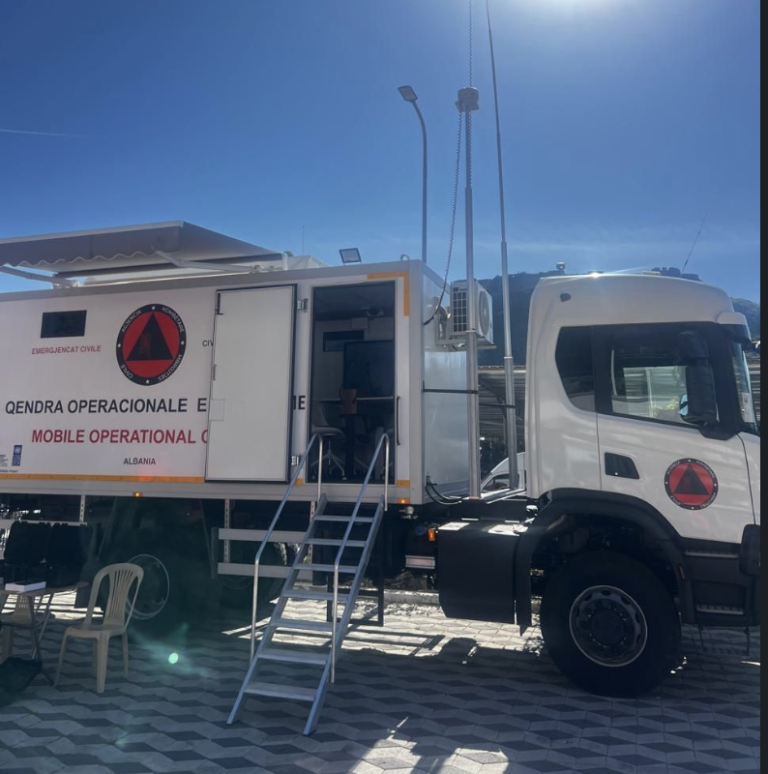
Mobile communication vehicle is the backbone of modern emergency response, military operations, and event management. These sophisticated platforms ensure seamless connectivity when and where it matters most. At Infinity Chassis Units, we engineer state-of-the-art communication vehicles that serve as mobile command centers, satellite communication hubs, and tactical operations posts.
This comprehensive guide covers everything you need to know about mobile communications vehicles, including design considerations, technical specifications, applications, and customization options.
What is a Mobile Communications Vehicle?
A mobile communications vehicle is a specialized platform equipped with advanced communication technologies to provide reliable connectivity in any location. These communication vehicles range from compact rapid-response units to large command centers with multiple workstations.
Mobile communication vehicles serve critical functions:
- Emergency response coordination
- Military tactical operations
- Disaster recovery communications
- Major event management
- Broadcast and media production
- Remote site connectivity
- Government agency operations
Types of Mobile Communications Vehicles
Infinity Chassis Units offers a complete range of mobile communications vehicles to meet diverse operational requirements.
1. Emergency Communications Vehicles
Emergency communications vehicles are designed for rapid deployment during crises. These units restore communication networks when infrastructure fails.
| Configuration | Typical Features | Best For |
|---|---|---|
| Rapid Response Van | Satellite internet, cellular boosters, generators | First responder coordination |
| Tactical Communications Unit | Encrypted radios, mesh networking, UAV integration | Police and SWAT operations |
| Disaster Recovery Vehicle | Multiple satellite systems, cellular base stations, long-range power | Natural disaster response |
2. Military Communication Vehicles
Military communication vehicles are ruggedized platforms built to the most demanding specifications. These military mobile communications vehicles ensure secure, reliable communications in theater.
Key features:
- Encrypted communication systems
- Nuclear/biological/chemical protection
- Ballistic protection options
- Extreme temperature operation
- Low-probability-of-intercept transmissions
3. Mobile Command Vehicles
Mobile command vehicles serve as on-scene coordination centers for complex operations. These mobile command center vehicles provide:
- Multiple workstations with networked computers
- Video wall displays
- Real-time data integration
- Interagency communication systems
- Briefing and planning areas
4. Mobile Satellite Communication Vehicles
Mobile satellite communication vehicles provide connectivity in the most remote locations. These units feature:
- Motorized satellite dishes (1.2m to 2.4m)
- Auto-acquisition and tracking systems
- Ku-band, Ka-band, or X-band capability
- Bonded cellular/satellite hybrid systems
- Rapid deployment (under 5 minutes)
5. Telecom Response Vehicles
Telecom response vehicles restore cellular and internet service during outages. These mobile telecom response vehicles function as:
- Temporary cell towers (Cells on Wheels – COWs)
- Portable telecom command centers
- Fiber optic splicing and repair units
- Microwave backhaul stations
6. Broadcast Communication Vehicles
Mobile broadcast vehicles enable live television and radio production from any location. These mobile media communications units include:
- Live production switchers
- Satellite uplink systems
- Multiple camera inputs
- Audio mixing and monitoring
- Edit suites
7. Tactical Communication Vehicles
Tactical communication vehicles are designed for law enforcement and special operations. These tactical communication vehicle builders create platforms with:
- Secure voice and data networks
- Drone integration and control
- Real-time surveillance feeds
- Encrypted video backhaul
- Rapid deployment capabilities
Key Design Considerations for Mobile Communications Vehicles
Designing the perfect mobile communication vehicle requires careful attention to operational requirements, technical specifications, and user workflows.
Communication Systems Integration
| System Type | Options |
|---|---|
| Satellite Communications | Ku-band, Ka-band, X-band, L-band, multi-band terminals |
| Cellular Systems | 4G/LTE, 5G, private LTE, carrier aggregation |
| Radio Systems | VHF/UHF, P25, Tetra, DMR, HF, amateur radio |
| Mesh Networking | Tactical mesh, ad-hoc networks, self-healing topologies |
| Backhaul | Microwave, fiber optic, bonded cellular, satellite |
Antenna and Mast Systems
Durable masts for RV communication and professional applications include:
| Mast Type | Height | Capacity |
|---|---|---|
| Pneumatic Masts | 5-15 meters | Light to medium loads |
| Electric Telescopic Masts | 3-12 meters | Medium loads |
| Hydraulic Masts | 10-30 meters | Heavy loads (satellite dishes) |
| Manual Masts | 3-10 meters | Light loads, no power required |
Power Systems
Mobile communication in remote locations requires robust, redundant power:
| Component | Specification |
|---|---|
| Primary Generator | 5-30 kW, diesel or propane |
| Backup Generator | Secondary unit for redundancy |
| Inverter/Battery System | Pure sine wave, deep-cycle batteries |
| UPS | Uninterruptible power for critical equipment |
| Solar Ready | Pre-wired for solar array connection |
| Shore Power | 30A, 50A, or 100A input |
Environmental Control
Maintaining optimal operating conditions for sensitive electronics:
| System | Specification |
|---|---|
| HVAC | Precision cooling, redundant units |
| Temperature Range | -40°C to +50°C operation |
| Humidity Control | Dehumidification systems |
| Air Filtration | NBC filtration for military units |
| Pressurization | Positive pressure to exclude contaminants |
Interior Layout and Workflow
Mobile command vehicle designs optimize workspace for operators:
| Zone | Function |
|---|---|
| Operator Positions | 2-8 workstations with ergonomic seating |
| Video Wall | Multiple displays for situational awareness |
| Equipment Racks | 19″ rackmount space for electronics |
| Conference Area | Planning and briefing space |
| Rest Area | Crew rest and relief |
Mobile Communications Vehicle Applications
Emergency Management
Mobile emergency communications vehicles are essential for:
- Hurricane response and recovery
- Wildland fire operations
- Earthquake disaster relief
- Flood incident management
- Search and rescue coordination
Military Operations
Military communication vehicles support:
- Forward operating bases
- Tactical operations centers
- Field headquarters
- Coalition coordination
- Humanitarian missions
Law Enforcement
Communication vehicles for police and tactical units:
- SWAT command and control
- Major incident coordination
- Surveillance operations
- Crowd management
- Multi-agency task forces
Public Events
Mobile communications vehicles enable:
- Olympic Games coordination
- Super Bowl command centers
- Political conventions
- Music festivals
- Marathons and parades
Broadcast and Media
Mobile media communications support:
- Live news coverage
- Sports broadcasting
- Entertainment production
- Documentary filming
- Remote interviews
Telecommunications
Mobile telecom response vehicles provide:
- Temporary cellular coverage
- Emergency backhaul
- Fiber optic repair
- Network expansion
- Rural connectivity
Mobile Communications Vehicle Specifications
Van-Based Communications Vehicles
Built on premium chassis like Mercedes-Benz Sprinter, Ford Transit, and RAM ProMaster.
| Specification | Typical Range |
|---|---|
| Length | 5.9 – 7.6 meters |
| Width | 2.0 – 2.2 meters |
| Height | 2.6 – 3.0 meters (with roof equipment) |
| GVWR | 3,500 – 5,000 kg |
| Operator Positions | 2-4 workstations |
| Power | 5-15 kW generator |
| Mast Height | 5-10 meters pneumatic |
Truck-Based Communications Vehicles
Built on medium-duty chassis for maximum capability.
| Specification | Typical Range |
|---|---|
| Length | 7.6 – 11.0 meters |
| Width | 2.4 – 2.6 meters |
| Height | 3.0 – 4.0 meters (with roof equipment) |
| GVWR | 8,000 – 16,000 kg |
| Operator Positions | 4-8 workstations |
| Power | 15-30 kW generator |
| Mast Height | 10-20 meters telescopic/hydraulic |
Trailer-Based Communications Units
Towable units for maximum flexibility and space.
| Specification | Typical Range |
|---|---|
| Length | 4.9 – 12.2 meters |
| Width | 2.4 – 2.6 meters |
| Height | 2.4 – 3.0 meters (travel) / 3.5-4.5m (deployed) |
| Operator Positions | 2-10 workstations |
| Power | 10-30 kW generator |
| Mast Height | 10-25 meters hydraulic |
Mobile Satellite Communication Vehicle Specifications
| Component | Specification |
|---|---|
| Satellite Dish | 1.2m, 1.8m, or 2.4m motorized |
| Frequency Bands | Ku, Ka, X, C-band options |
| Acquisition Time | < 3 minutes from stop |
| Throughput | Up to 100 Mbps |
| Modem | Modern satellite modems with ACM |
Mobile Communication Vehicle Manufacturers
As a leading mobile communication vehicle manufacturer, Infinity Chassis Units distinguishes itself through:
| Factor | Infinity Chassis Units Advantage |
|---|---|
| Engineering Excellence | Finite element analysis, thermal modeling, RF testing |
| Integration Expertise | Seamless integration of complex communication systems |
| Customization | Every vehicle built to your specific operational requirements |
| Quality Materials | Military-grade components and construction |
| Regulatory Compliance | Designed to meet FCC, MIL-STD, and other standards |
| Global Support | Worldwide delivery and after-sales service |
Mobile Command Vehicle for Sale: Price Guide
Mobile command vehicle prices vary significantly based on size, complexity, and communication equipment.
| Configuration | Typical Features | Estimated Price Range (USD) |
|---|---|---|
| Basic Communications Van | Satellite internet, cellular boosters, 2 workstations | $150,000 – $250,000 |
| Standard Command Vehicle | 4 workstations, video wall, 1.2m satellite, 10kW generator | $250,000 – $400,000 |
| Advanced Tactical Vehicle | 6 workstations, encrypted systems, 1.8m satellite, 20kW generator | $400,000 – $700,000 |
| Large Command Trailer | 8-10 workstations, multiple systems, 2.4m satellite, 30kW generator | $700,000 – $1,200,000+ |
| Military-Grade Communications | NBC protection, ballistic armor, multiple redundant systems | $1,000,000 – $2,500,000+ |
Factors Affecting Price
| Factor | Impact |
|---|---|
| Size and Chassis | Larger vehicles and heavy-duty chassis cost more |
| Communication Systems | Basic vs. advanced satellite, radio, cellular systems |
| Redundancy | Single vs. redundant generators, modems, amplifiers |
| Mast System | Manual pneumatic vs. automated telescopic |
| Interior Fit-Out | Basic workstations vs. full command center |
| Environmental Protection | Standard vs. military-grade (NBC, ballistic) |
| Customization Level | Standard design vs. fully custom configuration |
Mobile Communication Vehicle Design Process
Infinity Chassis Units follows a comprehensive design process for every mobile communications vehicle:
Phase 1: Needs Assessment
- Understand your operational mission
- Identify communication requirements
- Determine coverage areas and bandwidth needs
- Review regulatory and security requirements
Phase 2: Conceptual Design
- 3D modeling and space planning
- RF system design and link budget analysis
- Power budget calculation
- Preliminary specifications
Phase 3: Engineering
- Structural analysis
- Systems integration engineering
- Thermal management design
- Final design approval
Phase 4: Fabrication
- Chassis procurement
- Interior construction
- Systems installation
- Communication equipment integration
Phase 5: Testing and Commissioning
- Factory acceptance testing
- RF performance verification
- Operator training
- Field deployment support
Mobile Communications Vehicle Applications by Sector
Government and Emergency Management
Mobile communications vehicles enable:
- FEMA disaster response
- State emergency operations
- County emergency management
- Urban search and rescue
- Public health emergencies
Department of Defense
Military communication vehicles support:
- Army tactical operations
- Marine Corps expeditionary forces
- Navy shore operations
- Air Force base communications
- Special operations command
Law Enforcement
Communication vehicles for police include:
- State police command units
- Sheriff’s department operations
- Major city police tactical units
- FBI and federal task forces
- Border patrol coordination
Private Sector
Mobile communication vehicles serve:
- Utility companies (storm response)
- Telecommunications providers
- Oil and gas operations
- Mining operations
- Construction projects
Broadcast and Media
Mobile media communications support:
- Television networks
- News organizations
- Sports broadcasters
- Production companies
- Streaming services
Frequently Asked Questions (FAQ)
1. What is a mobile communications vehicle?
A mobile communications vehicle is a specialized platform equipped with advanced communication technologies to provide reliable connectivity in any location. These vehicles serve as mobile command centers, satellite communication hubs, and tactical operations posts.
2. What are communication vehicles used for?
Communication vehicles are used for emergency response coordination, military tactical operations, disaster recovery communications, major event management, broadcast production, remote site connectivity, and government agency operations.
3. How much does a mobile command vehicle cost?
Mobile command vehicle prices range from $150,000 for a basic communications van to $2,500,000+ for a fully equipped military-grade command center. The final cost depends on size, communication systems, redundancy, and customization level.
4. What is a mobile satellite communication vehicle?
A mobile satellite communication vehicle is equipped with motorized satellite dishes (typically 1.2m to 2.4m) and modems to provide broadband connectivity in remote locations. These units feature auto-acquisition systems and can be operational within minutes of arrival.
5. What types of communication systems are installed in these vehicles?
Mobile communication vehicles can be equipped with satellite communications (Ku, Ka, X, L-band), cellular systems (4G/LTE, 5G), radio systems (VHF/UHF, P25, Tetra), mesh networking, and microwave backhaul.
6. How are antennas and masts deployed?
Vehicles use pneumatic masts (5-15m), electric telescopic masts (3-12m), or hydraulic masts (10-30m) depending on the antenna load and height requirements. Most systems can be deployed in under 5 minutes.
7. What power systems are needed for remote operation?
Mobile communication in remote locations requires robust power systems including primary generators (5-30 kW), backup generators, inverter/battery systems, UPS for critical equipment, and shore power connections.
8. Can these vehicles operate in extreme environments?
Yes. Infinity Chassis Units designs mobile communications vehicles for operation from -40°C to +50°C. Military versions include NBC protection and ballistic armor for the most demanding environments.
9. How long does it take to build a custom communications vehicle?
Typical lead times range from 6 to 12 months depending on complexity. A detailed project plan is provided upon contract initiation.
10. Do you ship mobile communications vehicles internationally?
Yes. Infinity Chassis Units specializes in worldwide delivery of mobile communications vehicles. We manage professional crating, customs documentation, and logistics coordination to any destination.
11. What is a tactical communication vehicle?
A tactical communication vehicle is designed for law enforcement and special operations, featuring secure voice and data networks, drone integration, real-time surveillance feeds, and encrypted video backhaul.
12. What is a telecom response vehicle?
A telecom response vehicle restores cellular and internet service during outages, functioning as temporary cell towers (Cells on Wheels – COWs), portable telecom command centers, or fiber optic repair units.
13. Can mobile communications vehicles be used for broadcasting?
Yes. Mobile broadcast vehicles enable live television and radio production with live production switchers, satellite uplink systems, multiple camera inputs, audio mixing, and edit suites.
14. What is the difference between a command vehicle and a communications vehicle?
A mobile command vehicle typically includes command and control functions with workstations, video walls, and planning areas. A mobile communications vehicle focuses primarily on providing communication connectivity, though many vehicles combine both functions.
15. How do I choose the right mobile communications vehicle?
Consider your operational mission, required coverage area, bandwidth needs, number of operators, deployment environment, and budget. Infinity Chassis Units provides expert consultation to help you select the optimal configuration.
Why Choose Infinity Chassis Units for Your Mobile Communications Vehicle?
| Reason | Description |
|---|---|
| Experience | Decades of engineering specialized mobile platforms |
| Integration Expertise | Seamless integration of complex communication systems |
| Customization | Every vehicle built to your operational requirements |
| Quality | Military-grade materials and construction |
| Compliance | Designed to meet industry and government standards |
| Support | Global delivery and after-sales service |
| Value | Competitive pricing without compromising quality |
Contact Infinity Chassis Units
Ready to discuss your mobile communications vehicle requirements? Contact Infinity Chassis Units today for a consultation and detailed quotation.
Tell us about your needs:
- What is your operational mission? (Emergency response, military, broadcast, telecom?)
- What communication systems are required?
- How many operator positions are needed?
- Where will the vehicle be deployed?
- What environmental conditions must it withstand?
We build the perfect mobile communications vehicle for your mission.
Infinity Chassis Units: Engineering Mobile Connectivity
Infinity Chassis Units is committed to advancing mobile communications through innovative mobile communications vehicles and communication vehicles. We combine engineering excellence with deep expertise in RF systems, power management, and vehicle integration to create solutions that keep you connected anywhere in the world.
Choose Infinity Chassis Units. Choose the best in mobile communications.