Technical Overview
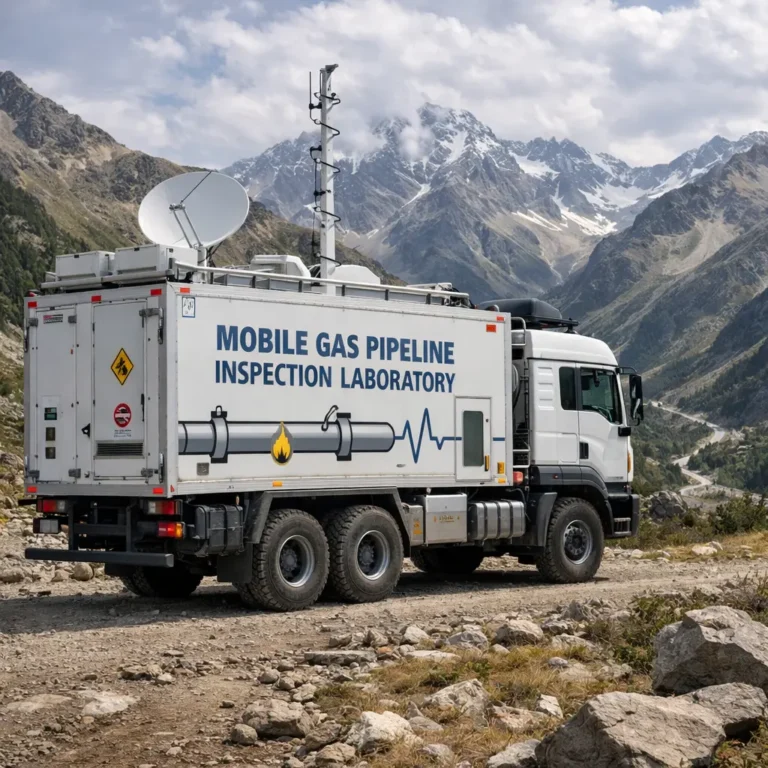
Our Mobile Gas Pipeline Inspection Laboratory is a fully-equipped, 6×6 all-terrain diagnostic center designed for comprehensive evaluation of gas pipeline integrity. Mounted on a KamAZ 43118 chassis, this mobile lab features 6 sleeping berths and integrates advanced corrosion monitoring, cathodic protection testing, and wall thickness measurement technologies for field deployment in remote locations.
Core Diagnostic Capabilities
1. Pipeline Integrity Assessment System
- Portable ultrasonic defectoscope “Alfascan III” for weld inspection
- DM 5E ultrasonic thickness gauge (0.6-500mm range)
- IKN-4M flaw detector with measuring wheel
- Thermal imager ITSELF for temperature anomaly detection
2. Cathodic Protection Monitoring Suite
- Statron 3656.3 rectifiers (0-60V DC, 33A output)
- Cu/CuSO4 reference electrodes (5 measuring, 2 stable)
- MI 3123 soil resistance meter with 4-wire measurement
- Pipeline current mapper (RSMh system) with 30km range
3. Coating & Insulation Analysis
- SPY 790 holiday detector (5-35kV pulse DC)
- SPY 670 wet sponge detector for coating flaws
- CM-1 adhesion meter for coating bond strength
- Coating thickness gauge for multi-layer analysis
Technical Specifications
| Category | Specifications |
|---|---|
| Vehicle Platform | KamAZ 43118 (6×6) |
| Laboratory Dimensions | 5300×2400×2100mm |
| Power Systems | 230V AC + 6.5kW backup generator |
| Crew Capacity | 6 personnel (sleeping berths) |
| Data Management | INTMESS 3.0 & WinTrans 1.0 software |
| Environmental Range | -40°C to +50°C operation |
Specialized Equipment Package
Electrical & Measurement Systems
- MD 9050 digital multimeters (1000V AC/DC)
- GPS SYNTAKT time-synchronized sensors
- 25A power switching system
- 2000W UPS with 24V DC input
Field Support Tools
- Makita 9565CVR angle grinder (1400W)
- AEG WSE 9-125 MX grinding kit
- Bosch GSB 16RE impact drill
- Portable welding system CD 1500
Safety & Support Systems
- 4 gas analyzers (EX TEC RM 4)
- VARIOTEC 8EX multi-gas detector
- Dielectric protection kit (1000V rated)
- 500W halogen work lights (40 lamps)
Operational Advantages
✔ All-terrain mobility for remote pipeline access
✔ On-site data processing with dedicated software
✔ Comprehensive corrosion monitoring (CP, UT, IR)
✔ Self-sufficient living quarters for extended missions
✔ EN/ISO compliant measurements
Field Applications
- Cathodic protection system evaluation
- Pipeline wall thickness surveys
- Coating integrity assessments
- Construction quality control
- Emergency damage inspections
Conclusion
This Mobile Gas Pipeline Inspection Laboratory represents the pinnacle of field-deployable diagnostic technology, combining advanced measurement systems with extreme operational mobility. Its integrated design and comprehensive equipment suite make it ideal for pipeline operators, integrity management teams, and regulatory compliance inspections where accurate field data is critical for infrastructure safety.
Contact
Frequently Asked Questions (FAQ)
1. What is the main purpose of this Mobile Gas Pipeline Inspection Laboratory?
The laboratory is a self-contained, all-terrain diagnostic center designed to perform comprehensive on-site integrity assessments of gas pipelines in remote or difficult-to-access locations. It combines advanced inspection technologies with mobile living quarters for extended field missions.
2. What vehicle is the laboratory built on, and why was it chosen?
The laboratory is mounted on a KamAZ 43118 chassis with a 6×6 all-wheel-drive configuration. This platform was chosen for its exceptional off-road capability, durability, and load capacity, allowing the lab to reach pipeline sections in challenging terrain like deserts, forests, and tundra.
3. How many inspectors can work and live in the mobile lab during a mission?
The unit is equipped to support a crew of 6 personnel. It includes integrated sleeping berths, allowing the team to remain on-site for extended periods without needing external accommodation, which is crucial for remote area inspections.
4. What are the core technical inspection capabilities of the laboratory?
The lab’s core capabilities are divided into three main areas:
- Pipeline Integrity Assessment: Ultrasonic wall thickness measurement (DM 5E gauge), weld inspection (Alfascan III defectoscope), flaw detection (IKN-4M), and thermal imaging for anomaly detection.
- Cathodic Protection (CP) Monitoring: Testing and adjustment of CP systems using rectifiers (Statron 3656.3), reference electrodes, soil resistivity measurement (MI 3123), and pipeline current mapping (RSMh system).
- Coating & Insulation Analysis: Detection of coating defects (holidays) using high-voltage detectors (SPY 790, SPY 670), adhesion testing (CM-1), and coating thickness measurement.
5. What is the operating temperature range for the equipment?
The laboratory and its integrated equipment are designed to operate reliably in an extreme environmental range from -40°C to +50°C, ensuring year-round deployment in most climatic conditions.
6. How does the laboratory ensure operational independence in the field?
The unit is fully self-sufficient. It has its own power supply system including a 230V AC grid connection and a 6.5kW backup generator, a 2000W UPS, and carries comprehensive tools (grinders, welders) and safety equipment for on-site repairs and work.
7. What software is used for data management and reporting?
Field data is processed and managed using dedicated professional software: INTMESS 3.0 and WinTrans 1.0. This allows for on-site analysis, reporting, and compliance with EN/ISO standards, streamlining the workflow from data collection to final report.
8. What safety features are integrated into the laboratory?
Safety is paramount. The lab carries:
- Gas detection: Four EX TEC RM 4 gas analyzers and a VARIOTEC 8EX multi-gas detector for ambient air monitoring.
- Electrical safety: A full dielectric protection kit rated for 1000V for personnel working on CP systems.
- Work area lighting: Forty 500W halogen lamps to ensure safe, well-lit operation during night or low-light conditions.
9. What are the typical applications for this mobile lab?
Key applications include:
- Routine cathodic protection system surveys and effectiveness evaluations.
- Pipeline wall thickness surveys for corrosion monitoring.
- Coating integrity assessment during construction or maintenance.
- Construction quality control and compliance inspections.
- Emergency inspections following third-party damage or natural events.
10. Who would typically use this Mobile Inspection Laboratory?
This unit is ideal for:
- Pipeline Operators and Asset Owners managing long-distance transmission or distribution networks.
- Integrity Management Service Companies conducting contracted inspection campaigns.
- Engineering and Regulatory Compliance Teams performing due diligence, pre-purchase surveys, or regulatory audits.