
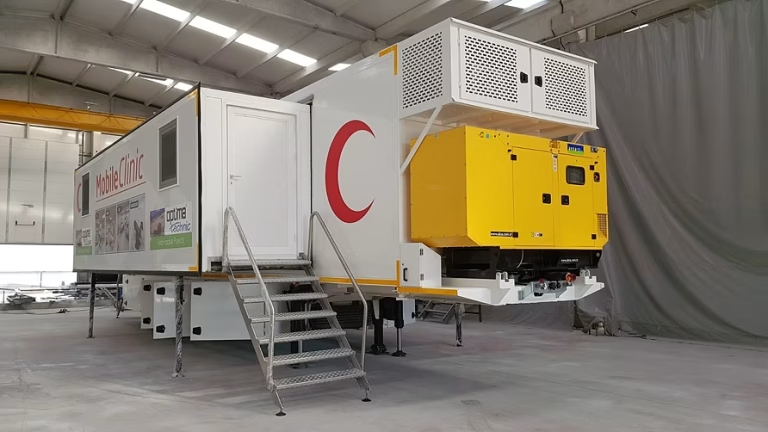
Imagine a hospital that can pack up and move. A place where doctors can work, surgeries can happen, and patients can be treated, but instead of being a big building that stays in one spot, it can travel to where the help is needed. That’s what a mobile hospital is.
Sometimes bad things happen in places that don’t have hospitals. Earthquakes, floods, wars, or just remote areas far from any doctor. Regular hospitals can’t help if they’re too far away. But mobile hospitals? They can go anywhere.
What Is a Mobile Hospital?
A mobile hospital is basically a hospital that isn’t stuck in one place. It’s made to be moved around. Some are built inside big trucks or trailers. Others come in containers that can be loaded onto ships or planes. When they arrive where they’re needed, they set up and start working.
Inside, they have real medical equipment. Not just basic first aid stuff. We’re talking operating tables, X-ray machines, ventilators, and everything else you’d find in a regular hospital. They’re small, sure, but they’re fully equipped to handle serious medical situations.
Where Mobile Hospitals Get Used
Natural Disasters
When an earthquake hits or a flood sweeps through a town, local hospitals might be damaged or destroyed. Even if they’re still standing, they get overwhelmed with injured people fast. Mobile hospitals can move in and set up right where they’re needed, giving people a place to get treatment when they have nowhere else to go.
War Zones
In conflicts, hospitals can become targets or get caught in the fighting. Sometimes medical facilities have to pick up and leave quickly. Mobile hospitals can move with the people who need them. They can set up in safer areas and keep treating wounded soldiers and civilians.
Places With No Hospitals
Lots of rural areas around the world don’t have any hospital nearby. People might have to travel hours or even days to see a doctor. Mobile hospitals can visit these places, set up for a while, and give people the medical care they can’t usually get.
Health Camps
Sometimes organizations run special health programs. Maybe they’re vaccinating kids, doing health screenings, or running awareness campaigns. Mobile hospitals are perfect for this. They can go where the people are and do the work.
Emergency Response
When something bad happens suddenly, mobile hospitals can be the fastest way to get medical help on scene. They’re designed to move quickly and set up fast.
What Makes Mobile Hospitals Special
They Move
This is the whole point. They can go anywhere. Trucks, ships, planes, trains. However they need to travel, they can do it.
They Set Up Fast
When every minute counts, you can’t spend days building something. Mobile hospitals are made to be set up in hours, not weeks. People get help faster.
They Work on Their Own
Mobile hospitals bring their own power. Generators keep the lights on and the machines running. They have their own water tanks. They don’t need to plug into anything. This means they can work anywhere, even in places with no electricity or clean water.
They Can Be Changed
Need more beds? Add another section. Need an operating room? They can set one up. Mobile hospitals are modular, which means you can change them around based on what you need right now.
They Have Real Equipment
These aren’t just tents with bandages. Mobile hospitals have real medical gear. Ventilators for people who can’t breathe. Monitors to watch heart rates. X-ray machines to see broken bones. Even operating rooms for surgery.
Good Things About Mobile Hospitals
They reach people who need help. The whole point is getting medical care to places that don’t have it. Mobile hospitals do exactly that.
They’re flexible. One day they might be treating earthquake victims. The next month they could be running a vaccination clinic. They adapt to whatever is needed.
They work fast. When something bad happens, waiting isn’t an option. Mobile hospitals can be moving toward the problem while regular hospitals are still making plans.
They save money. Building a real hospital costs millions and takes years. Mobile hospitals cost less and can be ready much sooner.
They go where nothing else can. Some places are just too hard to reach with normal medical help. Mobile hospitals are built to handle tough conditions.
What Goes Into a Mobile Hospital
A good mobile hospital has a lot of parts working together:
The structure itself. The tent or container or truck that everything goes inside. It needs to be strong, weatherproof, and easy to set up.
Medical equipment. All the stuff doctors need to treat people. Beds, monitors, ventilators, surgical tools, X-ray machines, lab equipment.
Power systems. Generators, batteries, solar panels. Whatever it takes to keep everything running when there’s no plug to connect to.
Water and plumbing. Tanks for clean water, systems for waste, sinks for washing. Hospitals need water for all kinds of things.
Climate control. Heating and cooling. Patients need to be comfortable. Some medicines need specific temperatures.
Lighting. So doctors can see what they’re doing, day or night.
What Affects Mobile Hospital Prices
If you’re looking to buy a mobile hospital, prices vary a lot. Here’s what makes the difference:
Size matters. A small clinic for basic care costs less than a big hospital with operating rooms and multiple beds.
Equipment makes a difference. Better machines cost more. More machines cost more. The fanciest medical gear isn’t cheap.
Materials change the price. Stronger, longer-lasting materials cost more upfront but might save money over time.
Features add up. Better climate control, bigger water tanks, more powerful generators. Each extra thing adds to the price.
Customization costs. If you need something special, built just for you, that takes more work and more money.
The Bottom Line
Mobile hospitals fill a gap that regular hospitals can’t. When disaster strikes, when fighting breaks out, when people live too far from any doctor, these movable medical centers bring help right where it’s needed.
They’re not as big as real hospitals. They can’t do everything. But they can go anywhere, set up fast, and start saving lives when every minute counts. And for the people they help, that’s everything.