
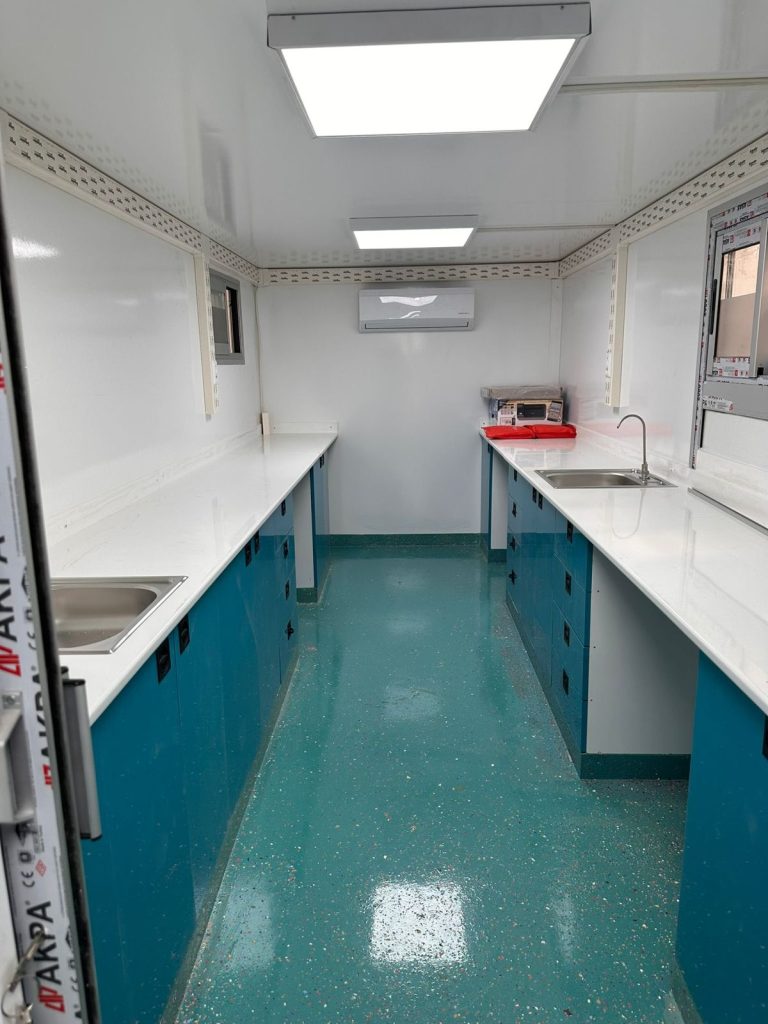
What Are Mobile Laboratory Vehicles?
Imagine a fully equipped laboratory that can travel anywhere—from remote villages to disaster zones. That’s exactly what Mobile Laboratory Vehicles (MLVs) are. These self-contained units are transforming how we deliver emergency medical response, conduct field research, and provide diagnostic services in areas without permanent facilities.
Whether built into trucks, trailers, or shipping containers, these mobile labs bring cutting-edge science where it’s needed most.
Key Applications: Where Mobile Labs Make a Difference
1. Emergency & Outbreak Response
When disease outbreaks strike or disasters hit, time is critical. Mobile labs provide:
- Rapid diagnostic testing for pathogens like COVID-19, Ebola, or cholera at the outbreak epicenter
- Water quality analysis after floods or earthquakes
- Chemical hazard assessment in environmental disasters
2. Healthcare in Remote Communities
Millions lack access to basic medical testing. Mobile labs solve this by:
- Providing HIV, TB, malaria, and maternal health testing in rural areas
- Serving as mobile clinics for underserved populations
- Supporting vaccination campaigns with on-site analysis
3. Environmental & Wildlife Monitoring
Scientists use mobile labs for:
- Real-time pollution tracking in hard-to-reach locations
- Wildlife disease surveillance to prevent animal-to-human transmission
- Agricultural testing for soil and water quality
4. Specialized Operations
- Forensic crime scene investigation
- Food safety inspections
- Clinical trial support in diverse communities
- Border security and customs screening
Essential Features of Modern Mobile Labs
Design & Infrastructure
- Multiple Platforms: Custom vans for agility, expandable trailers for space, or ISO containers for global shipping
- Biosafety Standards: Configurable to BSL-2 or BSL-3 levels with HEPA filtration and pressure controls
- Self-Sufficiency: Onboard power (generators/solar), climate control, water systems, and satellite internet
Standard Equipment
- Molecular Diagnostics: Portable PCR machines and DNA sequencers
- Microbiology Tools: Microscopes, incubators, and centrifuges
- Safety Systems: Biological safety cabinets, autoclaves, and secure waste containment
5 Major Advantages of Mobile Laboratory Solutions
- Speed to Action: Deploy in hours, not months
- Cost Efficiency: Serve multiple locations for less than building permanent labs
- Sample Integrity: Test on-site without degradation during transport
- Containment: Process dangerous pathogens safely at the source
- Flexibility: Reconfigure for different missions as needs change
Real-World Success Stories
COVID-19 Pandemic Response
During the pandemic, mobile PCR labs expanded testing capacity dramatically. Countries like South Korea and Germany deployed dozens of units to hotspots, reducing result times from days to hours.
Ebola Outbreaks in Africa
BSL-3 mobile labs were crucial in diagnosing Ebola cases in remote regions of West Africa and the DRC, containing outbreaks faster than ever before.
Rural Health Initiatives
In India and sub-Saharan Africa, mobile diagnostic vans now provide routine healthcare testing, catching diseases earlier and saving lives.
Challenges and Solutions
| Challenge | Modern Solution |
|---|---|
| High initial cost | Modular designs, government/public health partnerships |
| Maintenance in field | Remote diagnostics, trained local technicians |
| Limited throughput | Automated systems, lab-on-a-chip technology |
| Connectivity issues | Satellite internet, offline-capable equipment |
The Future of Mobile Laboratories
Trend 1: Smarter Technology
- AI-powered diagnostics for faster, more accurate results
- Lab-on-a-chip systems that minimize manual steps
- Drone delivery integration for sample collection
Trend 2: Greater Sustainability
- Solar-powered labs with battery backups
- Water recycling systems
- Lightweight, fuel-efficient vehicles
Trend 3: Connected Networks
- Telemedicine integration for expert consultation
- Real-time data sharing with central health authorities
- IoT monitoring of equipment and samples
Conclusion: Mobile Labs Are Changing the Game
Mobile Laboratory Vehicles represent one of the most important innovations in global health equity and emergency preparedness. They break down the barriers between advanced medical science and the people who need it most—whether in a bustling city during an outbreak or a village hundreds of miles from the nearest hospital.
As technology continues to miniaturize and connectivity expands, these mobile labs will become even more capable, affordable, and widespread. They’re not just vehicles; they’re lifelines, research stations, and beacons of scientific progress on wheels.
Keywords for SEO: mobile laboratory, mobile lab vehicle, emergency response lab, field diagnostic unit, portable laboratory, BSL-3 mobile lab, outbreak response vehicle, rural health testing, mobile PCR lab, disaster response laboratory, deployable lab, self-contained laboratory, mobile testing unit, remote diagnostic lab, biosafety mobile unit.