
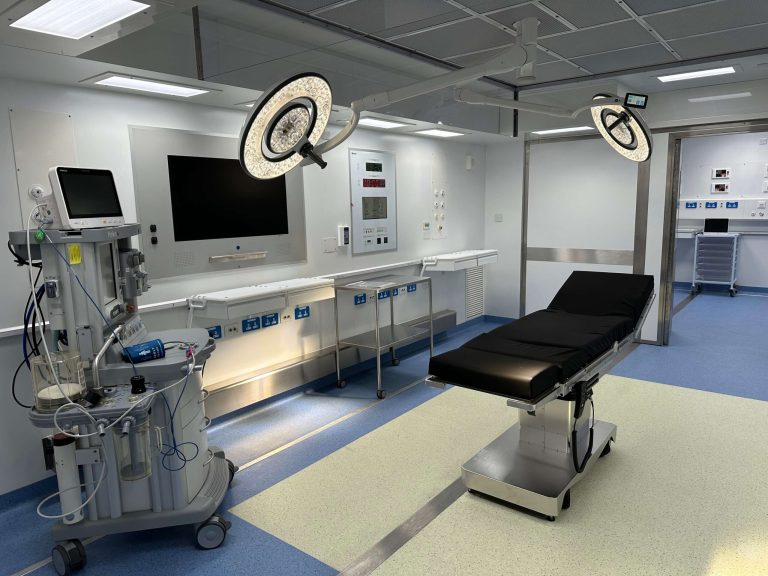
What We Offer
We build mobile surgery units. That’s what we’ve been doing for over 25 years. Different sizes, different chassis, different equipment packages. But always the same goal: a sterile, functional operating room that can go anywhere.
Some of our units are trailers. Some are trucks. Some are shipping containers converted into surgical suites. Which one you need depends on where you’re going and what you’re doing when you get there.
Three Ways to Take Surgery on the Road
Truck-Mounted Units
These are self-propelled. You drive them to the location, park, and start working. No towing, no separate vehicle needed.
Who uses them:
- Military units that need to move fast
- Disaster response teams going into rough terrain
- Anyone who doesn’t want to deal with a trailer
We build these on Toyota Hino, Mercedes-Benz, and Ford chassis. 4×4 available if you’re going off-road. The body is CTP composite panel – waterproof, insulated, and easy to clean.
[More on truck-mounted units →]
Trailer-Based Units
These get towed to location and parked. They can stay there for weeks or months, then move to the next site. Cheaper than truck-mounted because you’re not paying for an engine and cab you don’t really need.
Who uses them:
- Field hospitals
- Rural outreach programs
- Hospitals under renovation who need extra OR capacity
We make 20ft and 40ft versions. The expandable ones double their floor space in about three minutes. Prices from $145k to $320k depending on size and equipment.
[More on surgical trailers →]
Containerized Operating Rooms
These are built from standard 20ft or 40ft shipping containers. They ship anywhere in the world by boat, train, or truck. Set them up individually or connect several to make a proper field hospital.
Who uses them:
- Long-term humanitarian missions
- Military bases in remote locations
- Governments building rural healthcare infrastructure
They take a couple days to set up, but once they’re running, they’re as good as a permanent OR.
[More on container ORs →]
What’s Inside?
Across all three platforms, you get the same basic package:
The operating room:
- Surgical table that adjusts every which way (electric-hydraulic)
- LED lights bright enough you forget you’re in a vehicle
- Medical gas outlets – oxygen, air, suction
- Space for anesthesia machine and patient monitor
The stuff that makes it work:
- HVAC with HEPA filters, positive pressure, 20+ air changes per hour
- Generator so you don’t need shore power
- Battery backup for when the generator hiccups
- Water tanks (fresh and waste)
- Smooth walls and floors that clean up easily
Quick Comparison
| Type | Length | Setup | Best For | Price |
|---|---|---|---|---|
| MST-20 Trailer | 20 ft | 30 min | Quick response, small teams | $145k – $185k |
| MST-40 Trailer | 40 ft | 45 min | Full field hospitals | $245k – $320k |
| Truck-mounted | 7.5-9.5m | Drive in | Tactical, rough terrain | $285k – $395k |
| Toyota Hino Truck | 7.5-9.5m | Drive in | Rugged field ops | €80k – €120k |
| Container | 20/40ft | 2-3 days | Semi-permanent | Quote |
Who Buys These Mobile Surgery Units ?
Ministries of Health use them to reach villages that don’t have hospitals. They park in a town for two weeks, do fifty surgeries, then move to the next town. Simple and effective.
Military medical units take them wherever the troops go. Our truck-mounted units have been everywhere from desert training exercises to actual combat zones. NATO-compatible, CBRN protection if you need it.
Humanitarian organizations fly them into disaster zones. After earthquakes, floods, whatever. They ship by air, set up fast, and start saving lives.
Hospitals rent them when their own ORs are full or under renovation. Park it outside, hook it up to hospital utilities, keep the surgery schedule moving.
A Few Things Worth Knowing
Sterility isn’t a problem. The HVAC keeps positive pressure inside, so dirty air from outside can’t get in. HEPA filters catch everything. Smooth surfaces mean nothing for bacteria to hide in.
They run off-grid. Generator, water tanks, battery backup. Solar panels optional if you want them.
We customize everything. Tell us what surgeries you’re doing, what climate you’re in, what equipment your surgeons like. We’ll build it.
Delivery anywhere. We handle shipping, customs, everything. We’ve delivered to six continents. Antarctica’s the only one left.
Questions People Ask
What surgeries can you actually do in these?
General surgery. Trauma, C-sections, hernia repairs, gallbladder, orthopedics, cataracts. Not heart transplants or brain surgery, but the stuff that makes up most of the world’s surgical workload.
How long do they last?
We’ve got units from 15 years ago still running. The CTP panels don’t rust or rot. Mechanical stuff wears out eventually, but we support everything we build.
Can I rent one instead of buying?
Yes. Monthly rentals from $8k to $15k. Lease-to-own available too.
What about certification for Mobile Surgery Units ?
We build to international standards. Local certification is on you, but we provide all the documentation you need.
Bottom Line Mobile Surgery Units
You need surgical capability somewhere there isn’t a hospital. We build the thing that gets it there.
Truck, trailer, or container. Toyota Hino or Mercedes. Basic package or fully loaded. Your choice.