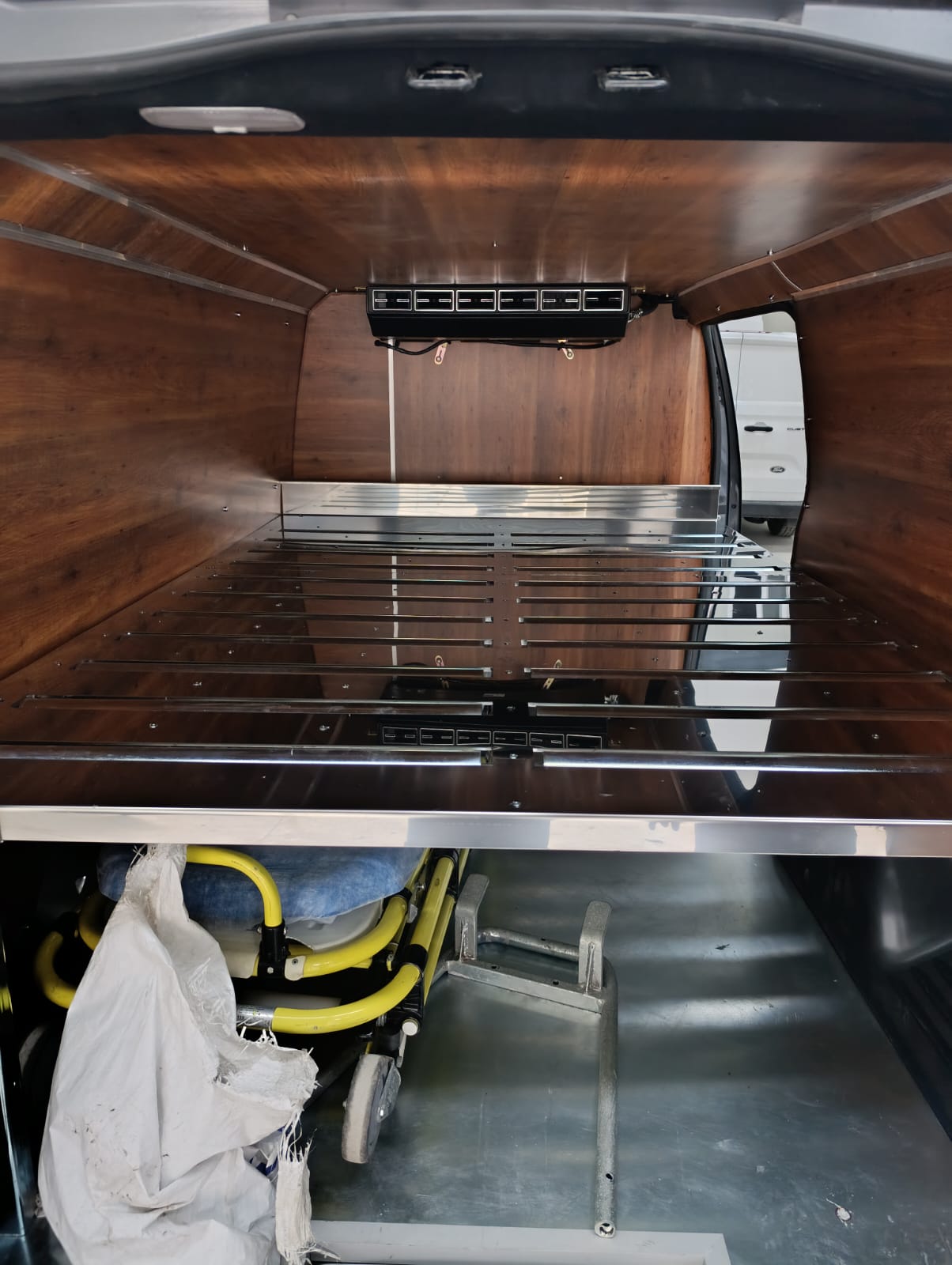
Description
Funeral and Morgue Vehicles – Engineered Solutions for Dignified and Secure Mortuary Logistics
In the essential and sensitive domains of funeral services, forensic investigation, and mass fatality management, Infinity Chassis Units (ICU) serves as a specialized engineering-driven manufacturer. Our Funeral and Morgue Vehicles are engineered to uphold the highest standards of hygiene, preservation, and operational efficiency, providing robust, reliable platforms for municipalities, health authorities, and disaster response organizations worldwide. Each vehicle ensures a proper chain of custody, mitigates public health risks, and facilitates the respectful and dignified handling of the deceased under all circumstances.
Vehicle & Platform Options: Configurable Solutions for Every Scale
We offer a purpose-built range of platforms to meet specific operational needs, from routine dignified transport to large-scale temporary mortuary capacity.
Van-Based Funeral Transport Vehicles:
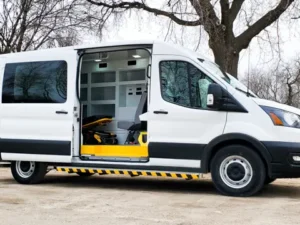
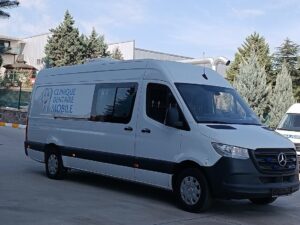
Engineered on discreet and reliable chassis such as the Mercedes-Benz Sprinter or Ford Transit, these units serve as professional funeral transport vehicles for funeral homes and hospitals. Designed for single-case transport, they feature a dignified interior compartment, secure stretcher mounting, and optional climate control to maintain professional service standards.
Truck-Based Morgue Vehicles:
Utilizing medium-duty or heavy-duty truck chassis, these units offer significant interior volume and payload capacity. Designed for multi-body transport or as self-contained mobile morgue vehicles, they are equipped with multi-body storage racks and powerful, independent refrigeration systems, making them ideal for coroner services, hospital overflow management, or initial response to mass casualty incidents.
Trailer-Based Morgue Units:
Offering exceptional flexibility, our trailer-based morgue units provide dedicated, towable capacity. This allows for semi-permanent deployment at disaster sites or hospital grounds, serving as surge capacity while freeing the tow vehicle for other logistical tasks.
Containerized Refrigerated Morgue Modules:
For high-capacity, prolonged temporary mortuary operations, our 20ft and 40ft containerized morgue units are the definitive solution. These modular, refrigerated buildings can be shipped globally and interconnected to create large-scale facilities for victim identification, autopsy, and long-term storage, meeting international forensic and humanitarian standards.
Interior Mortuary Layout & Optimized Workflow
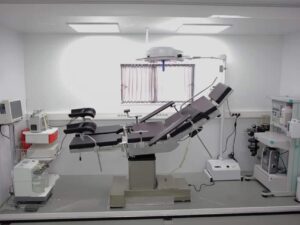
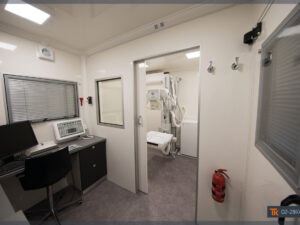
The interior of an ICU Funeral and Morgue Vehicle is meticulously designed to support a logical, dignified, and efficient workflow. Layouts are zoned to separate functions: secure access/loading, primary storage/transport, and often a separate workstation. For mobile morgues, the design facilitates a clear process flow for intake, temporary storage, examination, and release. The use of stainless steel interior surfaces and easy-wash antimicrobial flooring ensures a hygienic, easily decontaminated environment.
Refrigeration & Body Preservation Systems
Precise environmental control is the core technical function. We install medical-grade temperature-controlled refrigeration systems designed for mortuary applications, maintaining a stable holding environment of 2–6°C to decelerate decomposition. Optional deep-freeze capabilities down to -20°C are available for long-term storage or specific forensic needs. These systems feature precise digital thermostats, continuous monitoring, data logging, and alarms to ensure uniform and consistent preservation.
Loading, Handling & Ergonomic Equipment Integration
Safe and dignified transfer is critical. Our vehicles integrate specialized loading & handling equipment, such as hydraulic loading stretchers or lifts, to reduce physical strain and risk of injury. Inside, robust, corrosion-resistant multi-body storage racks are securely mounted to withstand transit forces. Containerized units can be configured with autopsy stations, evidence collection areas, and documentation spaces.
Hygiene, Sanitation & Air Management Systems
Maintaining a controlled bio-environment is essential. Our systems include integrated HEPA-filtered air extraction to remove particulates and manage odors. For examination units, hands-free sinks and sanitizer dispensers can be integrated. Floor plans with drains and wastewater collection tanks allow for thorough interior decontamination with proper containment of runoff.
Robust Electrical & Autonomous Power Systems
Uninterrupted operation is non-negotiable. Each vehicle functions as a self-sufficient power hub with a high-capacity generator & UPS configuration. The primary generator handles continuous loads, while an Uninterruptible Power Supply provides seamless battery backup for refrigeration controls, ensuring no loss of temperature control during generator start-up or power transfer.
Compliance with Mortuary, Forensic & Health Standards
Our engineering is informed by guidelines from the World Health Organization (WHO), Pan American Health Organization (PAHO), and best practices for disaster victim identification (DVI). We prioritize materials and systems that facilitate cleaning and disinfection in line with infection control protocols and provide comprehensive technical documentation to support regulatory approval.
Applications & Emergency Response Use Cases
Our vehicles are deployed in a wide range of scenarios:
-
Municipal funeral services and private funeral homes for daily operations.
-
Hospital groups and regional health authorities for managing capacity surges.
-
Disaster response agencies and health ministries following earthquakes, tsunamis, or terrorist attacks.
-
Forensic departments and police services for on-site processing during mass fatality incidents.
-
Humanitarian organizations in conflict zones or during disease outbreaks.
Global Delivery, Deployment & Operational Support
We manage the complete international supply chain. Our turnkey export & deployment support includes professional packing, comprehensive customs documentation, detailed operational manuals, and training programs. For complex systems, we offer on-site supervision during setup and commissioning to ensure your vehicle arrives mission-ready.
Frequently Asked Questions (FAQ)
What is the body storage capacity of your typical truck-based mobile morgue?
Capacity varies by configuration. A standard truck-based unit typically accommodates 6 to 12 remains on multi-tiered racks. Containerized morgue modules offer significantly higher capacity; a 40ft unit can store 20-40 bodies or more, depending on the layout.
Can the refrigeration system maintain temperature during long-distance transport or in extreme ambient heat?
Yes. Our systems are engineered with a significant capacity margin to handle high external ambient temperatures (standard up to 45°C / 113°F) and maintain a precise internal setpoint. The vehicle’s body is heavily insulated, and the compressor is designed for continuous duty.
How are the remains secured during transport to ensure dignity and safety?
Each tray or stretcher location within the storage chamber is equipped with integrated restraint systems, such as straps or locking mechanisms, to secure the remains and their container firmly in place during transit, preventing any shifting.
What provisions are made for forensic examination or victim identification in the field?
Larger mobile morgue and disaster victim identification vehicle configurations can be outfitted with dedicated examination stations, including stainless steel tables, surgical lighting, evidence storage, computer workstations, and photographic equipment, creating a self-contained field mortuary for DVI teams.
What is the process for decontaminating the vehicle after transporting infectious cases?
The interior is designed for easy decontamination. Using integrated drainage or portable sprayers, operators can apply hospital-grade disinfectant to all stainless steel surfaces and flooring. The HEPA-filtered air extraction system aids in removing aerosols. All wastewater is captured in dedicated tanks for proper disposal.
What is the lead time for a custom-built containerized morgue unit?
Lead times for a containerized morgue unit are typically five to seven months from order to shipping. This includes container procurement, structural modification, system installation, integration, and comprehensive factory testing to ensure all performance specifications are met before shipment.