Description
Mobile Health Vehicle; The expansion of equitable healthcare access demands innovative, flexible, and robust infrastructure capable of bridging the final mile to underserved populations. Infinity Chassis Units fulfills this imperative as a premier engineering and manufacturing specialist in the field of deployable medical infrastructure. We design and build professional-grade Mobile Health Vehicle and mobile healthcare vehicle solutions that serve as dynamic extensions of the public health system, enabling a wide spectrum of medical services to be delivered directly to community centers, remote villages, industrial sites, and urban neighborhoods. Our diverse range of vehicles, trailers, and modular units are engineered to support preventive screening, routine vaccinations, chronic disease management, and health education campaigns. Each unit represents a synthesis of clinical functionality, operational durability, and strategic mobility, providing healthcare organizations with a reliable platform to increase service coverage, improve health outcomes, and build resilient community health networks.
Vehicle & Trailer Platform Options: Configurable Foundations for Outreach
We offer a scalable portfolio of mobile platforms, each engineered to provide an optimal balance of mobility, interior space, and clinical capability, ensuring the right solution for every program scope and operational environment.
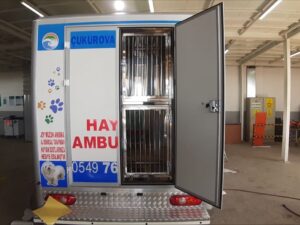
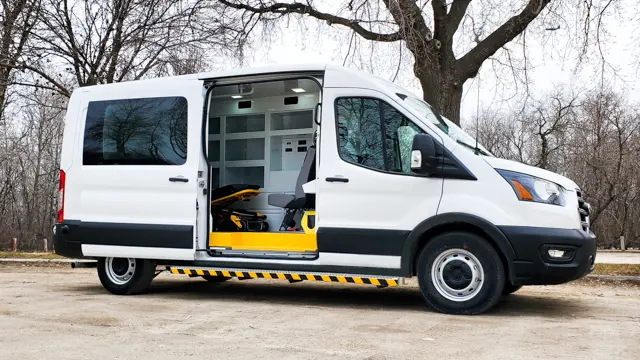
Van-Based Mobile Health Vehicles: Utilizing proven, maneuverable chassis such as the Mercedes-Benz Sprinter, Ford Transit, MAN, and Iveco, these units offer exceptional agility for targeted outreach. A van-based mobile health vehicle is ideal for small-team operations, such as door-to-door health education, targeted testing programs, or providing vaccinations in dense urban settings where parking and navigation are primary concerns. Despite their compact size, they are fully customizable to house essential screening and consultation equipment.
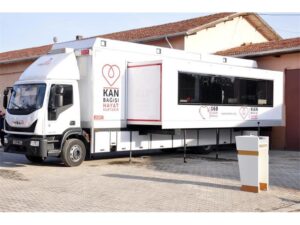
Bus-Based Mobile Healthcare Vehicles: For programs requiring higher patient throughput or multi-disciplinary services, our bus conversions provide expansive, adaptable interiors. These larger mobile healthcare vehicles can be configured with multiple private consultation rooms, several screening stations, and a dedicated vaccination area, making them perfect for large-scale community health fairs, multi-disease screening campaigns, and mobile clinic services that replicate the capabilities of a small outpatient department.
Medical Trailers & Towable Clinic Units: Offering exceptional flexibility and cost-efficiency, our mobile healthcare trailers are fully outfitted clinics on wheels that can be towed by a standard vehicle. This platform separates the clinical asset from the drivetrain, simplifying maintenance and allowing the tow vehicle to be used for other purposes when the clinic is stationary. They are an excellent choice for semi-permanent deployment at rotating community sites, school-based health programs, or as surge capacity for fixed facilities.
Containerized Healthcare Modules: For establishing a permanent or long-term health post in a remote location or as part of a modular health complex, our containerized solutions offer unparalleled durability and spatial efficiency. These units can be configured as standalone clinics or interconnected to form larger facilities, providing a fixed-site level of care with the inherent mobility of standard shipping logistics.
Interior Medical Layout & Optimized Patient Flow
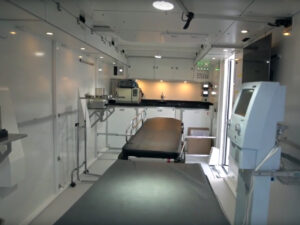
The clinical effectiveness of a Mobile Health Vehicle is fundamentally tied to its interior architecture. Our designs are guided by principles of efficient workflow, infection control, and patient privacy. We engineer intuitive layouts that segment the interior into defined zones: a secure patient intake and waiting area, private consultation areas for confidential discussions, dedicated screening & examination rooms for procedures and tests, and a centralized nursing station. For units focused on immunization programs, we incorporate a streamlined vaccination & consultation areas workflow with clear separation between pre-vaccination assessment, injection, and post-vaccination observation. This deliberate zoning minimizes cross-traffic, reduces contamination risks, protects patient confidentiality, and allows clinical staff to operate at peak efficiency, thereby maximizing the number of patients served per day.
Medical Equipment Integration & Cold Chain Management
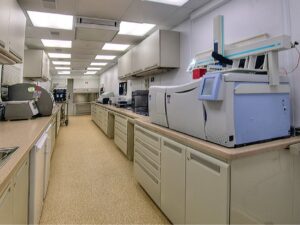
A mobile health unit’s utility is defined by the reliability and accessibility of its medical technology. Our engineering team specializes in the secure integration of a broad array of devices essential for preventive and primary care. We design custom mounting solutions for examination tables, diagnostic devices such as ECG machines and portable ultrasounds, and mobile workstations for electronic health records. A critical, non-negotiable component is the integration of medical refrigeration & cold chain systems. We install purpose-built pharmaceutical refrigerators and freezers, complete with dedicated power circuits, digital temperature monitors, and alarms. These are securely mounted and connected to our backup power infrastructure to ensure vaccine potency and medication integrity are maintained throughout extended off-grid operations, a cornerstone of effective immunization and public health outreach.
HVAC Systems & Advanced Hygiene Control
Maintaining a controlled, clean, and comfortable interior environment is vital for patient safety, staff well-being, and equipment longevity. Our units are equipped with a medical-grade HVAC system that provides precise, independent control over temperature and humidity. This system incorporates enhanced air filtration, often utilizing HEPA filters, to reduce airborne particulates and pathogens, which is especially important in a confined clinical space during respiratory illness seasons or pandemic response. This environmental control is complemented throughout the clinical areas by the use of cleanable antimicrobial surfaces. We specify non-porous, seamless materials for walls, floors, and countertops that resist microbial colonization and can be repeatedly disinfected with hospital-grade cleaning agents without degradation, creating an environment that inherently supports infection prevention and control protocols.
Robust Electrical & Autonomous Power Systems
Operational independence in diverse field conditions is a defining feature of our designs. Each mobile health vehicle functions as a self-sufficient utility hub. The electrical architecture is engineered around high-capacity deep-cycle batteries, a pure sine wave power inverter, and an automatic transfer switch, supported by an onboard diesel generator for sustained off-grid operation. An Uninterruptible Power Supply (UPS) is integrated to provide seamless backup power for sensitive IT equipment, refrigeration units, and medical devices during generator startup or brief grid interruptions. This redundant, layered approach to power management guarantees that clinical services can proceed without interruption, regardless of the availability of external infrastructure, from a remote village to a temporary parking lot site.
Integrated Data, IT & Telemedicine Connectivity
Modern mobile healthcare is data-driven and connected. We engineer our mobile healthcare vehicles to be fully integrated digital health nodes. Each unit is pre-wired for robust telemedicine & patient data connectivity, incorporating cellular signal boosters, satellite internet options, and secure Wi-Fi networks. We provide hardened mounting points for computers and tablets, enabling real-time access to Electronic Medical Record (EMR) systems, digital diagnostic tools, and public health databases. This connectivity enables telemedicine consultations with remote specialists, instant transmission of screening results, and efficient management of patient registries, transforming the mobile unit from an isolated service point into a connected component of a larger healthcare network.
Compliance with Healthcare Standards & Regulations
Infinity Chassis Units designs and manufactures every Mobile Health Vehicle with a foundational commitment to supporting regulatory compliance and clinical safety. Our engineering incorporates principles from international standards for medical electrical equipment, mobile clinics, and infection prevention. We prioritize structural safety, secure equipment anchorage, fire-retardant materials, and electrical systems designed to prevent interference. While the final certification as a healthcare service delivery point is subject to the regulations of the destination country or region, we provide exhaustive technical documentation, material safety data sheets, and system validation reports. This comprehensive documentation package is designed to serve as a solid foundation for local health authority approvals and inspections, facilitating a smoother compliance process for our clients.
Applications & Diverse Outreach Program Deployment
The versatility of our platforms enables them to serve a vast array of public health initiatives and clinical outreach models. Ministries of Health and public health programs deploy them for nationwide vaccination campaigns, non-communicable disease (NCD) screening for diabetes and hypertension, maternal and child health services, and health education outreach. Non-Governmental Organizations (NGOs) rely on them for humanitarian medical missions, refugee health programs, and disaster response. Hospitals utilize mobile health screening vehicles for community-based diagnostic services, preoperative assessment clinics, and corporate wellness partnerships. Furthermore, private healthcare operators leverage these units for occupational health services, corporate client visits, and expanding their service footprint into new geographic markets without the capital investment of a fixed facility.
Global Delivery, Installation, and Turnkey Support
As an export-oriented manufacturer, we have mastered the logistics of global delivery & support. Our turnkey export & installation service encompasses every post-production phase: professional crating for international shipping, comprehensive freight and customs documentation assistance, and coordination with in-country agents. We offer optional on-site commissioning, where our technical specialists travel to the destination to supervise final setup, conduct system operational tests, and provide comprehensive training to clinical and driver staff on all vehicle systems. This end-to-end service model ensures your Infinity Mobile Health Vehicle arrives at its destination not as a complex project, but as a fully operational, mission-ready asset.
Frequently Asked Questions (FAQ)
What is the primary difference between a van-based and a trailer-based mobile health unit?
The core difference lies in mobility and asset utilization. A van-based unit is an all-in-one, self-propelled vehicle offering maximum agility for daily site changes. A trailer-based unit requires a separate tow vehicle but offers greater flexibility; the clinic can be dropped at a site for long-term use while the tow vehicle is used for other logistics. Trailers also often provide more interior space for a lower overall cost compared to a similarly sized self-propelled vehicle.
Can these vehicles support chronic disease management programs?
Absolutely. They are ideally suited for such programs. With integrated screening equipment (e.g., glucometers, HbA1c analyzers, blood pressure monitors), private consultation areas, telemedicine capabilities, and secure data systems, they can effectively provide monitoring, patient education, and follow-up for conditions like diabetes, hypertension, and cardiovascular disease in community settings.
How is patient privacy maintained in a compact mobile environment?
Patient privacy is a critical design parameter. We ensure it through the use of sound-dampening materials, physical partitions or curtains to create private consultation and examination cubicles, and strategic layout planning that separates waiting areas from clinical zones. Operational protocols for staff, supported by the physical design, ensure confidential conversations and examinations are conducted discreetly.
What are the cold chain capabilities for vaccine deployment?
Our standard configuration includes a dedicated, pharmaceutical-grade refrigerator (2-8°C) with continuous temperature monitoring. For programs requiring frozen vaccines (e.g., -20°C), we integrate appropriate medical freezers. All cold chain appliances are connected to the vehicle’s UPS and generator systems, providing redundant power protection to maintain the required temperature range throughout a full operational day and during transit between sites.
How is biomedical waste handled onboard?
The interior design includes dedicated, sealed, and clearly marked containers for sharps and bio-hazardous waste, segregated from general waste streams. These are located in each clinical zone for immediate disposal at point of use. The units are designed for safe temporary storage of this waste until the vehicle returns to a central facility for proper disposal according to established clinical waste protocols.
What is the typical lead time for a custom mobile health vehicle project?
Lead time is dependent on the chosen platform, level of customization, and equipment integration complexity. A standard van or trailer conversion typically requires three to five months from order to shipping. More complex bus or containerized projects with extensive medical fit-outs may require four to six months. We provide a detailed project timeline following the final design approval.