Description
Mobile Surgery Unit; When access to life-saving surgical intervention is constrained by geography, infrastructure, or crisis, the ability to deploy a complete, sterile operating environment becomes a decisive factor in patient outcomes. Infinity Chassis Units stands at the forefront of this critical capability as an engineering-driven manufacturer of advanced Mobile Surgery Unit and mobile operating theatre facilities. We design and build not just medical vehicles, but fully integrated, rapid-deployment surgical environments that meet the exacting standards of a fixed-hospital operating room. Our containerized and vehicle-based units are engineered to provide a controlled, aseptic, and fully equipped platform for a wide range of surgical procedures, from emergency trauma surgery to elective general surgery. We enable ministries of health, military medical corps, and disaster response organizations to project surgical care directly to the point of need, ensuring that high-standard operative intervention is possible anywhere on the globe, under any conditions.
Platform & Structural Solutions: The Foundation of Deployable Surgical Care
Our engineering philosophy is based on providing scalable, robust, and interoperable platforms that serve as the structural and functional backbone for sterile surgical procedures outside of traditional hospital settings.
Containerized Operating Theatre Modules: The cornerstone of our capability, these are engineered from ISO-standard 20ft and 40ft shipping containers into autonomous surgical suites. We also offer expandable designs that increase floor space upon deployment. These modular surgical facility blocks are fully self-contained, housing the operating room, scrub area, preparation zone, and sterilization equipment within a single, transportable unit that can be airlifted, shipped, or trucked to any location and rapidly commissioned.
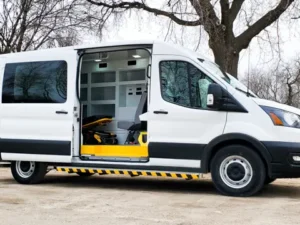
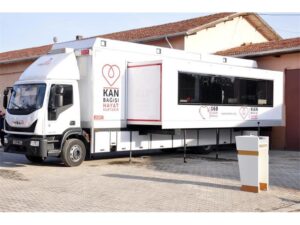
Truck-Based Mobile Surgery Units: For greater mobility and rapid tactical response, we integrate a complete operating theatre into rugged, all-terrain truck chassis. This mobile surgical unit configuration offers the advantage of being driven directly to a disaster epicenter, remote community, or military forward operating base, providing a surgical capability that can relocate as the operational situation evolves, serving as a true field surgery unit.
Trailer-Based Surgical Units: Offering exceptional flexibility, our trailer-based surgical units provide a towable, fully-equipped operating room. This platform separates the high-value surgical asset from the drivetrain, simplifying maintenance and allowing for semi-permanent staging at a hospital campus, refugee camp, or field hospital complex while the tow vehicle is utilized for other logistical support.
Interior Operating Theatre Layout & Surgical Workflow
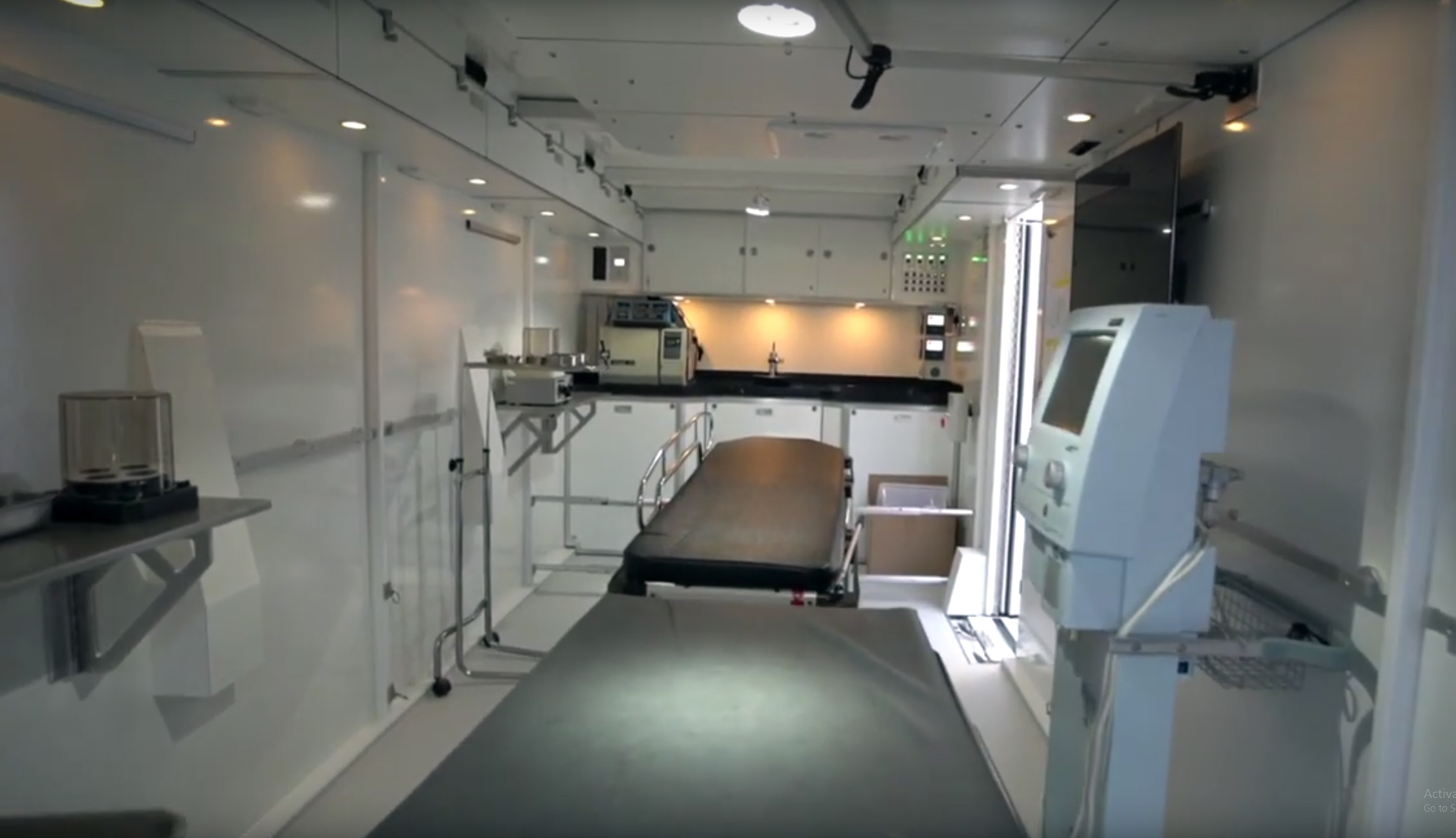
The interior design of an Infinity Mobile Surgery Unit is governed by the fundamental principles of aseptic technique and optimized surgical workflow. The layout enforces a strict zoning protocol: an external contaminated zone, a clean corridor and scrub & preparation zones, and the core sterile operating room. The flow is designed for one-way movement of staff and materials from clean to sterile to dirty, minimizing the risk of infection. The operating room itself is centered around the surgical table, with zones clearly defined for the surgical team, anesthesia provider, and circulating nurse. This meticulous planning, executed within the space-constrained mobile environment, ensures that every element supports efficiency, safety, and adherence to sterile field protocols, directly contributing to positive surgical outcomes.
Surgical Equipment & Medical Gas Systems Integration
The utility of a mobile theatre is defined by its seamless integration of critical surgical infrastructure. We specialize in the engineering and installation of complete medical gas pipeline systems (MGPS). This includes central manifolds or cylinders for oxygen, vacuum, medical air, and nitrous oxide, with pipelines terminated at ceiling-mounted booms or wall outlets in the operating room and anesthesia area. We integrate surgical lighting systems—typically multiple, adjustable LED surgical lights mounted to the ceiling or boom—providing shadow-free illumination. The secure mounting and interconnection of the anesthesia workstation, patient monitors, electrocautery units, and other essential devices are performed to hospital standards, with all equipment anchored to withstand transit and connected via dedicated, isolated electrical circuits to prevent interference.
HVAC & Precision Sterile Environment Control
Creating and maintaining a sterile environment is the single most critical engineering challenge in a mobile surgical facility. Our systems are designed to exceed international standards for operating room ventilation. We install a medical-grade HVAC system that creates and maintains a positive pressure sterile environment within the operating room relative to surrounding areas, preventing the ingress of contaminated air. The system delivers laminar airflow with HEPA filtration (ISO Class 5 or better) over the surgical site, dramatically reducing the count of airborne particles and pathogens. Temperature and humidity are precisely controlled for patient safety and staff comfort. This environmental control system is a medical device in its own right and is fundamental to preventing surgical site infections, making the mobile operating theatre a true clean-room for surgery.
Electrical Systems & Redundant Backup Power
Surgical procedures cannot tolerate power interruption. Our power architecture is engineered with multiple layers of redundancy. The system is built around a primary generator sized to handle the simultaneous load of HVAC, surgical lights, anesthesia machines, and other equipment. A critical Uninterruptible Power Supply (UPS) provides instantaneous, seamless battery backup for life-support and critical monitoring equipment during the seconds required for generator start-up or transfer between power sources. All electrical panels, wiring, and grounding are performed to medical electrical equipment standards (e.g., IEC 60601), ensuring patient and staff safety from electrical hazards and providing clean, stable power sensitive to digital surgical devices.
Water, Sterilization & Support Systems
A fully functional surgery unit must support the entire perioperative process. We integrate a dedicated sterilization area, often equipped with a pass-through autoclave for instrument processing. This zone includes sinks and work surfaces for cleaning and packing. Water systems include fresh water supply tanks and dedicated waste water collection tanks for contaminated fluid from scrub sinks and cleaning. The clean-room wall & flooring systems throughout the sterile and clean areas are constructed from seamless, non-porous, and chemical-resistant materials that can withstand aggressive disinfection. These integrated support systems transform the mobile unit from a simple procedure room into a comprehensive surgical facility capable of sustained operations.
Compliance with Surgical & Medical Facility Standards
Infinity Chassis Units designs every Mobile Surgery Unit to facilitate compliance with stringent international benchmarks for operating rooms and mobile medical facilities. Our engineering references key standards including ISO 14644 (Cleanrooms), ISO 7396-1 (Medical Gas Pipeline Systems), and guidelines from recognized surgical and anesthesiology societies. We conduct rigorous Factory Acceptance Tests (FAT) on all integrated systems. While final certification as a surgical facility is conferred by the local health authorities or authorizing body in the country of deployment, we provide an exhaustive compliance support package. This includes detailed engineering drawings, material certifications, test reports for air quality and medical gases, and maintenance manuals, providing the evidentiary foundation required for regulatory approval and accreditation.
Deployment, Installation & Rapid Activation
Speed and simplicity of deployment define the utility of a mobile emergency surgery asset. Our systems are engineered for rapid mobilization. Turnkey deployment & installation services include comprehensive site preparation guides, container interconnection kits, and color-coded utility connections. We offer tiered support, from detailed remote manuals to the dispatch of our installation and commissioning teams who oversee site setup, module placement, utility interconnection, and system validation. This process ensures the containerized operating room can be transformed from a shipping container to a fully functional, sterile operating theatre in a matter of days, not weeks, at the location of greatest need.
Applications & Critical Use Cases
Our mobile surgery units are deployed globally in the most demanding scenarios. Ministries of Health utilize them for surgical outreach programs in remote regions, providing elective general, orthopedic, and ophthalmic surgery. Military medical corps integrate them into Role 2 or Role 3 medical treatment facilities for forward combat casualty surgery. Disaster response agencies and humanitarian organizations deploy them following earthquakes, hurricanes, and in conflict zones to manage trauma and emergency obstetric cases. Furthermore, hospitals use them as temporary operating suites during facility renovation or to expand surgical capacity during periods of high demand, ensuring continuity of essential surgical services.
Global Delivery, Logistics & After-Sales Support
We manage the complete global supply chain, from manufacturing to delivery at the destination. Our global delivery & after-sales support encompasses logistics planning, customs clearance assistance, and freight coordination. Our commitment is long-term; we provide ongoing technical support, remote diagnostics, spare parts provisioning, and system upgrade services. We also offer refresher training and protocol consulting to ensure your Mobile Surgery Unit remains at the peak of operational readiness and clinical effectiveness throughout its service life.
Frequently Asked Questions (FAQ) Mobile Surgery Unit
What types of surgery can be performed in a mobile surgery unit?
These units are engineered to support a wide range of non-specialized major surgery, including general surgery (appendectomy, hernia repair), orthopedic surgery (fracture fixation, debridement), emergency trauma surgery, and obstetrics/gynecological procedures (C-section). The environment is designed to be as versatile as a standard hospital operating room, excluding highly specialized procedures like cardiothoracic or neurosurgery that require fixed, complex infrastructure.
How is sterility maintained during patient and staff transfer into the unit?
Sterility is maintained through the strict zoning of the interior and controlled access. The positive pressure in the OR prevents inflow of air from adjacent areas. Staff follow a strict protocol: changing into surgical attire in a designated area, performing a surgical scrub, and entering the OR through a defined pathway. Patient transfer is managed via a dedicated entrance, often with an airlock or anteroom, to minimize environmental exchange.
Can the unit support laparoscopic (minimally invasive) surgery?
Yes. Our units are fully compatible with laparoscopic equipment. We provide sufficient electrical outlets for insufflators, camera systems, and monitors. The medical gas system supplies carbon dioxide (CO2) for insufflation if specified. The integration of surgical data connectivity also allows for the use of modern digital imaging and recording systems commonly used in laparoscopic procedures.
What is the air exchange rate and particulate standard in the operating room?
Our standard operating room HVAC system is designed to provide a minimum of 20 air changes per hour with HEPA-filtered air. The system maintains particulate counts to meet or exceed ISO Class 5 (Class 100) cleanliness levels in the critical zone over the surgical table, which is the standard for performing invasive surgical procedures.
How are medical gases supplied and for how long?
Gases can be supplied via two primary methods: a central manifold system connected to large external gas cylinders (H-cylinders) or liquid oxygen tanks, or via smaller cylinders (E-cylinders) mounted in secure racks within the unit. The duration of supply depends on the storage capacity and surgical caseload; we design the system based on your projected operational profile, typically ensuring multiple days of operation before replenishment is needed.
What training is provided for clinical and technical staff?
We provide comprehensive operational training. This includes technical training for engineers on the HVAC, electrical, and medical gas systems, and clinical orientation for surgical staff on the specific layout, equipment interfaces, and safety protocols of the mobile theatre. Training can be conducted at our facility, at the client’s location, or on-site during commissioning.