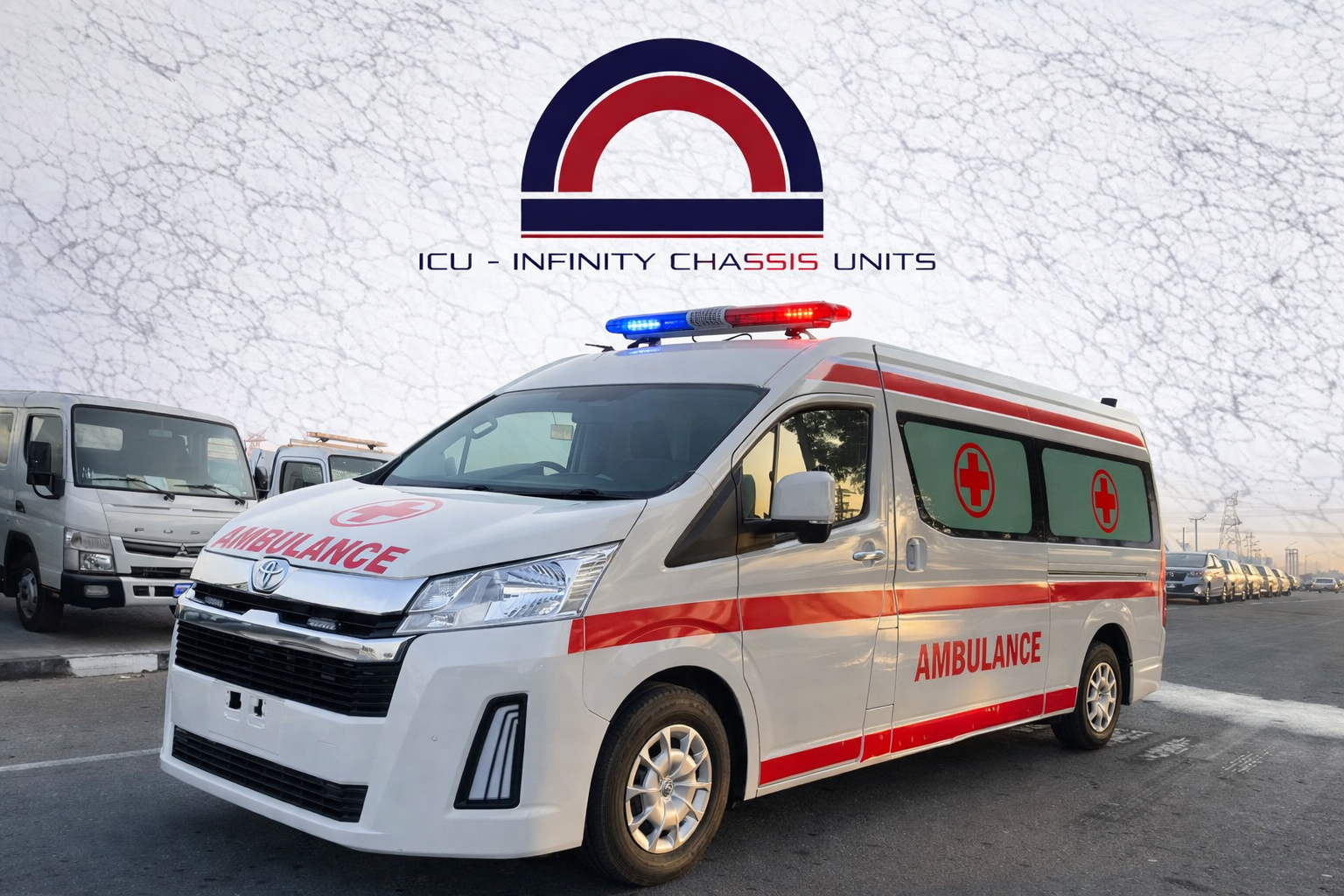
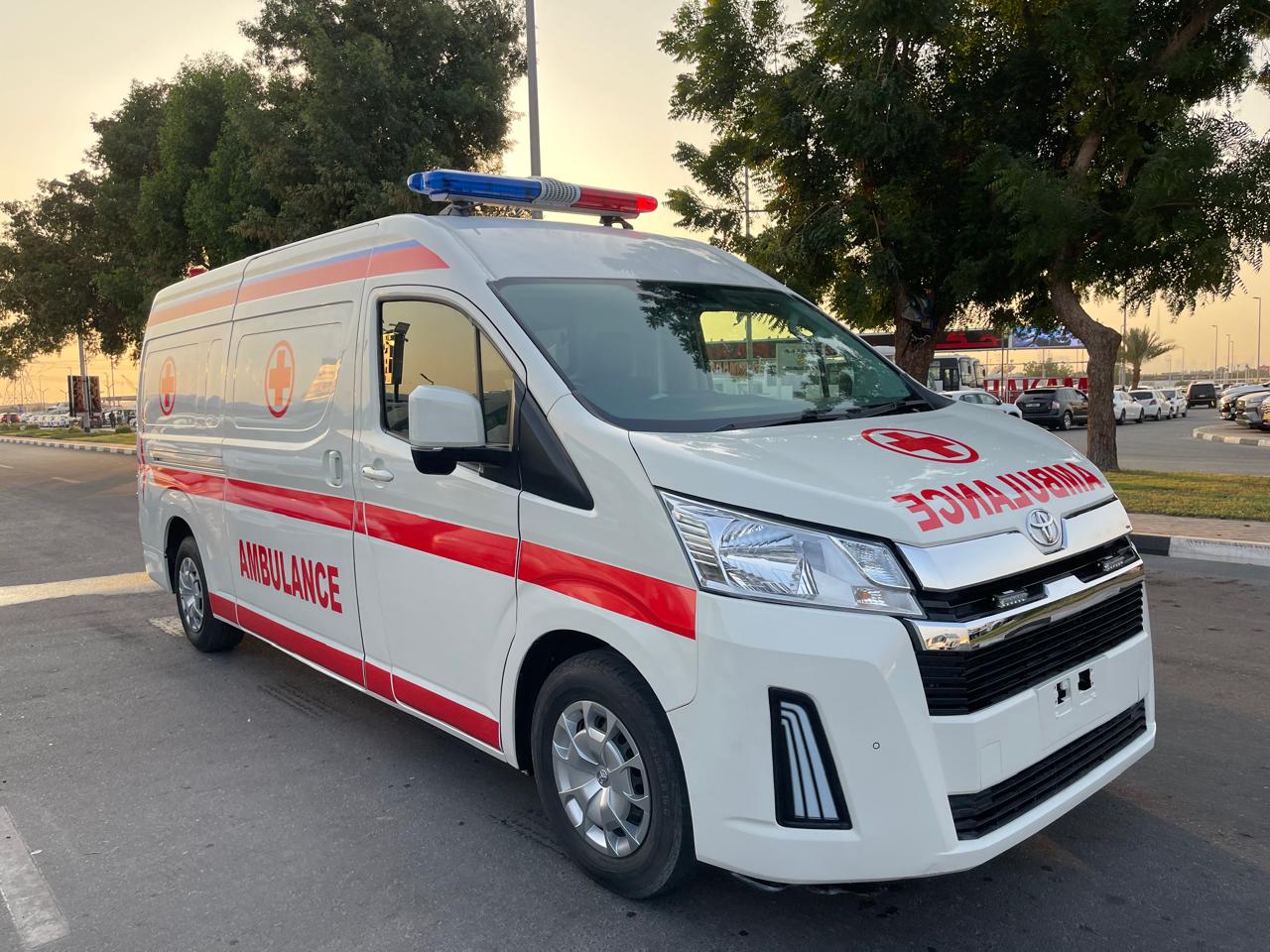
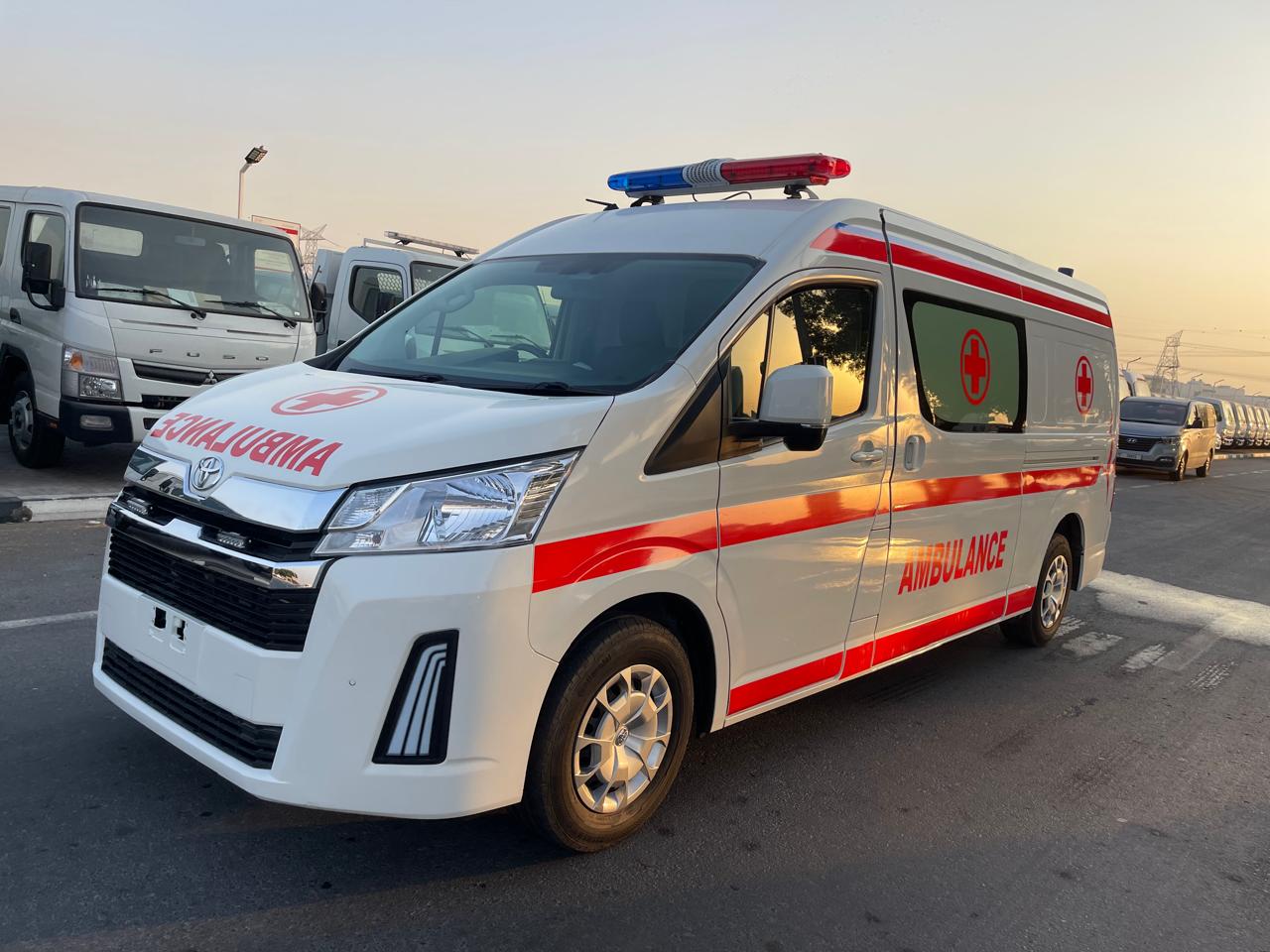
When you look at ambulance fleets across Africa, Asia, the Middle East, and the UK, one vehicle stands out above all others: the Toyota Hiace Right-Hand Drive (RHD) Ambulance. It’s not flashy. It’s not the most technologically advanced. But it is, without question, one of the most reliable and practical ambulance platforms ever built.
For markets where vehicles drive on the left side of the road—the UK, Japan, Australia, India, and dozens of other countries—the Toyota Hiace Right-Hand Drive (RHD) Ambulance is the obvious choice. It combines legendary Toyota reliability with a layout that makes sense for your roads.
Why the Hiace Dominates Global Ambulance Fleets
The numbers don’t lie. Toyota has been building the Hiace since 1967, and it has become the best-selling light commercial vehicle in many parts of the world . There are good reasons for this.
Unmatched reliability. The Hiace is famous for running for hundreds of thousands of kilometers with nothing but basic maintenance. For emergency services, this means fewer breakdowns and more time responding to calls.
Global parts availability. You can find Hiace parts in virtually every country on earth. From major cities to remote villages, mechanics know how to work on these vehicles. This matters when your ambulance is far from home.
Simple, field-serviceable mechanics. When something does need fixing, you don’t need a specialized dealership with expensive computers. Local mechanics with basic tools can handle most repairs.
Strong resale value. Toyota holds its value better than almost any other brand. When it’s time to upgrade your fleet, your Hiace ambulances will still be worth something.
Right-hand drive availability. For markets like the UK, Japan, Australia, and many Commonwealth nations, factory RHD configuration means no awkward conversions or compromises .
Engine and Performance
The Toyota Hiace ambulance typically comes with proven powertrains designed for reliability and efficiency.
Common engine options include:
| Engine Type | Displacement | Power | Torque | Best For |
|---|---|---|---|---|
| 2.7L Petrol | 2,693 cc | ~154 hp | ~240 Nm | Urban response, quieter operation |
| 2.5L Diesel | 2,494 cc | ~95 hp | ~200 Nm | Fuel efficiency, long-distance transfers |
| 2.8L Turbo Diesel | 2,755 cc | ~174 hp | ~450 Nm | Maximum torque, fully loaded operations |
| 3.0L Diesel | 2,986 cc | 91 hp (68 kW) | 197 Nm | Proven workhorse for basic transport |
The 2.8L turbo diesel has become the modern favorite. It delivers strong torque—useful when the ambulance is fully loaded with equipment—while maintaining reasonable fuel economy.
Transmission options typically include 5-speed manual or 4/5-speed automatic, depending on the model year and market .
Fuel tank capacity is usually around 70-80 liters, giving you solid range between fill-ups .
Dimensions and Interior Space
One reason the Hiace works so well as an ambulance is its interior space.
Typical dimensions:
-
Length: 4,800–5,380 mm (depending on wheelbase)
-
Width: ~1,880 mm
-
Height: 2,285–2,510 mm (high roof models)
-
Wheelbase: 2,890–3,110 mm for long wheelbase models
-
Interior headroom: ~1,350–1,600 mm in patient area
The high roof design is particularly valuable for ambulance conversions. It allows medical staff to stand upright while working on patients, reducing fatigue during long transfers .
Patient Compartment Features
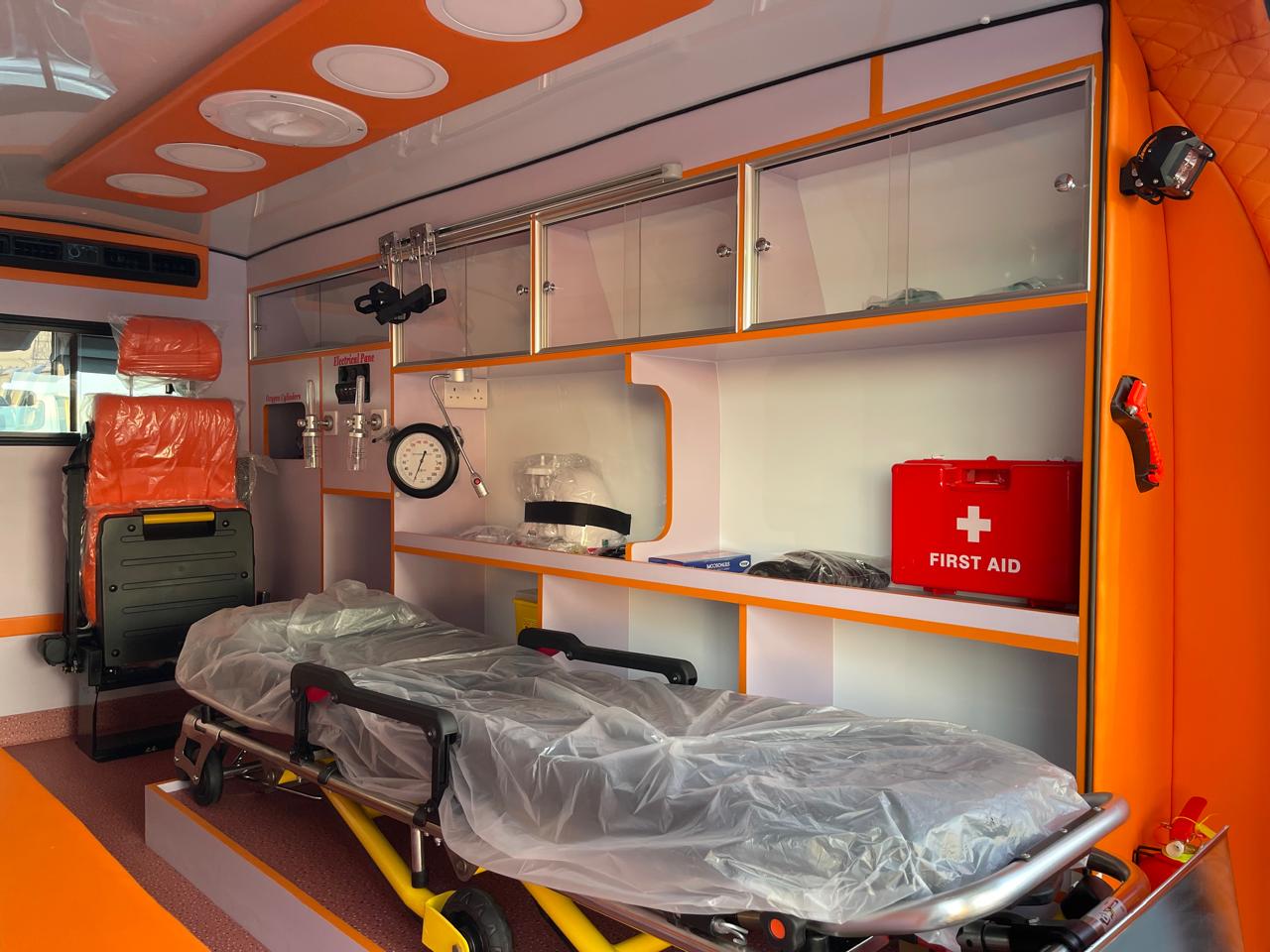
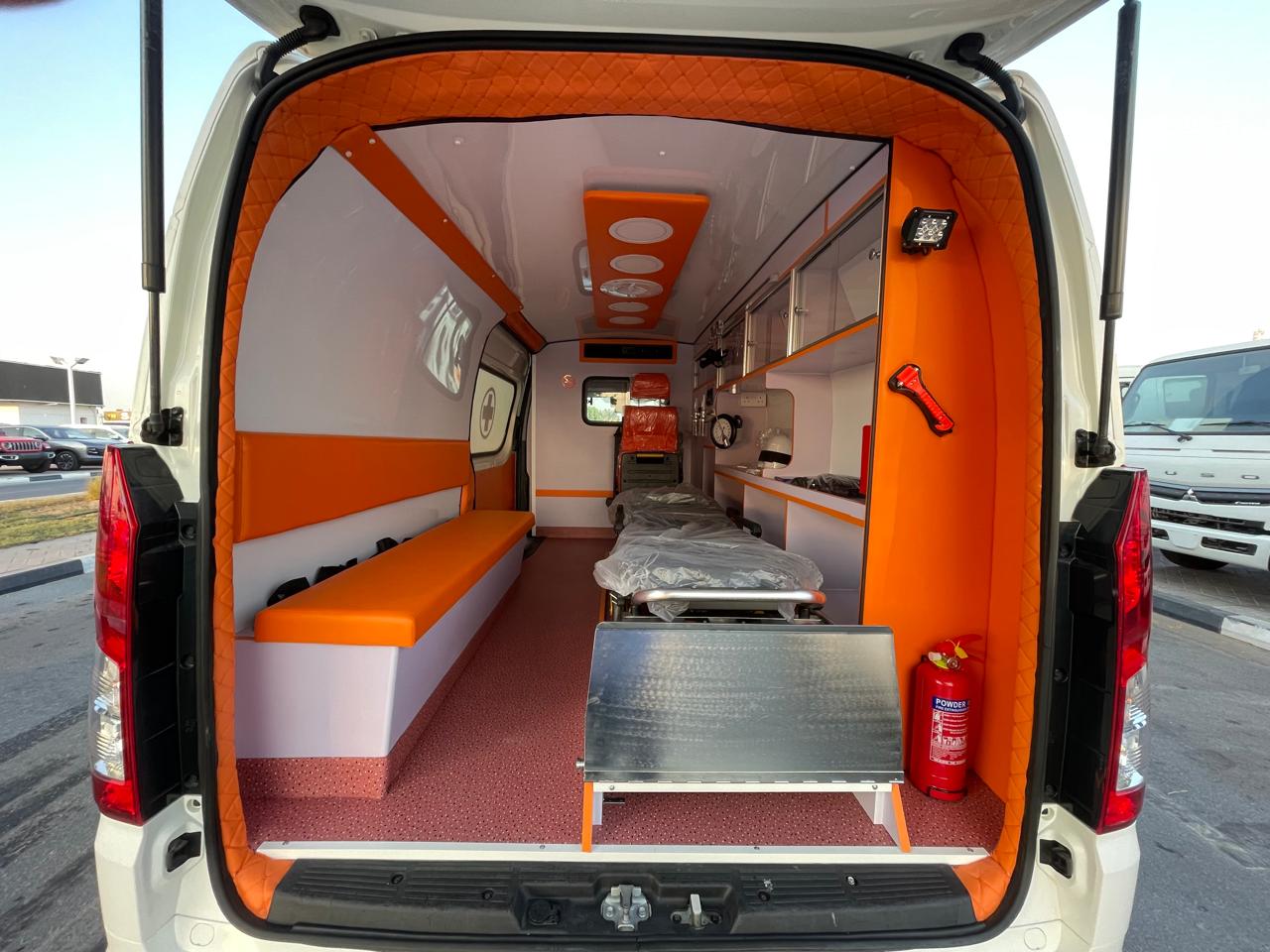
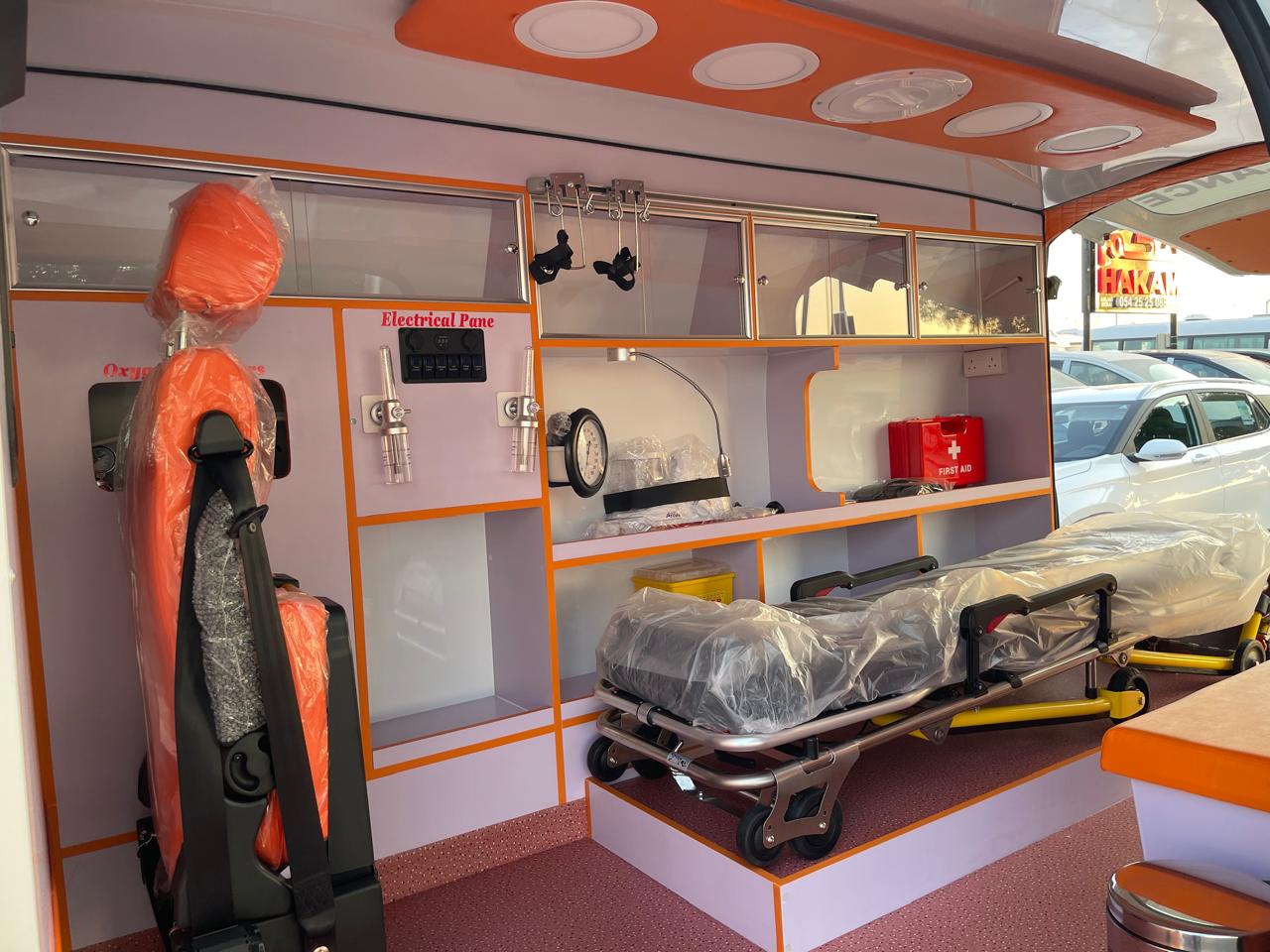
A properly converted Hiace ambulance includes everything needed for emergency care.
Stretcher Systems
-
Main stretcher with caster wheels and secure locking mechanism
-
Folding sub-stretcher for additional patients
-
Loading height of 600–700 mm for ergonomic handling
Seating
-
Attendant seating for 4-5 medical personnel
-
Folding or swivel seats for better patient access
-
Safety restraints for all occupants
Medical Equipment Integration
-
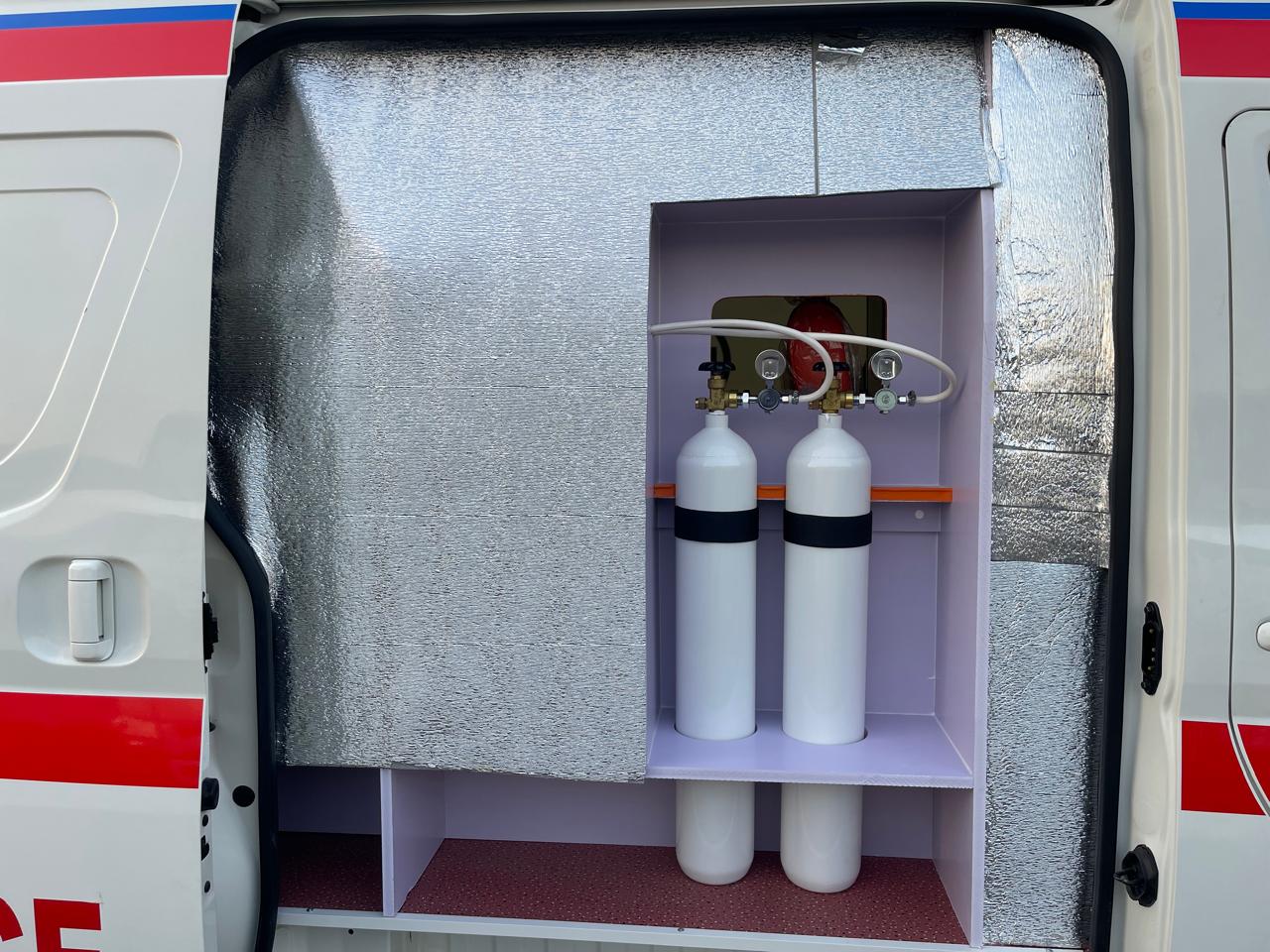
Oxygen cylinder storage with piped outlets
-
Suction unit mounts (electric or manual)
-
Defibrillator mounting points
-
IV pole holders
-
Medical cabinet storage for supplies
Interior Finishes
-
Heavy-duty non-slip vinyl flooring with coved edges for easy cleaning
-
Impact-resistant ABS or composite wall panels
-
Acoustic and thermal insulation
Climate Control
-
Separate HVAC system for patient compartment
-
Front and rear air conditioning (non-CFC)
-
Optional HEPA filtration for infection control
Lighting
-
Overhead LED room lamps
-
Focused procedure lighting over stretcher area
-
Red night lighting for preserving night vision
Exterior Features
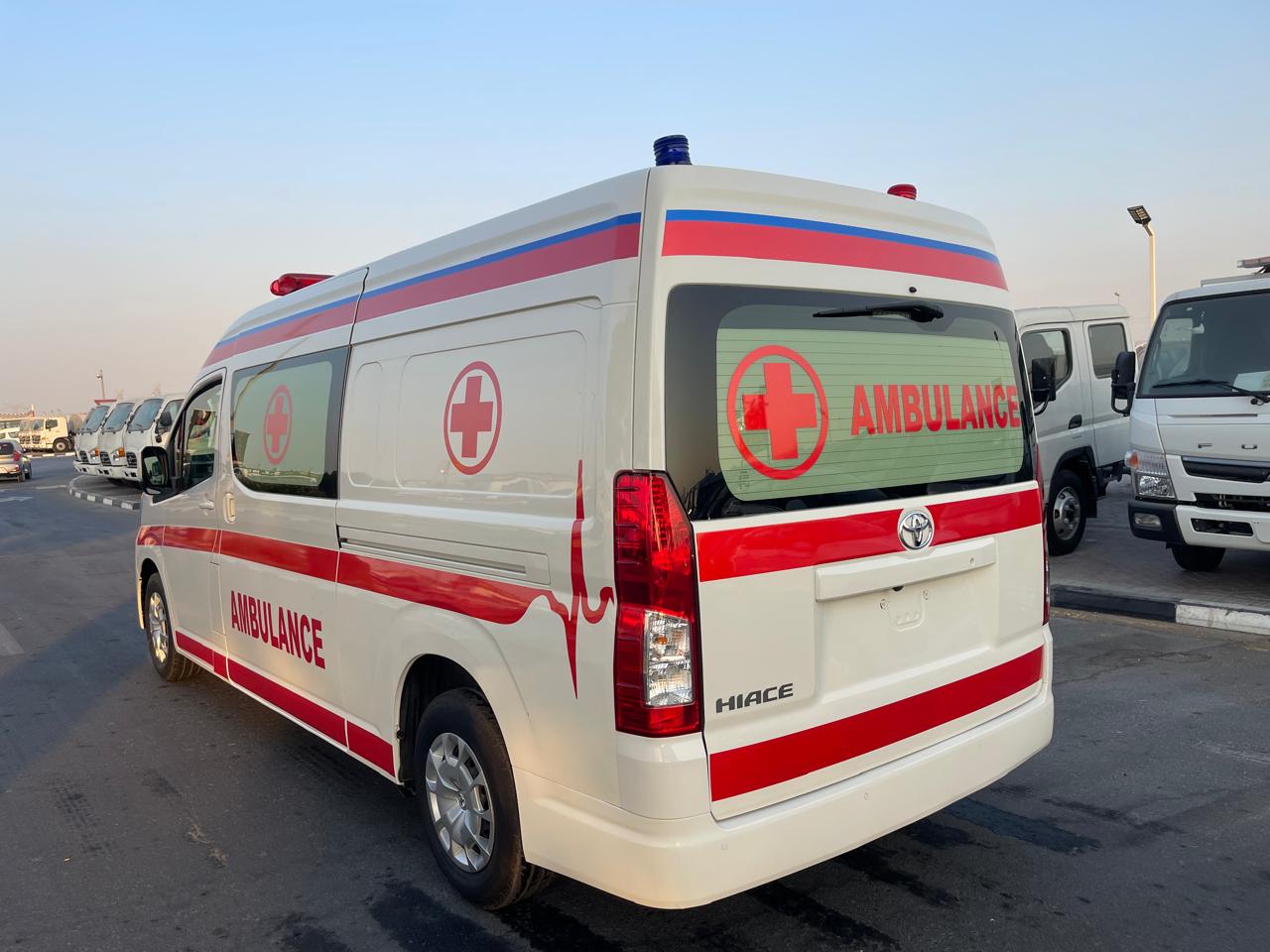
The Hiace ambulance is built to be visible and functional.
Standard exterior equipment often includes:
-
Beacon lamp (red, 55W) or full LED lightbar
-
Electric siren amplifier with speaker
-
High roof fiberglass extension
-
Rear step bumper with non-slip coating
-
Electric or lift-up rear door for easy loading
-
Sliding side door for patient access
-
Rear parking camera with monitor
-
Reflective ambulance livery and markings
Safety Equipment
Toyota takes safety seriously, even in workhorse vehicles.
Standard safety features:
-
ABS (Anti-lock Brake System)
-
Dual airbags (driver and passenger)
-
Fire extinguisher (typically 1-2 kg)
-
First aid kit
-
Triangle caution plate
-
Seat belts for all occupants (3-point ELR type)
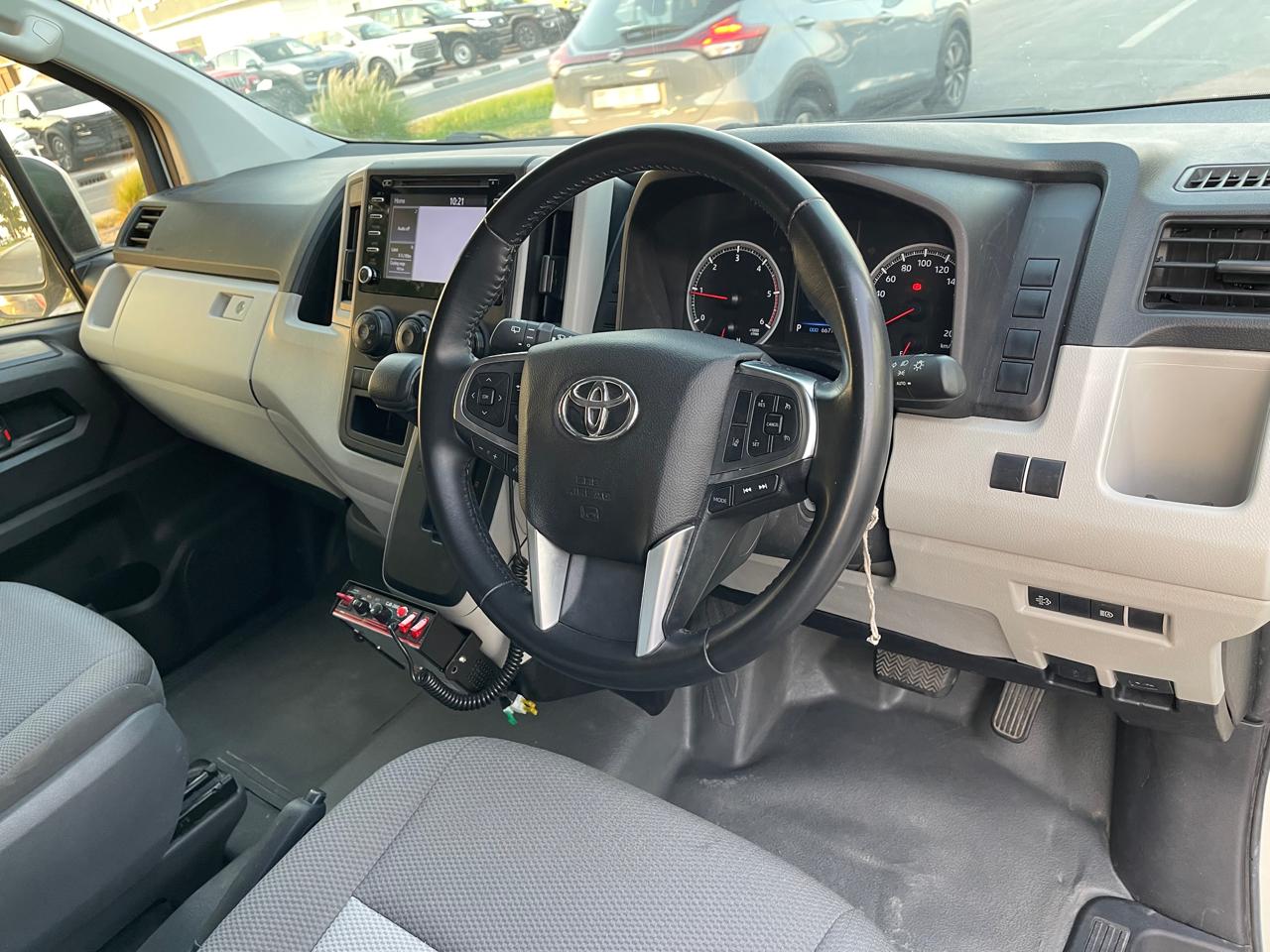
Right-Hand Drive Configuration
The RHD version is specifically designed for markets where traffic flows on the left.
Key advantages of factory RHD:
-
Driver positioned optimally for seeing oncoming traffic
-
Natural ergonomics for local driving conditions
-
No awkward pedal or steering conversions
-
Better visibility when overtaking
-
Proper mirror positioning for left-side driving
The RHD Hiace is particularly popular in the UK, Japan, Australia, New Zealand, India, South Africa, and many Southeast Asian and Caribbean nations .
How Much Does a Toyota Hiace RHD Ambulance Cost?
Based on current market data, here’s what you can expect to pay :
| Configuration | Price Range (USD) | Best For |
|---|---|---|
| Basic Patient Transport (used) | $28,500 – $33,000 | NGOs, budget-conscious buyers, rural clinics |
| Standard Emergency BLS (new) | $34,000 – $44,000 | Municipal EMS, basic life support |
| Fully Equipped ALS (new) | $45,000 – $65,000 | Advanced life support, urban response |
| 4×4 High Roof Special (new) | $50,000 – $75,000 | Rough terrain, remote operations |
The 2.8L turbo diesel model at around $34,000 represents the best value for most emergency services, balancing cost with capability .
Why Choose Toyota Hiace Right-Hand Drive (RHD) Ambulance?
For organizations operating in left-side driving countries, the choice is simple. Factory RHD means:
-
No conversion costs or compromises
-
Better driver ergonomics and safety
-
Proper mirror positioning
-
Easier passing and overtaking
-
Higher resale value in local markets
The Bottom Line
The Toyota Hiace Right-Hand Drive Ambulance isn’t the fanciest emergency vehicle you’ll ever see. It doesn’t have the prestige of a Mercedes or the raw power of a Ford truck.
But that’s not what it’s built for.
This vehicle is built for one purpose: to reliably transport patients from wherever they are to wherever they need to be. It’s designed to start every time, run all day, and keep going for years. It’s built to be fixed anywhere, by anyone, with whatever parts are available.
For emergency services in the UK, Japan, Australia, India, Africa, and beyond, the RHD Hiace is the workhorse that makes healthcare accessible. It’s the vehicle that shows up when someone calls for help—day after day, year after year.
And in emergency medicine, that reliability is everything.


