
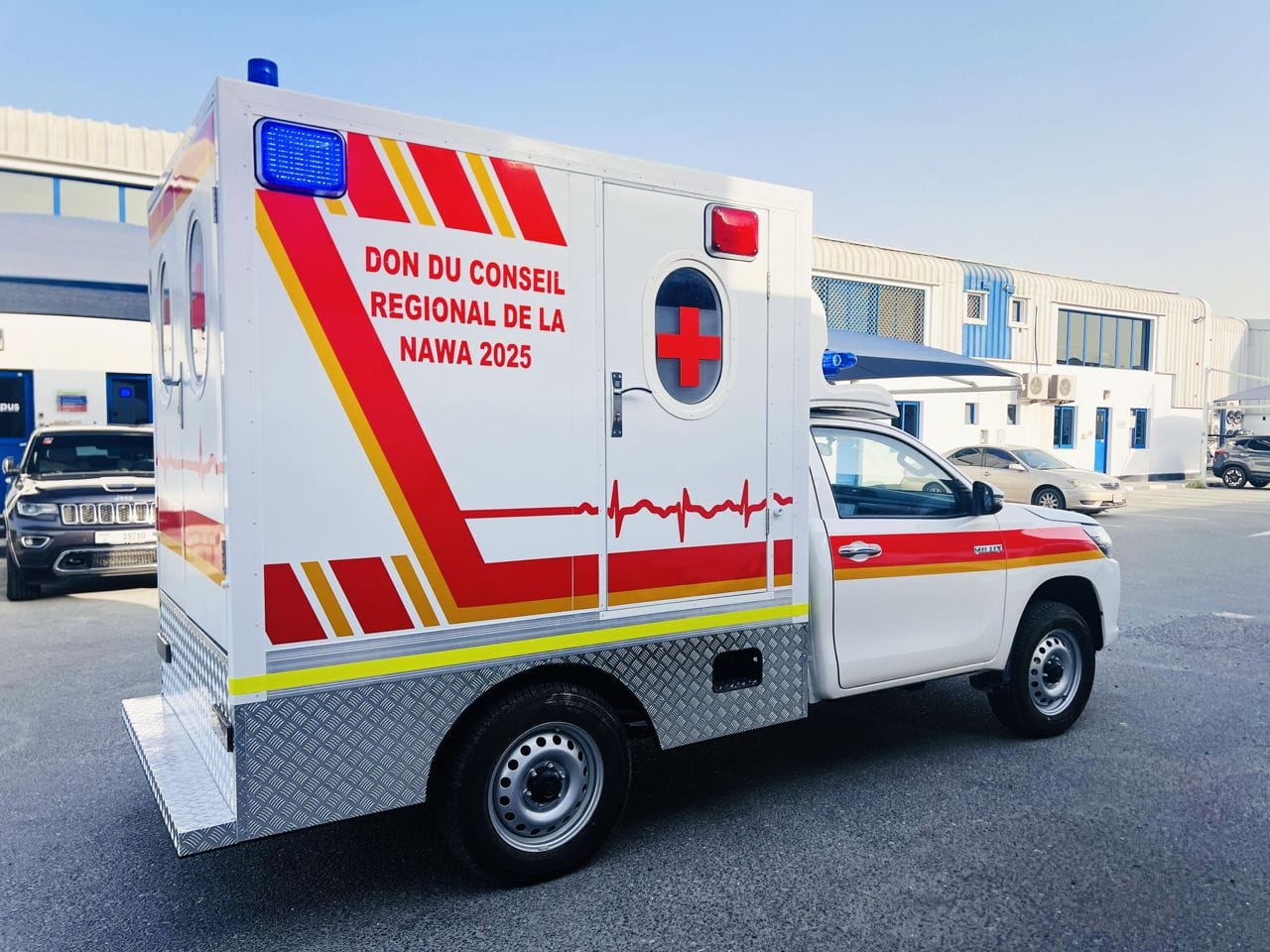
When your emergency medical work takes you far from paved roads—into mines, oil fields, mountain villages, or desert outposts—you need a vehicle that prioritizes toughness over luxury. You need something that can carry medical equipment and personnel to places where normal ambulances fear to tread.
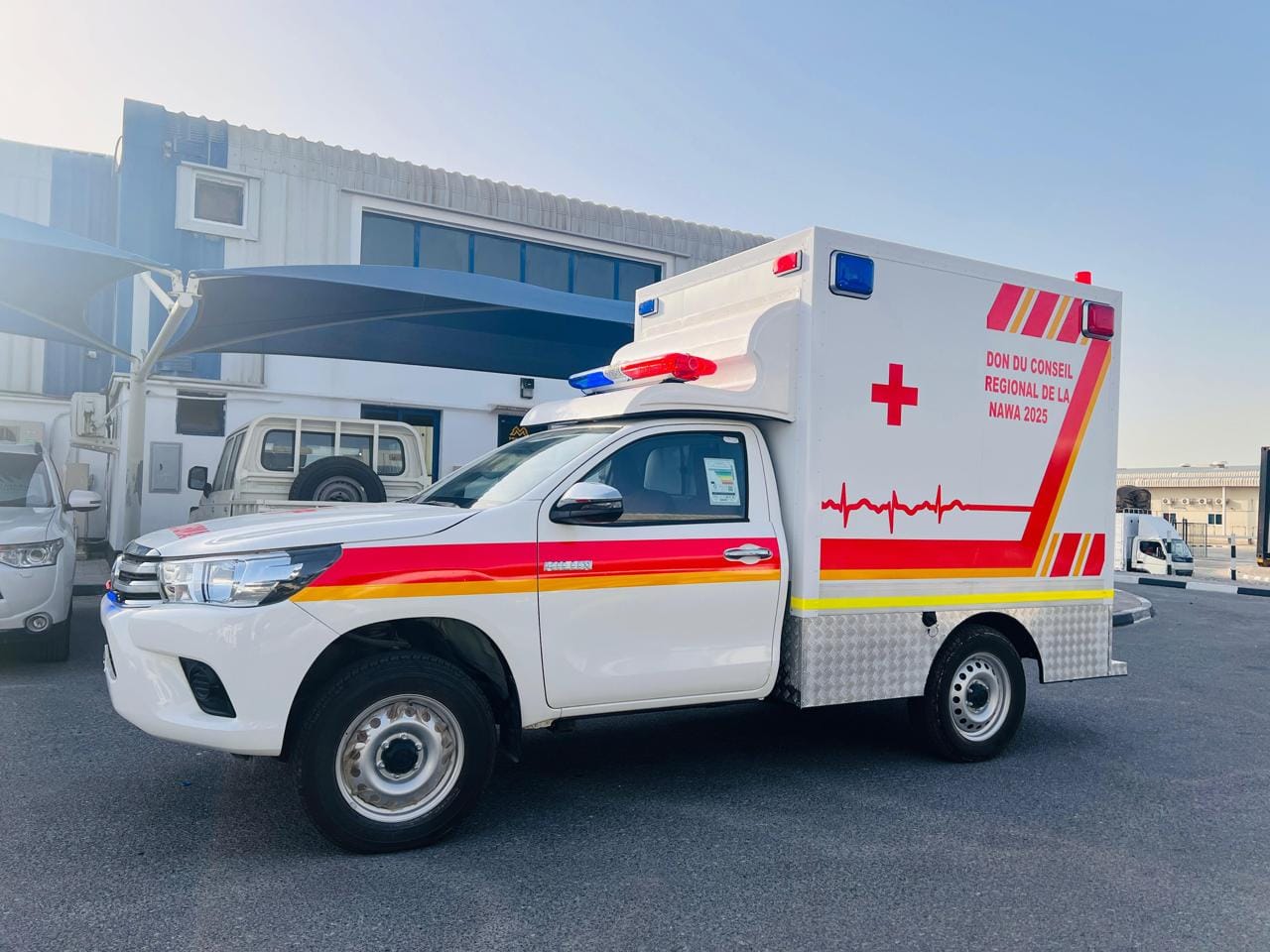
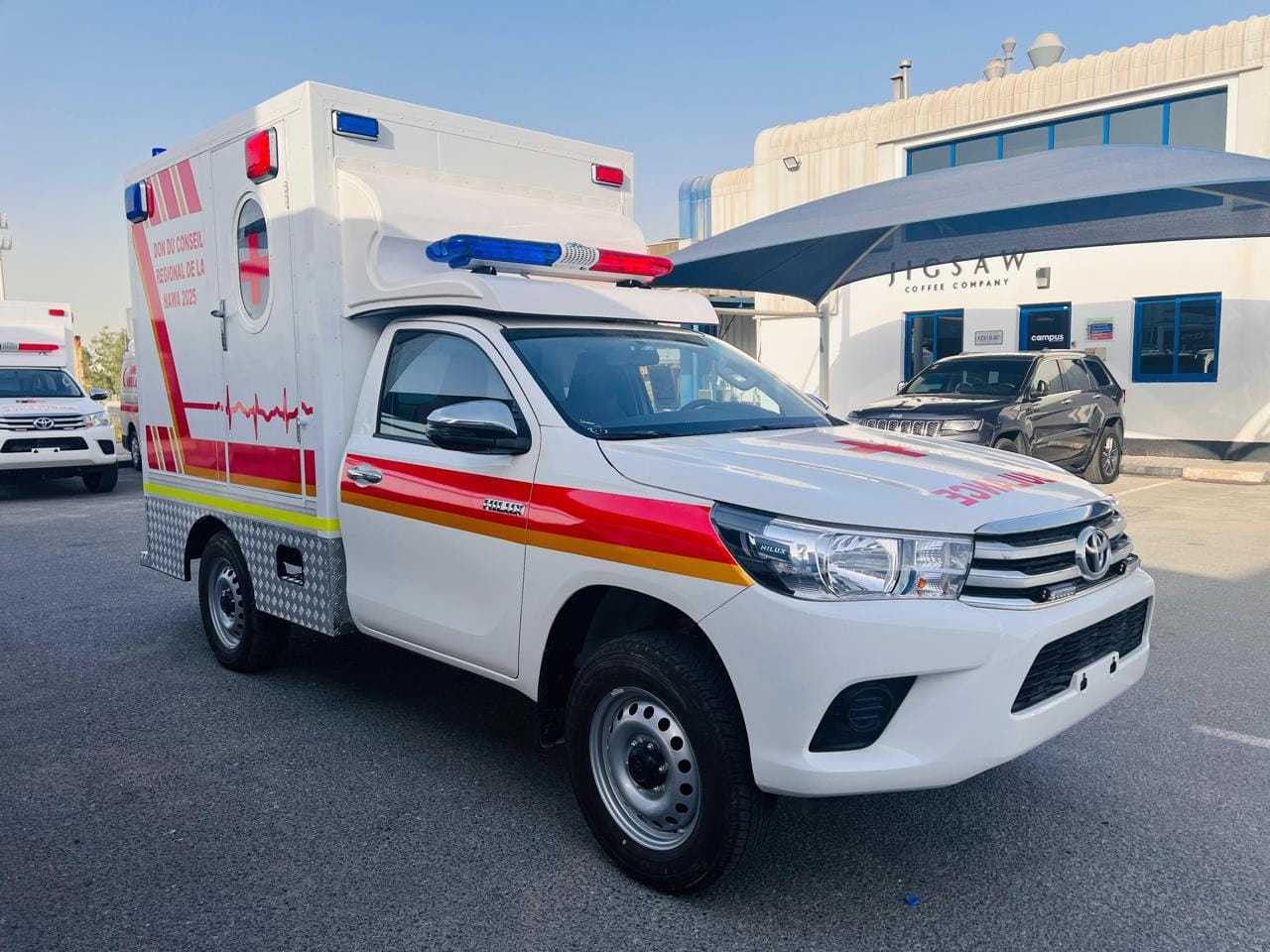
The Toyota Hilux Single Cab Ambulance is exactly that vehicle. Built on the legendary Hilux pickup platform, this ambulance configuration strips away unnecessary complexity and focuses on one thing: getting medical help to patients in the world’s most challenging locations.
What Makes the Single Cab Different?
Unlike the double cab version, which prioritizes passenger seating, the single cab configuration is all about payload and module space. The cab seats up to three people—driver and two crew members—while the entire rear area is dedicated to a custom-built ambulance module . This means:
-
Maximum medical workspace in the rear compartment
-
Higher payload capacity for equipment and supplies
-
Shorter wheelbase for better off-road maneuverability
-
Simpler, more focused design for dedicated emergency response
Powertrain and Performance
The Toyota Hilux Single Cab Ambulance is available with several proven engine options, depending on your operational needs and market.
2.7L Petrol Engine
This is a popular choice for organizations that prefer gasoline for its quieter operation and easier cold-weather starting.
| Specification | Detail |
|---|---|
| Engine Type | 2.7L 4-cylinder DOHC, Dual VVT-i |
| Power | 164 hp @ 5,200 rpm |
| Torque | 24.9 kg-m @ 4,000 rpm |
| Transmission | 5-speed manual |
| Drivetrain | 4WD with low-range transfer case |
| Fuel Type | Petrol (gasoline) |
2.4L Turbo Diesel Engine
For maximum torque and fuel efficiency, the 2.4L GD diesel is an excellent choice, especially for long-distance transfers in remote areas.
| Specification | Detail |
|---|---|
| Engine Type | 2.4L 4-cylinder turbo diesel |
| Power | 110 kW (approx. 148 hp) @ 3,400 rpm |
| Torque | 343 Nm @ 1,400-2,800 rpm |
| Transmission | 5-speed manual |
| Drivetrain | 4×2 or 4×4 options available |
| Fuel Type | Diesel |
The diesel engine delivers its peak torque at very low RPMs—just 1,400 rpm—which is exactly what you need when crawling over rocks or pulling a heavy load up a steep gradient .
2.8L Turbo Diesel Engine
For organizations needing maximum power and torque, the 2.8L option provides the strongest performance, especially when the ambulance module is fully loaded with equipment .
Dimensions and Capacity
The single cab configuration offers plenty of space for both crew and patients.
| Dimension | Measurement |
|---|---|
| Length | 5,270–5,325 mm |
| Width | 1,800 mm |
| Height | 1,690–1,795 mm |
| Wheelbase | 3,085 mm |
| Ground Clearance | 184–194 mm |
| Fuel Tank Capacity | 80 L |
| Seating in Cab | 2-3 people |
| Towing Capacity (braked) | 2,500 kg |
The 80-liter fuel tank provides excellent range between refuels—critical when operating in remote areas where fuel stations are few and far between .
Chassis and Suspension
The Hilux is built on a legendary ladder-frame chassis, celebrated worldwide for its incredible strength and durability .
-
Front Suspension: Double-wishbone independent suspension for good on-road comfort and off-road articulation
-
Rear Suspension: Leaf spring design, ideal for carrying heavy payloads
This combination allows the vehicle to carry a fully equipped ambulance module while maintaining stability on rough terrain.
Safety Features
Toyota equips the Hilux with comprehensive safety equipment, even in workhorse single cab models.
| Safety Feature | Availability |
|---|---|
| Airbags | Dual front airbags , some models with 3 airbags |
| ABS | Anti-lock Brake System |
| Brake Assist | Yes |
| EBD | Electronic Brakeforce Distribution |
| VSC | Vehicle Stability Control |
| Child Lock | Yes |
The Ambulance Module
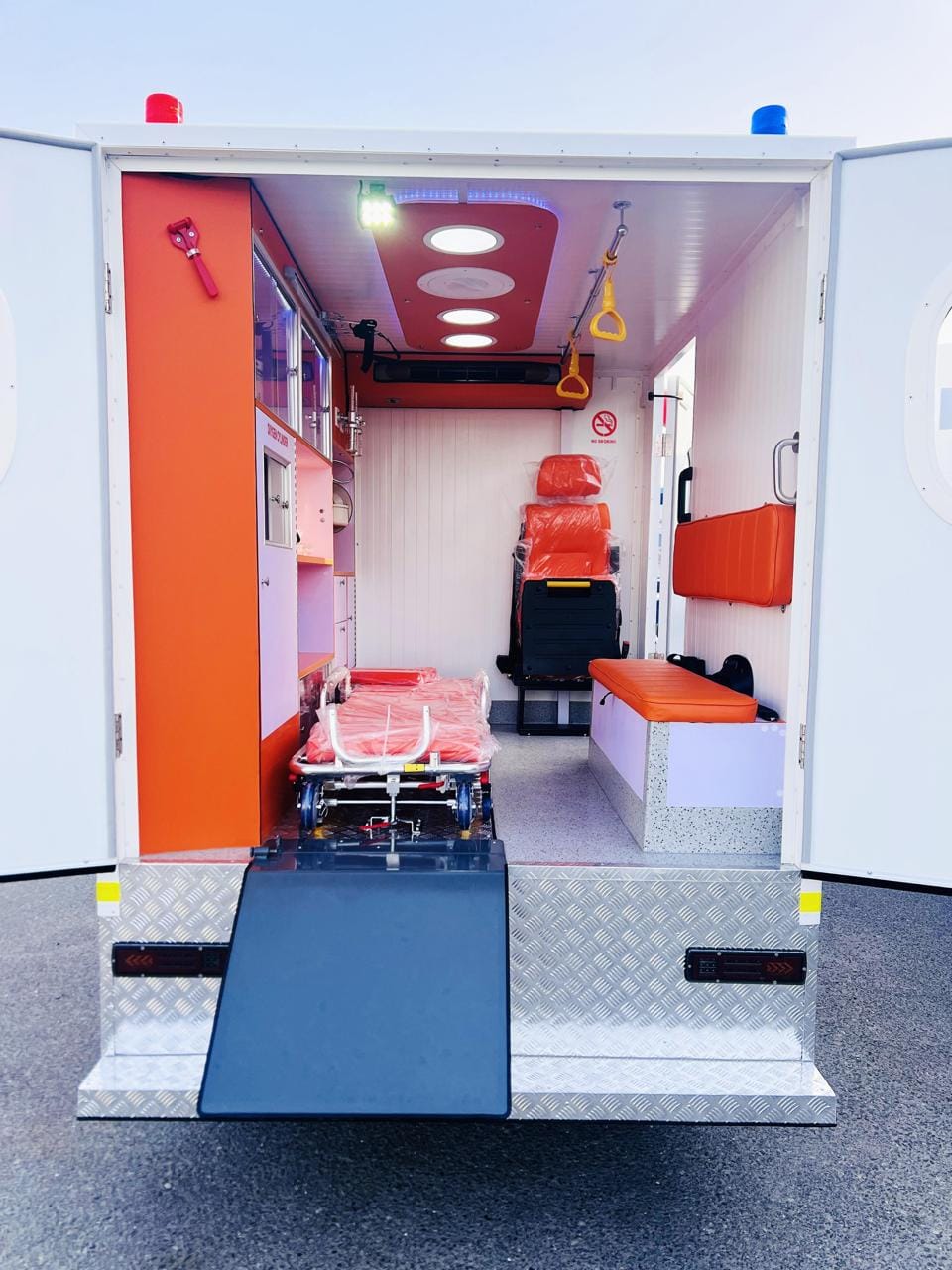
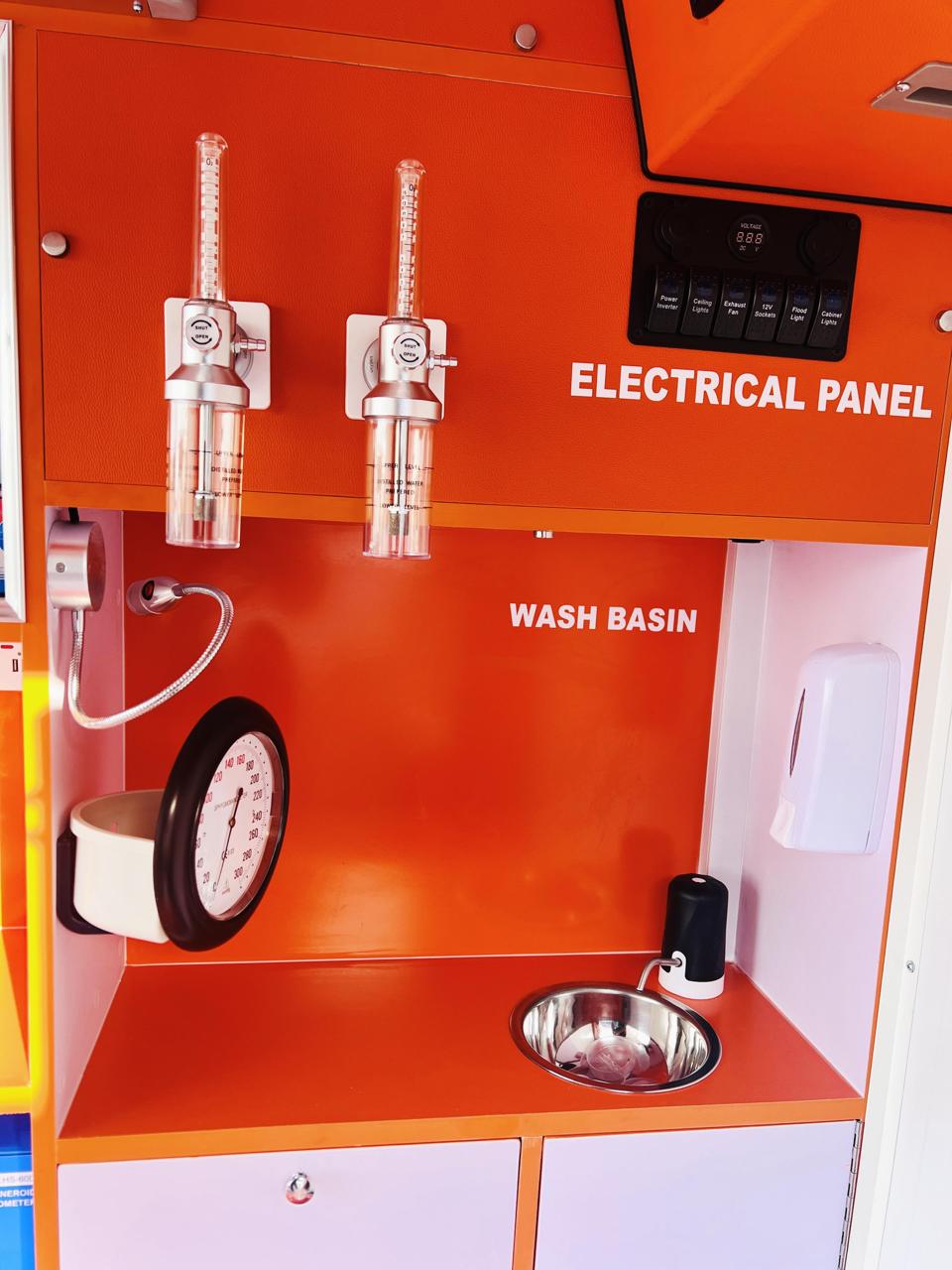
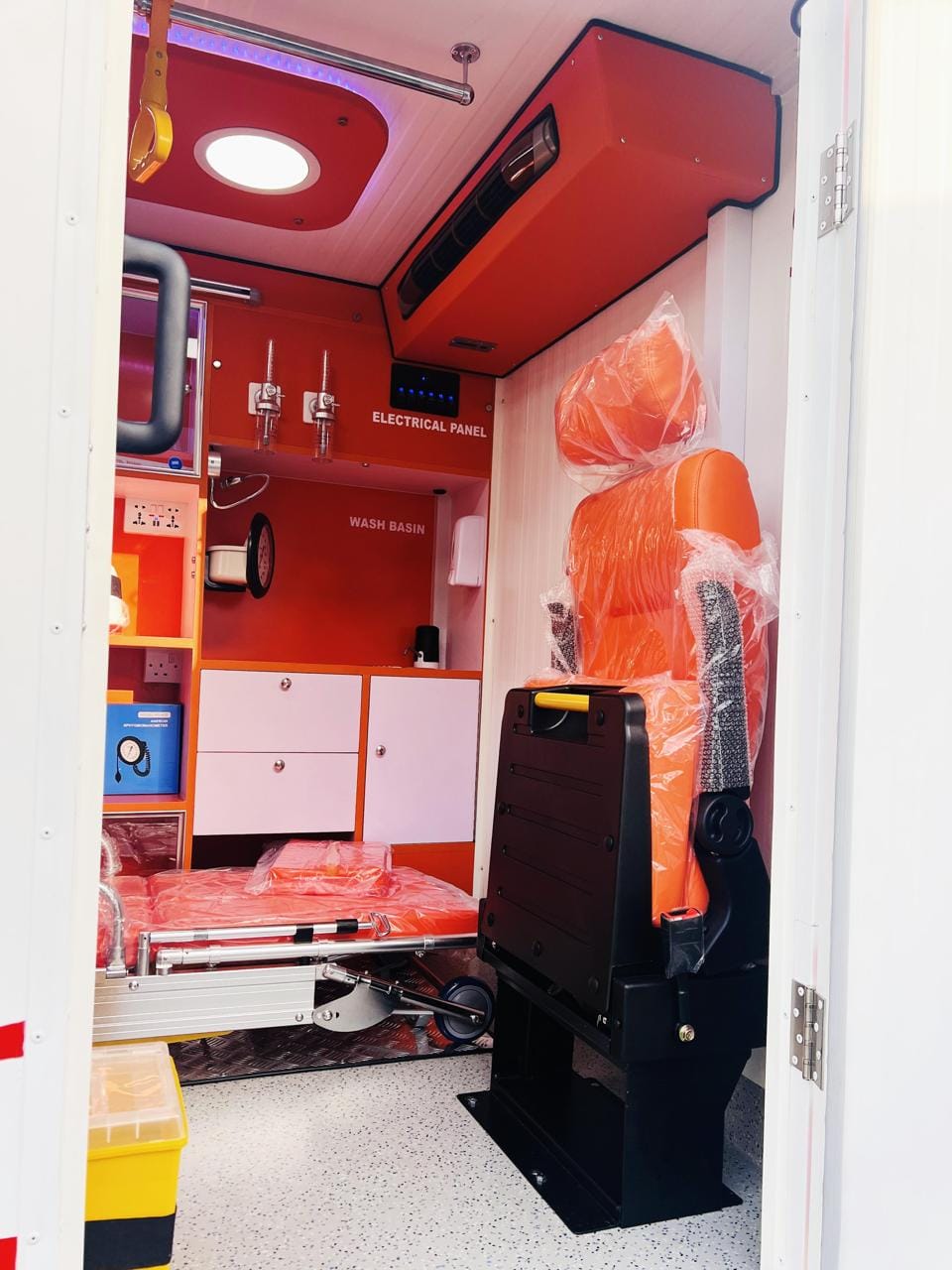
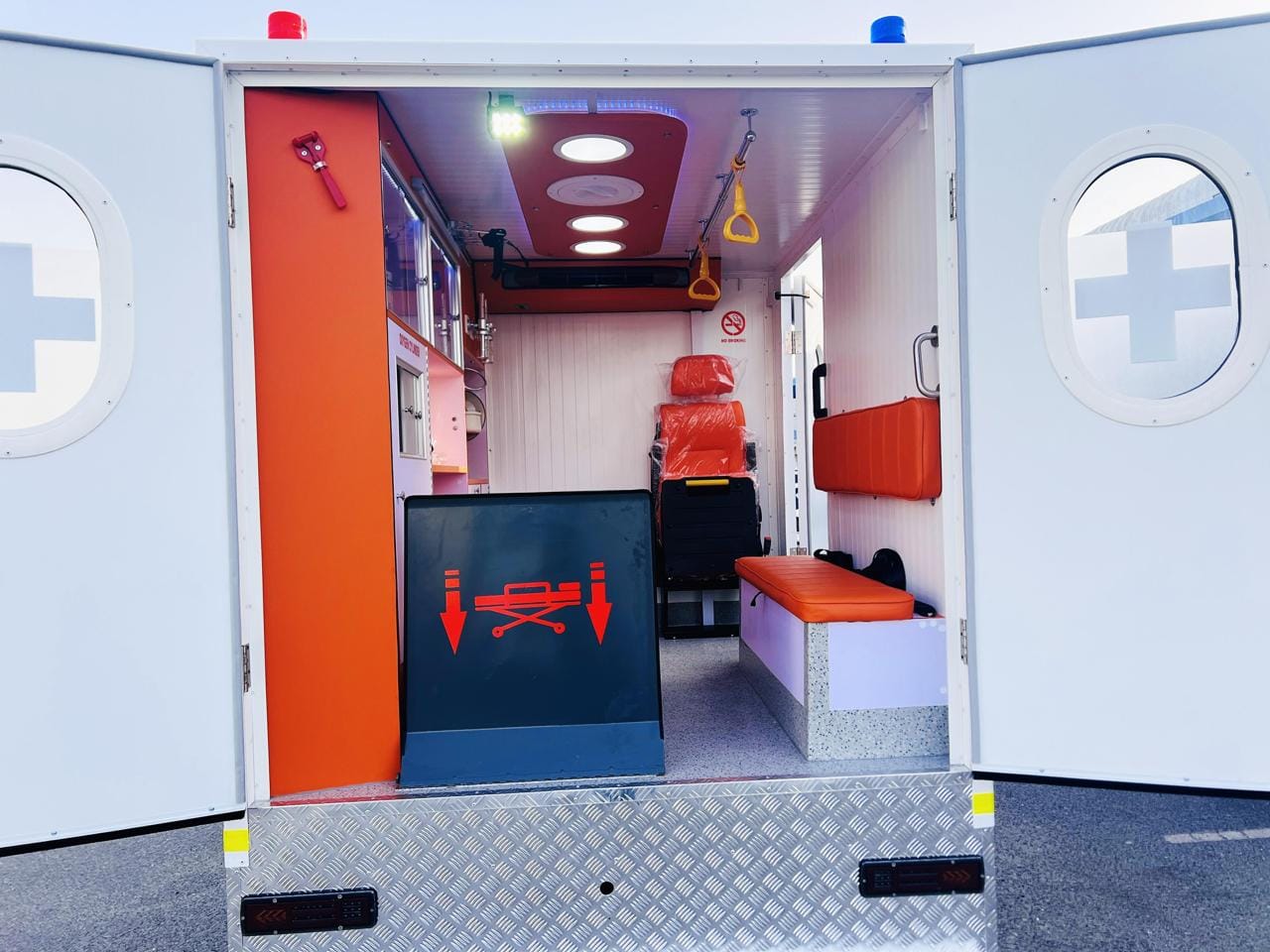
The rear of the single cab is transformed into a fully functional medical compartment. Built from reinforced lightweight materials like fiberglass or composite, the module is designed to withstand extreme vibrations and off-road angles .
Typical Module Features:
Patient Transport
-
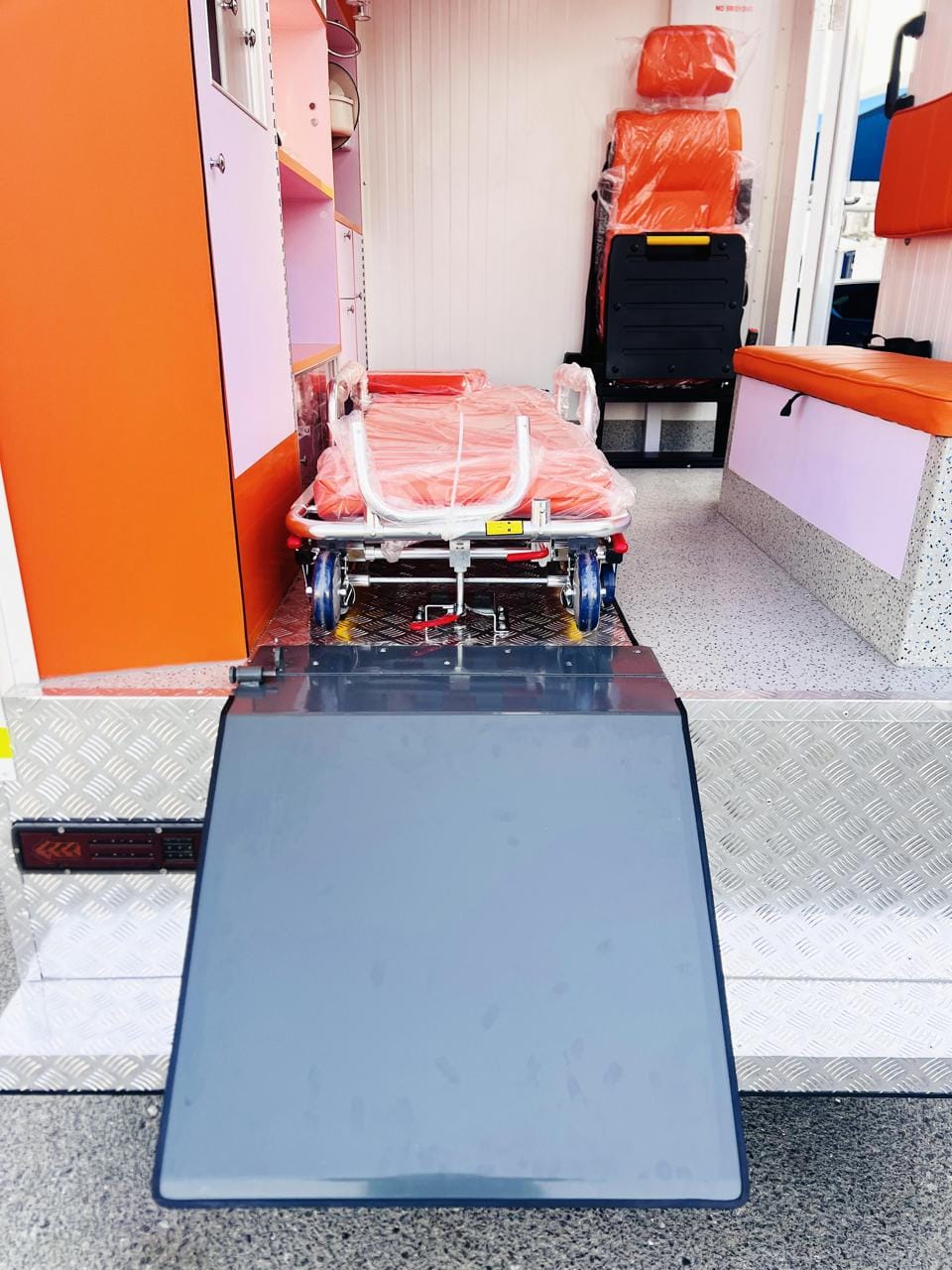
Adjustable stretcher with secure locking mechanism
-
Foldable attendant seats with seat belts
Medical Systems
-
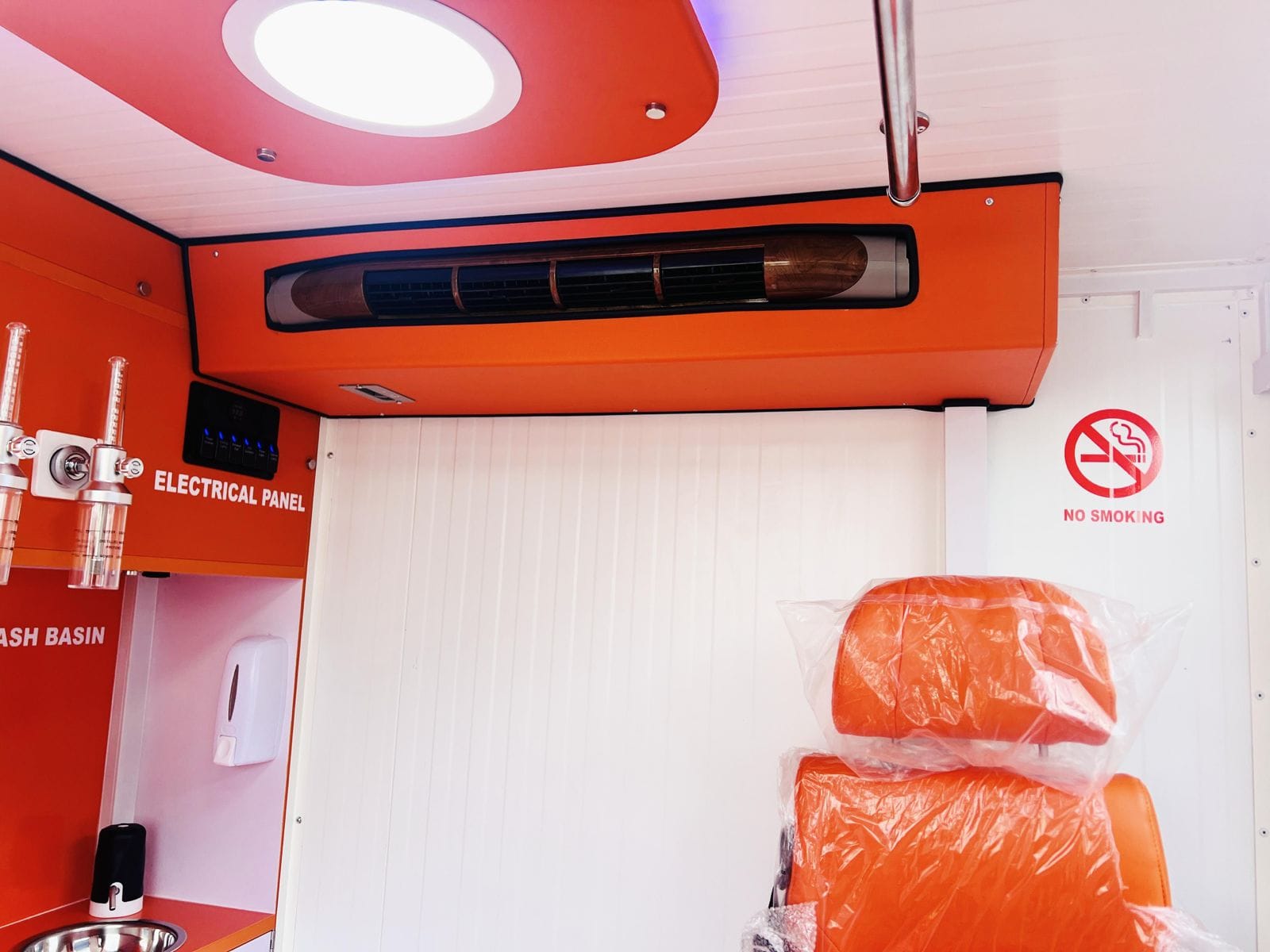
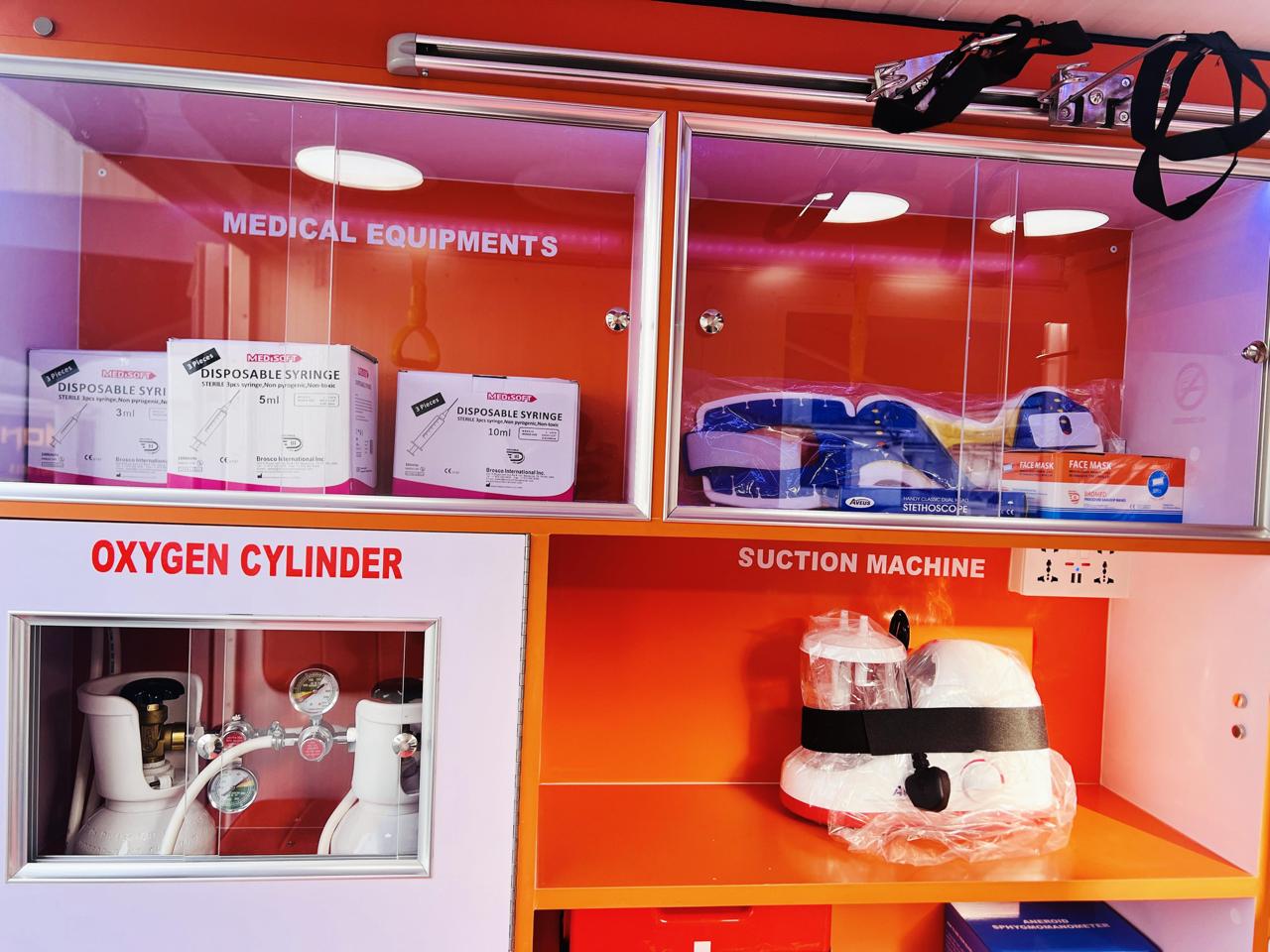
Integrated oxygen cylinder with flowmeter and wall outlets
-
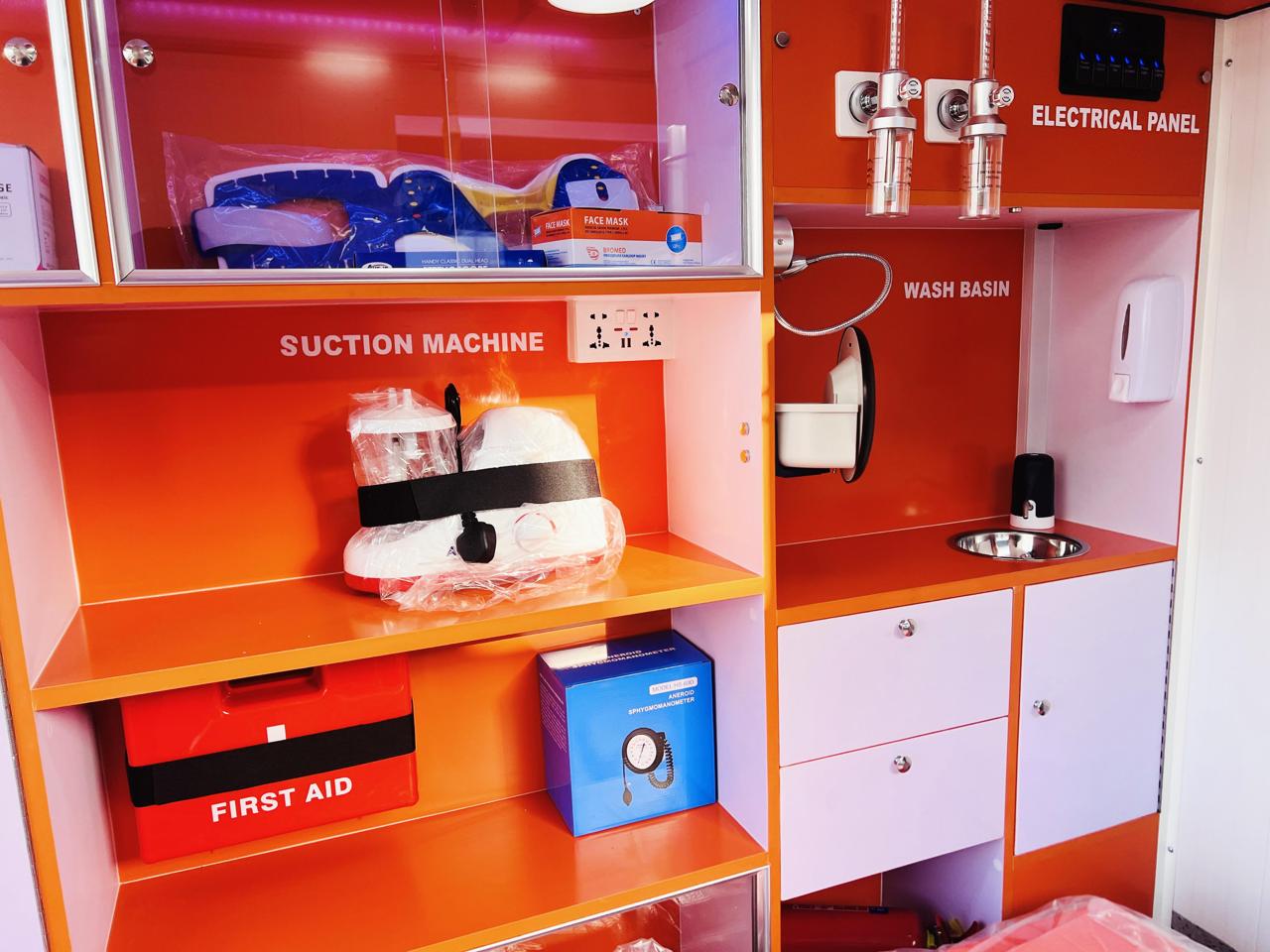
Suction unit mounts
-
Defibrillator mounting points
-
IV pole holders
Storage
-
Medical cabinets and drawers for supplies
-
Secure equipment mounting systems
Interior Finishes
-
Thermal and acoustic insulation for patient comfort
-
Easy-clean surfaces
-
Non-slip flooring
Electrical System
-
Independent electrical system with inverter and battery backup
-
LED interior lighting
-
External emergency lights
Climate Control
-
Dedicated air conditioning and heating for patient compartment
4×4 Capability
For organizations operating in truly remote areas, the 4×4 version of the Hilux Single Cab Ambulance is the gold standard.
Key off-road features:
-
Full-time 4WD with low-range transfer case
-
Excellent approach and departure angles
-
Reinforced suspension for heavy loads
-
High ground clearance
This allows the ambulance to traverse sand, mud, rocks, and steep inclines that would stop any conventional emergency vehicle .
Who Uses the Hilux Single Cab Ambulance?
Based on industry data, these vehicles are trusted by :
-
NGOs and humanitarian organizations operating in remote regions
-
Mining companies with on-site medical response requirements
-
Oil and gas operations in desert or jungle environments
-
Remote clinics serving isolated communities
-
Mountain rescue teams needing off-road capability
-
Government health services in developing nations
-
Military and peacekeeping forces
How Much Does a Toyota Hilux Single Cab Ambulance Cost?
Pricing varies significantly based on configuration, but here are general guidelines:
| Component | Estimated Cost Range |
|---|---|
| Base Hilux Single Cab (new) | Starts around R 375,000–R 418,000 in South Africa (~$20,000–$25,000 USD) |
| Ambulance Module Conversion | $15,000–$35,000 depending on equipment level |
| Fully Equipped BLS Ambulance | $35,000–$50,000 USD |
| Fully Equipped ALS with 4×4 | $50,000–$70,000 USD |
The final price depends on :
-
Engine choice (2.4L diesel, 2.7L petrol, or 2.8L diesel)
-
Drivetrain (4×2 vs 4×4)
-
Level of medical equipment (BLS vs ALS)
-
Module construction materials
-
Custom features (winches, roof racks, upgraded electrical systems)
Why Choose the Single Cab?
The single cab configuration offers distinct advantages for dedicated ambulance work:
-
Maximum module space. Without a rear seat, the entire chassis can be used for the patient compartment.
-
Higher payload capacity. Less weight in the cab means more capacity for medical equipment.
-
Better weight distribution. The module sits squarely over the rear axle for optimal handling.
-
Simpler maintenance. Fewer doors and moving parts than double cab conversions.
-
Purpose-built. This configuration is designed specifically for ambulance work, not adapted from a passenger vehicle.
The Bottom Line
The Toyota Hilux Single Cab Ambulance represents the ultimate in no-nonsense, go-anywhere emergency medical transport. It’s not designed for city streets or hospital transfers. It’s built for the places where roads end and emergencies don’t wait.
For organizations that need to reach patients in the world’s most challenging environments—deserts, mountains, jungles, or disaster zones—this vehicle delivers the legendary reliability of the Hilux platform in a purpose-built medical configuration.
It’s tough, it’s simple, and it works. When lives depend on you getting there, that’s exactly what you need.


