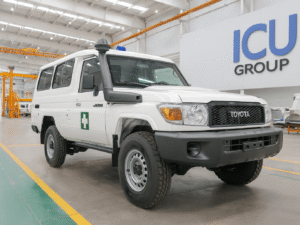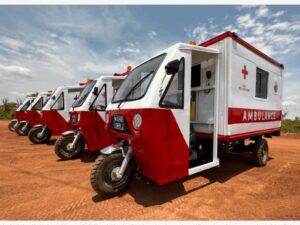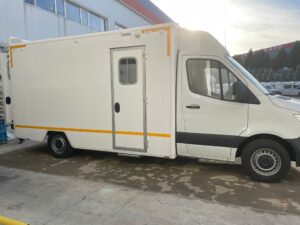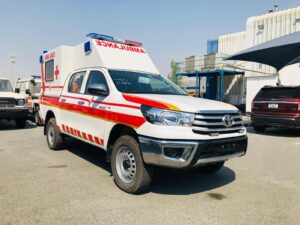
Toyota Hiace Ambulance: 2026 Specifications, Options & Price Range GuideThe Toyota Hiace is a global icon in the ambulance world, renowned for its legendary reliability, low operating costs, and versatile platform. For 2026, it remains a top choice for budget-conscious services, urban operators, and markets where simplicity and durability are paramount. Toyota Hiace Ambulance: 2026 Specifications, Options & Price Range Guide, navigating the Hiace’s wide price range—from $28,500 to over $51,000—requires understanding its distinct configurations.
This guide breaks down the 2026 Toyota Hiace ambulance lineup to help you identify the right model for your needs and budget.
The Hiace Paradox: Understanding the Extreme Price Range
The Hiace’s cost spectrum reflects two completely different vehicle categories:
- The Standard Hiace Ambulance ($28,500 – $45,000): This is the traditional, globally recognized workhorse for basic medical transport.
- The Special Operations Hiace ($42,000 – $51,000): These are not standard vans. The exorbitant price indicates armored or specialized protective vehicles (e.g., B6/B7 ballistic protection, blast mitigation, custom climate systems) for high-threat environments, VIP medical evacuation, or infectious disease control. For this guide, we will focus on the standard ambulance variants.
2026 Toyota Hiace Standard Ambulance Specifications & Prices
Here is a detailed look at the standard configurations available for 2026 procurement.
1. Base Model: The Most Affordable Entry Point
- Model: Hiace 2.7L Manual Cargo Van
- 2026 Price: $28,500 USD (Ex-Works)
- Key Specifications:
- Engine: 2.7L 4-cylinder gasoline, manual transmission.
- Roof: Standard van roof.
- Use Case: Ultra-basic patient transport where budget is the absolute primary constraint. Suitable for low-mileage, non-emergency transfers in flat, urban environments.
- Considerations: Manual transmission may limit driver pool. Lower power and standard roof mean limited interior space and equipment carrying capacity.
2. The Mainstream Standard: Optimal Balance
- Model: Hiace 3.5L Standard Roof
- 2026 Price: $35,000 USD (Ex-Works)
- Key Specifications:
- Engine: 3.5L V6 gasoline, automatic transmission (typical).
- Roof: Standard roof, converted into an ambulance compartment.
- Use Case: The most common Hiace ambulance globally. Ideal for general patient transport (BLS), hospital discharges, and municipal services in developing regions. Offers a good balance of power, reliability, and cost.
- Typical Build-Out: Includes full ambulance conversion with basic stretcher system, oxygen, suction, AED, essential medical cabinets, and warning lights.
2026 Toyota Hiace Ambulance: Key Decision Factors & Options
When specifying your Hiace for 2026, these are the critical choices that affect capability and price:
A. Roof Height: The Space Determiner
- Standard Roof: As above. Crew can stand in a stooped position; interior feels confined but vehicle retains a lower center of gravity.
- High Roof (in standard configurations): Adds significant cost (comparing to other chassis, a high-roof Sprinter is ~$85k). It allows medical personnel to stand fully upright, dramatically improving ergonomics and ease of patient care during transport. This is a recommended upgrade for any serious medical transport application.
B. Powertrain & Drivetrain
- Engine: The 2.7L is for minimum cost. The 3.5L V6 is strongly recommended for adequate power, especially when fully loaded with equipment, patients, and crew in hot climates or on hills.
- Transmission: Automatic is standard for ambulance applications due to ease of use and reduced driver fatigue. Manual is a cost-saving option only.
- Drivetrain: Most Hiaces are RWD (Rear-Wheel Drive). 4×4 is a rare and valuable option for rural or all-weather services, but it substantially increases the base chassis cost and may require a special order.
C. Ambulance Build Specifications
Even within the “standard” price range, build quality varies. Ensure your 2026 quote includes:
- Compliance: Build to TS EN 1789 or similar patient safety and vehicle standards.
- Electrical System: Dual-battery isolation system, pure sine wave inverter (1000W+), and adequate 12V/220V outlets.
- Climate: A dedicated rear compartment heater is essential. An independent air conditioner is a critical, often optional, addition for hot climates.
- Flooring: Seamless, anti-bacterial epoxy flooring for infection control.
- Warning System: Full LED lightbar, electronic siren, and side/ rear warning lights.
2026 Price Summary & Recommendation
| Your Service Profile | Recommended 2026 Hiace Spec | Expected Price Range (Ex-Works) |
|---|---|---|
| Low-Volume, Urban BLS Transport | Hiace 3.5L Std Roof, Auto, BLS Pack | $35,000 – $45,000 |
| High-Volume or ALS-Capable Transport | Hiace 3.5L High Roof, Auto, Upgraded Electrical/Climate | $45,000 – $65,000+ (Estimate based on conversion costs) |
| Rural / All-Terrain BLS | Hiace 3.5L, 4×4 (if available), High Roof | $55,000 – $75,000+ (Estimate, chassis premium) |
| Special Operations (Armored/Protected) | Custom Hiace High Roof, Armored | $42,000 – $51,000 (As per provided data) |
The Verdict: Who is the 2026 Toyota Hiace Ambulance For?
Choose a Toyota Hiace Ambulance if:
- Your primary concern is reliability and lowest total cost of ownership.
- You operate in regions with strong Toyota service networks and parts availability.
- Your needs are centered on Basic Life Support (BLS) and patient transport, not heavy-duty emergency response.
- You value simplicity and ease of maintenance over the latest automotive technology.
Consider a Different Platform (e.g., Ford Transit, Mercedes Sprinter) if:
- You require a true standing-height high roof as standard.
- You need more interior space for multiple providers or extensive ALS equipment.
- Advanced driver assistance features (lane-keep, auto emergency braking) are a priority.
- Your operational budget allows for a higher initial investment for greater long-term capability.
For 2026, the Toyota Hiace continues to offer unparalleled value in the entry-level and mid-range ambulance segment. By carefully selecting the right engine, roof, and conversion specifications, you can secure a durable, cost-effective medical transport solution that will serve reliably for years to come. Always ensure your supplier provides a detailed build sheet aligned with international standards to guarantee safety and quality.
5. 4×4 Ambulances for Remote Areas: When Are They Necessary?
4×4 Ambulances for Remote Areas: When Are They Necessary? A 2026 Decision Guide
For emergency medical services, reaching the patient is the first and most critical step. In cities, a standard 2WD ambulance is sufficient. But when your service area includes unpaved mountain roads, desert tracks, snow-covered lanes, or muddy farm paths, the equation changes dramatically. The decision to invest in a 4×4 (four-wheel drive) ambulance is a strategic one, balancing significant upfront cost against the irreplaceable value of guaranteed access.
This guide explores when a 4×4 ambulance is a necessary investment for 2026, analyzing use cases, costs, and key specifications.
The Core Question: When is 4×4 a Necessity, Not a Luxury?
A 4×4 ambulance is non-negotiable when one or more of the following conditions define your operational environment:
- Unpaved or Poorly Maintained Roads: Gravel, dirt, sand, or rutted tracks that become treacherous or impassable in wet or icy conditions.
- Significant Seasonal Weather:
- Snow & Ice: Regular snowfall where roads are not immediately plowed.
- Heavy Rain & Mud: Monsoon seasons or areas where dirt roads turn to deep mud.
- Off-Road Terrain: Requirement to drive across fields, beaches, or unmarked terrain to reach accident sites (e.g., agricultural, wilderness, or coastal rescue).
- Steep Inclines & Mountainous Regions: Where extra traction is needed for both ascent and controlled descent on slippery slopes.
- Disaster & Flood Response: Where infrastructure is damaged, and crews must traverse debris, standing water, or washed-out roads.
The Rule of Thumb: If your ambulances are regularly getting stuck, requiring secondary vehicle support for access, or if crews are forced to abandon vehicles and proceed on foot with equipment, you have already entered the “necessity” zone for 4×4.
2026 4×4 Ambulance Options & Price Analysis
The cost premium for 4×4 is substantial, but varies by vehicle class. Here’s how 2026 prices compare:
A. Light/Medium 4×4 Ambulances: The Agile Access Vehicles
These are ideal for remote clinics, village-based services, and rugged terrain where a large ambulance cannot go.
- Toyota Hilux 4×4 Ambulance:
- 2026 Price: $45,000 USD (vs. $35,000 for 4×2)
- Premium: +$10,000 (29% increase)
- Best For: Extreme off-road access, remote outposts, and mobile medical teams. The pickup-based platform offers exceptional ground clearance and ruggedness.
- Toyota Land Cruiser 4.2 V6 4×4 (Africa Spec):
- 2026 Price: $46,500 USD
- Best For: The undisputed king of reliability in harsh environments. Built for durability, with enhanced cooling and suspension for African terrain. Ideal for long-distance medical evacuations over mixed roads.
- SUV-Based Conversions: A Land Cruiser or similar SUV converted to a compact ambulance is a premier choice for doctor-led outreach or rapid response in wilderness areas.
B. Heavy-Duty 4×4 Ambulances: The Unstoppable Responders
For services that need full-size ambulance capability with ultimate traction.
- Ford F550 4×4 Ambulance (Type I):
- 2026 Price: $115,000 USD
- Note: This price reflects a top-spec, standards-compliant emergency ambulance. The 4×4 capability is part of a package built for the most demanding rescue operations, often including enhanced suspension, tire systems, and winch preparedness.
- Other Heavy-Duty 4×4 Chassis: MAN, Iveco, and Mercedes offer 4×4 options on their larger chassis, typically adding a $15,000 – $40,000+ premium to the base chassis cost before conversion.
C. The 4×4 Alternative: All-Wheel Drive (AWD) Vans
- Models: Mercedes Sprinter 4×4, Ford Transit AWD.
- Capability: Excellent for snow, ice, and light off-road (e.g., gravel, wet grass). They provide superior traction to 2WD but lack the low-range gearing, extreme ground clearance, and underbody protection of a true 4×4 system like the Hilux or Land Cruiser.
- Compromise: They bridge the gap between urban and moderate rural use at a lower cost and complexity than heavy-duty 4×4.
Key 4×4 Ambulance Specifications to Demand for 2026
Purchasing a 4×4 ambulance isn’t just about the drivetrain. The conversion must be purpose-built for the stresses of off-road travel.
- Medical Equipment Securement: All cabinets, stretcher locks, and devices must be secured to withstand constant vibration, jolting, and vehicle angles far beyond a paved road standard (e.g., EN 1789 compliance covers this).
- Enhanced Suspension & Tires: The vehicle should be fitted with upgraded shock absorbers, springs, and All-Terrain (A/T) or Mud-Terrain (M/T) tires appropriate for the local terrain. Don’t send a 4×4 ambulance out on highway tires.
- Underbody Protection: Skid plates for the fuel tank, sump, and other critical components are essential to prevent damage from rocks and debris.
- Auxiliary Power & Air: Consider an engine-driven auxiliary power unit (APU) to run medical equipment without idling the main engine during long, remote evacuations. An onboard air compressor for re-inflating tires after lowering pressure for sand/mud is a valuable tool.
- Recovery Preparedness: Basic self-recovery gear (kinetic rope, shackles, shovel) should be standard. A front-mounted winch is a critical option for the most remote operations.
Decision Checklist: Do You Need a 4×4 Ambulance for 2026?
Answer YES to two or more of the following, and a 4×4 is a necessary line item in your budget:
- Terrain: More than 25% of your service area is unpaved road, sand, or requires leaving the road surface.
- Weather: Your region experiences seasonal snow, ice, or monsoonal rains that render key roads impassable to 2WD vehicles for days or weeks.
- Mission: You are responsible for wilderness search and rescue (SAR), disaster response, or support for remote communities without paved road access.
- History: Your current 2WD vehicles have a record of getting stuck, requiring tow assistance, or failing to reach patients multiple times per year.
- Distance: Evacuations routinely involve long transfers (50+ km) over variable road conditions where breakdown or delay is life-threatening.
Final Cost-Benefit Analysis for 2026
- The Cost: A 4×4 system adds a minimum 20-30% premium to the base vehicle cost. For a full conversion, this can mean an additional $10,000 to $50,000+.
- The Benefit: Uninterrupted mission capability. The ability to launch a response in any weather, reach a patient when minutes count, and transport them safely regardless of road conditions. It also enhances crew safety by providing more vehicle control in hazardous conditions.
Conclusion: For urban and suburban services, 4×4 remains an expensive luxury. But for rural, mountainous, desert, or disaster-prone regions, a 4×4 ambulance in your 2026 fleet is not just a vehicle—it’s a critical piece of lifeline infrastructure. The investment directly translates to expanded coverage, reliable service, and ultimately, lives saved that would otherwise be out of reach. Prioritize models like the Toyota Hilux ($45,000) or Land Cruiser ($46,500) for pure access, or invest in a heavy-duty 4×4 chassis for full-size capability where the terrain demands it.