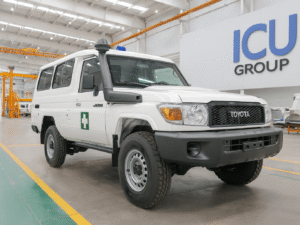
What Affects Ambulance Prices? A 2026 Guide to Chassis, Equipment & Standards; If you’ve ever looked at an ambulance price list and wondered why one model costs $35,000 and another exceeds $1 million, you’re not alone. The final price tag of a fully-equipped ambulance is the sum of several critical factors. As we look ahead to 2026 procurement, understanding these variables is key to budgeting correctly and choosing the right vehicle for your mission.
Let’s break down the three primary cost drivers: the Vehicle Chassis, the Medical Equipment & Build-Out, and the Compliance Standards.
1. The Foundation: Vehicle Chassis & Specifications – What Affects Ambulance Prices?
The chassis is the single largest variable in cost and defines the ambulance’s core capability. Prices escalate based on size, power, and intended use.
- Vehicle Type & Size:
- Light-Duty Vans (e.g., Toyota Hiace): Starting around $28,500, these are the most economical for basic patient transport in urban settings. They offer lower power and interior space.
- Mid-Size / Cutaway Vans (e.g., Ford Transit, Mercedes Sprinter): Ranging from $70,000 to $95,000, this is the most common platform. It offers an optimal balance of interior space, payload capacity, fuel efficiency, and drivability.
- Heavy-Duty / Truck Chassis (e.g., Ford F550, MAN): From $95,000 to over $1 million, these are for Type I emergency ambulances. They offer maximum interior space, durability for high-mileage use, and ability to carry heavy additional equipment like auxiliary power units (APUs).
- Powertrain & Drivetrain:
- 4×2 vs. 4×4: A 4×4 drivetrain adds significant cost (e.g., Toyota Hilux 4×2: $35,000 vs. 4×4: $45,000) but is essential for rural, off-road, or all-weather reliability.
- Engine Size & Transmission: Larger engines for heavier chassis and automatic transmissions (especially for high-roof models) increase the base vehicle price.
- Regional Specifications:
- A Toyota Land Cruiser ambulance built for the harsh conditions of Africa ($46,500) will have different engine cooling and suspension specs than a GCC (Gulf) spec model ($55,000), impacting price.
2. The Core: Medical Equipment & Conversion Quality
This is where an empty van becomes a mobile medical unit. The level and quality of fit-out create a massive price spread.
- Stretcher & Loading Systems: A basic manual stretcher system is standard. Prices rise with automatic loading systems, hydraulic lifts, and advanced locking platforms that enhance crew safety and reduce injury.
- Level of Medical Equipment:
- Basic Life Support (BLS): Includes essential items like oxygen, suction, basic immobilization, AED, and first-aid supplies. This is typical for patient transport units.
- Advanced Life Support (ALS) / Mobile ICU: Adds high-cost items like transport ventilators, multi-parameter patient monitors, defibrillators with pacing, infusion pumps, and complex oxygen/vacuum systems. Each added device can increase cost by thousands.
- Interior Build Materials & Cabinetry:
- Durability vs. Cost: Cabinets made of lightweight, easy-clean composites are more expensive than plywood-based builds. Anti-bacterial epoxy flooring and sealed seams are crucial for hygiene but add to labor and material costs.
- Electrical & Climate Systems:
- A robust dual-battery isolated system with a high-capacity inverter, LED lighting, and a dedicated rear compartment heater/AC is non-negotiable for patient and equipment safety but represents a significant part of the conversion cost.
3. The Non-Negotiables: Safety & Compliance Standards
You cannot put a price on safety, but standards certainly put a cost on the vehicle. Compliance is mandatory and engineered into every bolt.
- International Standards (e.g., TS EN 1789 / EU 1789): This European standard (widely adopted globally) dictates everything from vehicle stability and crash resistance to equipment securing, interior dimensions, and warning light intensity. Building to this standard requires specific materials, engineering, and certification processes, raising the price over a non-compliant vehicle.
- Local Regulations: Ambulances for the US market must meet KKK-A-1822 standards, which are incredibly stringent on crash testing, equipment lists, and performance. This is a primary reason a Ford F550 ambulance can reach $1.15 million—the compliance and testing regimen is exhaustive.
- Safety for Crew & Patient: Features like anti-lock stretcher locks, ergonomic cabinet design, 360-degree interior handrails, and advanced vehicle stability control are all integrated based on standards and add cost.
Bringing It All Together: A 2026 Price Scenario What Affects Ambulance Prices?
Why does a Toyota Hiace standard roof cost $35,000, while a high-roof automatic passenger model costs $450,000? The extreme difference in the provided list likely indicates the latter includes specialized armor, B6/B7 ballistic protection, or bespoke customizations for high-threat environments—a perfect example of how specifications drastically alter price.
Similarly, the jump from a GMC Savana ($70,000) to a MAN or heavy-duty ambulance ($95,000+) reflects the cost of a larger, more durable chassis designed for 24/7 emergency service, built to withstand constant use and carry more equipment.
Key Takeaway for 2026 Buyers
When requesting quotes, always specify:
- Intended Use: Patient transport vs. emergency response vs. special operations.
- Required Standard: Must comply with TS EN 1789, KKK, or other?
- Equipment Level: BLS or ALS configuration?
- Chassis Preference: Based on terrain and duty cycle.
What Affects Ambulance Prices?; The cheapest upfront cost may lead to higher long-term expenses through poor fuel efficiency, inadequate durability, or non-compliance. Investing in the right combination of chassis, equipment, and standards for your specific needs in 2026 will ensure operational efficiency, crew safety, and ultimately, better patient care for years to come.