Ford Transit Ambulance Types
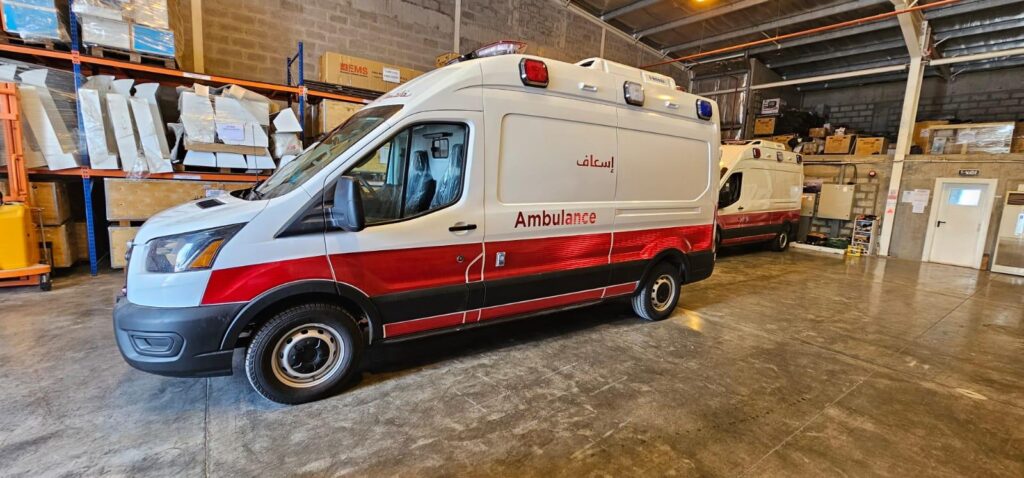
By Infinity Chassis Engineering Team – ISO 9001:2015 & EN1789 Certified Ford Transit Ambulance Types Manufacturer
Introduction
The Ford Transit has established itself as one of the most versatile and widely used ambulance platforms in the world. From urban emergency response to remote off-road rescue operations, the Transit platform offers multiple configurations tailored to different medical needs and operational environments .
This comprehensive guide covers all Ford Transit Ambulance Types, their specifications, and their ideal applications to help EMS providers, fleet managers, and government procurement officers make informed decisions.
Ford Transit Ambulance Classification Overview
Ford Transit ambulances can be classified in two ways:
By Physical Configuration (Body Style):
-
Box Shape (Module) Ambulance
-
High Roof Van Ambulance
-
Semi-High Roof Van Ambulance
-
FWD Low Floor Ambulance
-
4×4 Ambulance
By Medical Capability (EN1789 Standard):
-
Type A – Patient Transport Ambulance
-
Type B – Emergency Ambulance (BLS)
-
Type C – Mobile ICU (ALS)
Ford Transit Ambulance Types by Physical Configuration
1. Box Shape (Module) Transit Ambulance
Recognized for its spacious, rectangular design, the box shape configuration maximizes interior volume for medical equipment and personnel. The boxy structure provides a near-ideal working environment for emergency responders .
Key Features:
-
Maximum cargo and stretcher capacity
-
Ample room for Advanced Life Support (ALS) equipment
-
Excellent maneuverability in urban environments
-
Proven reliability in hospital-based EMS fleets
Limitations:
-
Slightly higher fuel consumption due to aerodynamics
-
May face clearance issues in low-height garages
-
Bulkier appearance may not suit all service branding
Best for: Urban EMS units, hospitals with high patient volume, and teams requiring full ALS capabilities
2. High Roof Ford Transit Ambulance Types
Featuring an elevated ceiling, this model allows medical staff to stand upright during transit – significantly improving access to patients and enabling more effective in-transit care .
Key Features:
-
Full standing room for paramedists
-
Enhanced ergonomics and reduced back strain
-
Compatible with ceiling-mounted medical devices
-
Superior interior organization and storage
-
Up to 11.5 cubic meters of interior space
Limitations:
-
Increased vehicle height may limit parking options
-
Higher center of gravity affects cornering stability
-
Potential need for specialized maintenance lifts
Best for: Advanced care units, long-distance patient transfers, and services prioritizing crew comfort and clinical efficiency
3. Semi-High Roof Transit Ambulance
This balanced design combines moderate headroom with improved road handling. It is ideal for facilities seeking a compromise between interior space and vehicle agility .
Key Features:
-
Sufficient headroom for most medical procedures
-
Better aerodynamics and fuel efficiency
-
Easier access to standard-height facilities and garages
-
Stable driving dynamics in varied conditions
Limitations:
-
Limited standing room for taller medical staff
-
Reduced overhead storage capacity
-
May require crouching during prolonged care
Best for: Rural clinics, volunteer EMS teams, and departments needing versatility without sacrificing drivability
4. FWD Low Floor Ford Transit Ambulance Types
Engineered with front-wheel drive and a lowered interior floor, this model prioritizes accessibility and ease of patient loading, especially for elderly or mobility-impaired individuals .
Key Features:
-
Smooth, step-free entry and exit
-
Improved weight distribution and traction
-
Ideal for wheelchair and bariatric patients
-
Reduced risk of injury during stretcher handling
Limitations:
-
Slightly reduced ground clearance
-
Less suitable for severe off-road conditions
-
May have tighter interior space due to floor design
Best for: Community health services, non-emergency patient transport, and aging populations
5. 4WD Transit Ambulance
Built for extreme conditions, the four-wheel-drive variant delivers unmatched traction and reliability in snow, mud, or rugged terrain – making it indispensable for remote and wilderness rescue operations .
Key Features:
-
Superior off-road capability and traction control
-
Enhanced safety in adverse weather (snow, ice, rain)
-
Access to isolated communities and disaster zones
-
Greater driver confidence on unpaved roads
Limitations:
-
Higher purchase and maintenance costs
-
Increased fuel consumption
-
Heavier drivetrain may affect ride smoothness
Best for: Mountain rescue, rural EMS, disaster response units, and regions with harsh winter climates
Ford Transit Ambulance Types by Medical Capability (EN1789)
Type A – Patient Transport Ambulance
Designed for non-emergency patient transport and basic care. The Ford Transit Custom Type A (such as the Euromast M764) is a transport solution combining practicality, comfort, and safety standards .
Key Features:
-
Basic medical supplies and oxygen therapy
-
Patient monitoring (basic)
-
Comfort-focused interior
-
Reinforced anti-rust treated cell
-
Complete thermal and acoustic insulation
-
Compatible with standard stretcher systems
Best for: Interfacility transfers, dialysis transport, clinic visits, non-urgent medical evacuations
Staff Requirements: EMTs
Type B – Emergency Ambulance (Basic Life Support)
Equipped for Basic Life Support and emergency response. This configuration is commonly used for 911 responses and urgent interfacility transfers .
Key Features:
-
AED defibrillator
-
Basic airway management equipment
-
Emergency lighting and siren
-
Attendant seating for medical staff
-
Oxygen supply and first aid kits
Best for: Emergency 911 responses, urgent transfers, volunteer EMS services
Staff Requirements: Emergency Medical Technicians (EMTs)
Type C – Mobile ICU (Advanced Life Support)
The highest level of pre-hospital care. The ALS variant of the Transit is engineered for emergency response, delivering critical care en route to medical facilities. Equipped with advanced medical technology, these ambulances function as mobile intensive care units (MICUs) .
Key Features:
-
Advanced cardiac monitoring (ECG, defibrillators)
-
Portable ventilators and intubation kits
-
IV infusion pumps and emergency medications
-
Onboard power systems for medical devices
-
Telemedicine capabilities
Considerations:
-
Higher maintenance and operational costs
-
Requires highly trained paramedics
-
More complex vehicle certification requirements
Best for: Critical care transports, cardiac arrests, trauma cases, high-acuity emergencies
Staff Requirements: Paramedics
Specialized Ford Transit Ambulance Configurations
Pediatric Ambulance
Specially configured for the safe and comfortable transport of infants and children. The pediatric Ford Transit ambulance includes age-specific medical equipment and child-friendly interior design. These units are staffed by medical personnel trained in pediatric emergency care .
Key Features:
-
Infant incubators and pediatric stretchers
-
Child-sized medical devices (ventilators, monitors)
-
Specialized medication dosing tools
-
Calming interior design with safety restraints
Best for: Neonatal ICU transfers, pediatric specialty care transport, emergency pediatric cases
Stork Ambulance (Mobile Maternity Unit)
A specialized variant designed for expectant mothers in active labor or high-risk pregnancies. The Stork ambulance transforms the Transit into a mobile delivery room .
Key Features:
-
Onboard delivery kit (sterile instruments, birthing bed)
-
Fetal and maternal monitoring systems
-
Emergency obstetric medications
-
Neonatal resuscitation equipment
Best for: Rural maternity transport, emergency childbirth scenarios, high-risk pregnancy transfers
Non-Emergency Medical Transport (NEMT)
NEMT vehicles based on the Ford Transit provide reliable, comfortable transportation for patients with chronic conditions or mobility challenges. These are not equipped for emergency care but focus on accessibility, comfort, and scheduled medical appointments .
Key Features:
-
Wheelchair lifts or ramps (ADA-compliant)
-
Comfortable seating and climate control
-
Optional stretcher or reclining chair setups
-
GPS tracking and scheduling integration
Best for: Dialysis patients, elderly transport, therapy sessions, routine medical appointments
Ford Transit Ambulance Models and Variants
Transit Van (Ambulance Preparation Package)
Ford offers an official Ambulance Preparation Package (47B) designed to support certified upfitters in transforming the vehicle into a complete ambulance .
Available Configurations (Long Wheelbase):
| Model | Roof Type | Description |
|---|---|---|
| T-150 (E1C) | Medium Roof | Light-duty ambulance platform |
| T-250 (R1C) | Medium Roof | Standard medium roof option |
| T-350 (W9C) | Medium Roof | Heavy-duty medium roof |
| T-250 (R1X) | High Roof | Standard high roof option |
| T-350 (W1X) | High Roof | Heavy-duty high roof |
Ambulance Preparation Package Features:
-
Privacy glass on side sliding door and swing out rear doors
-
Dual AGM batteries for increased electrical capacity
-
Dual alternators for high power demand
-
Auxiliary fuse panel with high-spec interface connector
-
Modified wiring system for medical equipment integration
-
Dual-note electric horn
Powertrain:
-
3.5L V6 Petrol EcoBoost Twin-Turbo engine
-
10-speed automatic transmission
-
310 hp @ 5,000 rpm
-
400 lb-ft torque @ 2,500 rpm
Ford Transit Custom Ambulance
The Transit Custom is a popular platform for ambulance conversion due to its optimal combination of interior space, maneuverability, fuel efficiency, and robust chassis. Its modular design allows for extensive customization .
Key Specifications:
-
Engine options: 2.0L TDCi diesel or EcoBoost petrol variants
-
Compact footprint under 5.5 meters
-
Available in multiple wheelbase and roof height options
-
All-wheel-drive (AWD) variants available
-
High roof provides superior working space
Safety Systems:
-
Lane Departure Warning
-
Pre-Collision Assist
-
Autonomous Emergency Braking
-
Grip Control System for slippery surfaces
Ford Transit Ambulance Comparison Table
| Ambulance Type | Interior Space | Accessibility | Terrain Suitability | Ideal Use Case |
|---|---|---|---|---|
| Box Shape | Excellent | Good | Urban/Suburban | Hospital-based emergency response |
| High Roof | Exceptional (standing height) | Good | Most conditions | Advanced medical care during transit |
| Semi-High Roof | Good (partial standing) | Good | Urban/Rural mix | General-purpose EMS operations |
| FWD Low Floor | Good | Excellent | Flat terrain | Patient transport & accessibility-focused care |
| 4WD | Good to Very Good | Fair to Good | Rugged/Off-road | Remote, rural, and all-weather rescue |
EN1789 Compliance: What It Means for Ford Transit Ambulances
EN1789 is the European standard for medical vehicles. All professional Ford Transit ambulance conversions should comply with this standard, which covers :
| Requirement | Description |
|---|---|
| Structural Strength | Rollover protection, anchored equipment, crash safety |
| Electrical Safety | Isolated medical-grade electrical systems, emergency power |
| Interior Ergonomics | Proper workspace for paramedics, optimized layout |
| Temperature Control | Independent patient compartment HVAC |
| Stowage | Secure storage for medical equipment |
| Weight Distribution | Axle loads, stability at speed |
| Materials | Antibacterial, fire-retardant, easy to clean surfaces |
Ambulances built to EN1789:2020 standards ensure the highest level of safety and quality for patients and frontline paramedics .
Choosing the Right Ford Transit Ambulance
When selecting a Ford Transit ambulance, consider these factors:
1. Define Your Primary Mission
-
Emergency 911 response → ALS configuration on high roof or box body
-
Interfacility transfer → BLS or Type A configuration
-
Non-emergency patient transport → NEMT or low floor configuration
-
Off-road / remote response → 4×4 variant
2. Assess Your Operational Terrain
-
Urban environments with narrow streets → Semi-high roof or Transit Custom
-
Rural roads → High roof with good ground clearance
-
No roads / extreme terrain → 4WD variant
3. Determine Medical Capability Needs
-
BLS only → Type A or B
-
ALS with ventilation → Type C
-
Specialized care → Pediatric or Stork configuration
4. Consider Regulatory Compliance
-
Ensure conversion meets EN1789 (Europe) or KKK-A-1822F (North America) standards
-
Work only with certified upfitters
Why Choose Infinity Chassis for Your Ford Transit Ambulance
Infinity Chassis Units is an EN1789 certified manufacturer specializing in ambulance conversions. Our facilities include:
-
Production Facility: Kahramankazan, Ankara, Turkey
-
Head Office: Çankaya, Ankara, Turkey
-
Dubai Sales Office: Ras Al Khor, UAE
Our Certifications
| Certification | Status |
|---|---|
| ISO 9001:2015 | Certified |
| EN1789 (Medical Vehicles) | Certified |
| CE Marking | Compliant |
| In-house R&D Center | Yes |
What Sets Us Apart
-
Direct Export Experience – We have delivered Ford Transit ambulances to government tenders, NGOs, and private EMS providers worldwide.
-
Engineering Excellence – Our in-house R&D team customizes each conversion to your operational requirements.
-
Transparent Communication – From initial consultation to after-sales support, we provide detailed documentation and responsive service.
-
Global Compliance – Our vehicles are engineered to meet EN1789 and other regional medical vehicle standards.
Frequently Asked Questions
Q1: What is the difference between a Transit and Transit Custom ambulance?
A: The Transit is the full-size commercial van offering more interior space and higher payload capacity. The Transit Custom is a slightly smaller variant optimized for maneuverability in urban environments while still providing ample space for ambulance conversion .
Q2: Does Ford offer a factory ambulance package?
A: Yes. Ford offers an Ambulance Preparation Package (47B) that includes dual alternators, dual AGM batteries, auxiliary fuse panel, and modified wiring system specifically designed for ambulance conversion .
Q3: Are Ford Transit ambulances available with 4×4?
A: Yes. Ford offers all-wheel-drive (AWD) variants of the Transit, and specialized 4×4 conversions are available for off-road emergency response .
Q4: What is the interior height of a high roof Transit ambulance?
A: The high roof Transit provides approximately 69 inches (1,752 mm) of interior headroom, allowing most medical staff to stand upright during patient care .
Q5: How much payload can a Ford Transit ambulance carry?
A: Depending on the configuration, the Transit can carry over 1,890 kg of payload, supporting heavy medical equipment and bariatric patients .
Q6: What is EN1789 certification and why is it important?
A: EN1789 is the European safety standard for road ambulances. It ensures your ambulance meets structural, electrical, and ergonomic requirements for safe patient transport .
Request More Information
Our team is ready to provide:
-
Technical specifications for your chosen Ford Transit platform
-
Detailed quotation with EN1789 certification
-
Logistics and shipping arrangements to your country
-
After-sales support and spare parts
| Location | Contact |
|---|---|
| Turkey (HQ) | +90 555 104 06 48 |
| Dubai (Sales Office) | +90 507 848 06 61 |
| sales@infinitychassis.com | |
| WhatsApp / BOTIM | +90 555 104 06 48 |
| Website | www.infinitychassis.com |
Office Hours: Monday – Friday, 09:00 – 18:00 (GMT+3)
About the Author
This guide was prepared by the Engineering Team at Infinity Chassis Units. Our lead engineers have extensive experience in Ford Transit ambulance conversion and EN1789 certification. We have overseen the production of hundreds of ambulance units on Ford, Toyota, and Mercedes-Benz platforms.


