


Description
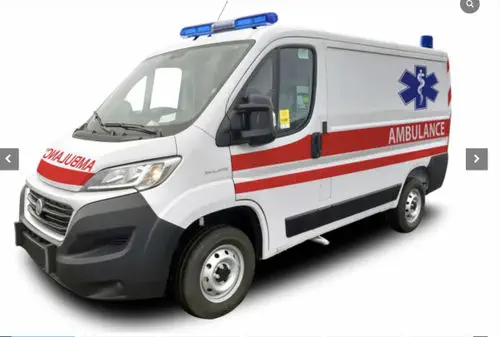
The Fiat Ducato ambulance is one such icon. From the bustling cities of Europe to the demanding terrains of the Middle East, Africa, and Latin America, this platform has earned its reputation as a cornerstone for Type 2 ambulance production. Its blend of practical design, robust engineering, and widespread serviceability makes it a primary contender for government tenders, private fleet operators, and NGOs. This guide provides a detailed overview of the Fiat Ducato ambulance specifications, Fiat Ducato ambulance dimensions, and key procurement considerations, equipping you with the knowledge to specify the ideal Ducato ambulance for your operational needs.
Why the Fiat Ducato is a Preferred Ambulance Platform
The Fiat Ducato platform succeeds in the demanding ambulance role due to a combination of inherent design advantages:
-
Proven Front-Wheel-Drive Configuration: Offers superior traction in adverse weather conditions compared to rear-wheel-drive vans, providing confident handling for emergency crews.
-
Exceptional Payload Capacity: Designed as a commercial vehicle, the Ducato boasts a high Gross Vehicle Weight Rating (GVWR), allowing it to carry the substantial weight of medical equipment, multiple personnel, and patients without compromise.
-
Fuel-Efficient Diesel Engines: A range of modern, turbocharged MultiJet diesel engines provides a balance of power for responsive performance and remarkable fuel economy for cost-effective fleet operations.
-
Global Parts & Service Network: As a vehicle sold worldwide, the Ducato benefits from an extensive logistics network, ensuring that mechanical parts and service support are accessible in most regions, minimizing downtime.
-
Driver Ergonomics and Visibility: A car-like driving position, intuitive controls, and excellent all-around visibility reduce driver fatigue and enhance safety during urgent responses.
Fiat Ducato Ambulance Specifications: Technical Overview
When specifying a Fiat Ducato ambulance, understanding the core technical parameters is essential. The following are general reference specifications typical for a professionally converted emergency medical vehicle.
Chassis & Powertrain:
-
Engine Options: Typically powered by a range of 2.3L or 3.0L MultiJet turbo-diesel engines, offering horsepower from approximately 120 HP to over 180 HP, paired with manual or automatic transmissions.
-
Gross Vehicle Weight Rating (GVWR): Ranges from 3.5 tonnes to 4.5 tonnes or more, depending on the specific model and wheelbase. This high rating is crucial for accommodating the ambulance module and its full medical load.
-
Wheelbase Options: Available in multiple wheelbase lengths (often referred to as L1, L2, L3, L4) to allow for custom interior layouts, balancing maneuverability with interior space.
Medical Module & Systems:
-
Electrical System: A dual electrical system is standard, with a reinforced alternator charging a deep-cycle auxiliary battery bank. This powers the medical compartment’s lighting, 230V/110V inverters, medical devices, and climate control independently of the vehicle’s engine.
-
HVAC & Insulation: A dedicated, powerful HVAC system is installed for the patient compartment, providing independent temperature control. The module is fully insulated with medical-grade materials for thermal and acoustic comfort.
-
Structural Integrity: The conversion involves structural reinforcement of the floor and mounting points to ensure the vehicle can withstand the dynamic forces of emergency driving and the static weight of equipment and personnel, a key requirement for standards like EN 1789.
Fiat Ducato Ambulance Dimensions: Space Planning
The interior dimensions of an ambulance Fiat Ducato are critical for workflow, equipment placement, and patient care. Dimensions can vary based on the wheelbase and roof height selected.
Exterior & Interior Dimensions (Typical Ranges):
-
Wheelbase Options: Common ambulance conversions utilize the medium (approx. 3450mm) or long (approx. 4035mm) wheelbase variants.
-
Interior Patient Compartment Length: Ranges from approximately 2.8 meters to over 3.5 meters of usable space behind the driver’s cabin.
-
Interior Width: Typically around 1.75 meters at the floor level, providing crucial space for lateral patient access and equipment mounting.
-
Interior Height: A critical specification. Standard roof models offer an interior height of roughly 1.6-1.7 meters, while high-roof (or maxi-roof) models provide over 1.9 meters of standing room, which is essential for effective patient treatment and staff comfort.
-
Stretcher Loading Height: The height from the ground to the floor of the patient compartment is a key ergonomic and safety factor, typically designed to be as low as possible to facilitate safe and easy patient loading.
Ambulance Configuration Options
The versatile Ducato platform can be configured to serve various medical missions:
-
Basic Life Support (BLS): Configured for non-emergency patient transport and essential care, with basic seating, oxygen, and first aid equipment.
-
Advanced Life Support (ALS): Equipped for emergency response with advanced monitoring (ECG, SpO2, NIBP), ventilation, infusion pumps, comprehensive lighting, and extensive medical storage. This is the most common configuration for the Ducato ambulans.
-
Intensive Care Unit (ICU): Configured for critical care transport, featuring enhanced power systems, multiple medical device mounting points, advanced ventilator support, and often additional climate control.
-
Patient Transport Unit: A cost-effective configuration focused on comfort and accessibility for routine hospital transfers.
Professional Manufacturing & Conversion Process
A true Fiat Ducato ambulancia is not a simple van fit-out. Professional conversion by a certified manufacturer involves a rigorous process:
-
Chassis Preparation: Reinforcing the floor structure and defining mounting points for the module.
-
Body Integration: Building a lightweight yet strong composite or aluminum module, integrating windows, doors, and exterior lighting.
-
Systems Installation: Installing the dual electrical system, HVAC, oxygen system, and plumbing.
-
Interior Fit-Out: Constructing a medical-grade interior with cleanable surfaces, customized cabinetry, and ergonomic equipment mounting.
-
Compliance Certification: For markets requiring it, the vehicle undergoes testing and inspection to certify compliance with standards like EN 1789, covering crash safety, electrical safety, and braking performance.
Export, Homologation & Global Compliance
Professional manufacturers engineer Fiat Ducato ambulances for global markets. Key regional compliance considerations include:
-
Europe: Full EN 1789 certification is the benchmark for quality and safety.
-
Middle East & GCC: Adaptations for climate (enhanced HVAC) and often compliance with local ministry of health specifications.
-
Africa & Latin America: Built to withstand rugged conditions, often certified to local import homologation requirements or to European standards as a mark of quality.
Why Source from a Turkish Fiat Ducato Ambulance Manufacturer
Turkey has established itself as a leading hub for high-quality ambulance manufacturing, offering distinct advantages for Ducato-based units:
-
European Standard Engineering: Turkish manufacturers combine European-level precision engineering and EN 1789 expertise with cost-competitive production.
-
Deep Export Experience: Proven capability in shipping and certifying vehicles to diverse markets across Europe, the Middle East, Africa, and beyond.
-
Full Customization: Ability to tailor every aspect—from layout to equipment lists—to meet exact tender specifications or unique operational needs.
-
Integrated Production: In-house control over metalwork, electrical systems, and medical interiors ensures quality, consistency, and streamlined communication.
How to Request a Quotation: A Buyer’s Checklist
To obtain an accurate and comparable quotation for a Fiat Ducato ambulance, provide manufacturers with the following details:
-
Intended Configuration: BLS, ALS, or ICU.
-
Target Country/Region: For compliance and shipping guidance.
-
Required Certification: EN 1789 or other specific standards.
-
Chassis Preferences: Wheelbase length, roof height (standard/high), engine power preference.
-
Medical Equipment List: Specify if to be supplied by you or the manufacturer.
-
Quantity Required.
Call to Action: Request Your Technical Proposal
Specifying the right Fiat Ducato ambulance requires a partner with technical expertise and a global perspective. If you are procuring for a government tender, private fleet, or humanitarian mission, a professionally converted Ducato offers an optimal balance of capability and value.
Contact us today to discuss your specific requirements. We will provide a comprehensive technical datasheet and a detailed quotation for a Ducato ambulance engineered to your exact specifications and destination country’s regulations.
Frequently Asked Questions (FAQ)
1. What are the typical Fiat Ducato ambulance specifications?
Typical Fiat Ducato ambulance specifications include a 2.3L or 3.0L turbo-diesel engine, a GVWR of 3.5 to 4.5 tonnes, multiple wheelbase options, a dual electrical system with auxiliary batteries and inverter, and a dedicated medical-grade HVAC system for the patient compartment. Exact specs vary based on the configuration (BLS/ALS/ICU) and manufacturer.
2. What are the standard Fiat Ducato ambulance dimensions?
Fiat Ducato ambulance dimensions vary. The interior patient compartment length can range from ~2.8m to over 3.5m. The critical interior height is approximately 1.6-1.7m in a standard roof model and over 1.9m in a high-roof model, which is essential for a standing treatment area. The interior width is typically around 1.75m.
3. Is the Fiat Ducato suitable for Advanced Life Support (ALS) ambulances?
Yes, absolutely. The Fiat Ducato is one of the most popular platforms for ALS ambulances in Europe and beyond. Its payload capacity, available space in high-roof models, and robust electrical system make it ideal for housing the extensive monitoring, ventilation, and infusion equipment required for advanced pre-hospital care.
4. Are EN 1789 certified Ducato ambulances available?
Yes. Reputable ambulance manufacturers, particularly in export-focused regions like Turkey, routinely produce Fiat Ducato ambulances that are fully tested and certified to the EN 1789 European standard. This certification is a key indicator of a vehicle’s structural safety, electrical safety, and overall build quality.
5. What is the typical production lead time for a custom Ducato ambulance?
For a custom-converted vehicle, the typical lead time ranges from 10 to 16 weeks after chassis confirmation and order finalization. This period encompasses the professional conversion process, equipment installation, quality testing, and certification. Lead times can be affected by chassis availability and complexity of customization.
6. Do you export Fiat Ducato ambulances worldwide?
Yes, experienced manufacturers export Fiat Ducato ambulances globally. They have a proven track record of supplying vehicles to government and private buyers across Europe, the Middle East (GCC), Africa, Asia, and Latin America, managing all aspects of export documentation, logistics, and compliance support.